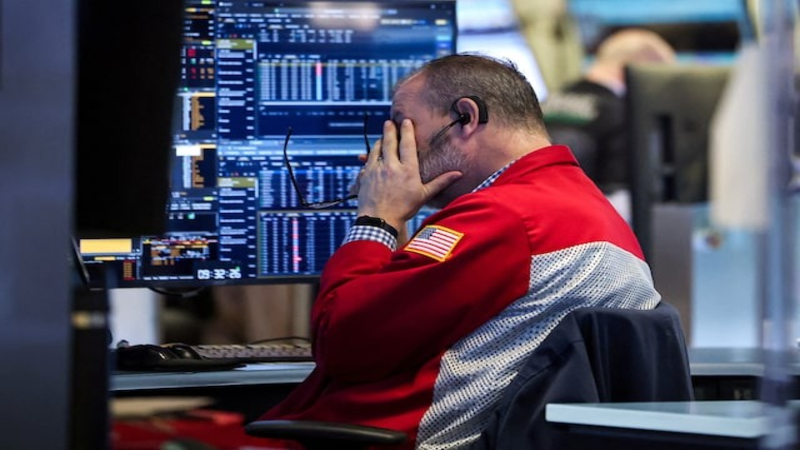
Global financial markets turned volatile as investors reacted to renewed uncertainty surrounding US economic policy and rising geopolitical risk. US equities ended lower, led by sharp declines in financial stocks after major banks warned that proposed limits on credit card interest rates could disrupt lending and consumer credit activity. The pullback in Wall Street contrasted with gains in parts of Asia, where Japanese stocks reached record highs even as currency and bond markets showed signs of strain. The US dollar stabilized after recent softness, rebounding against several Asian currencies, while Treasury yields edged lower following solid demand at government debt auctions. The combination of policy intervention risk and uneven global growth signals has reinforced caution across asset classes, with traders closely watching Washington for further direction.
Commodity markets reflected a decisive shift toward safety as oil and precious metals surged. Crude prices jumped to multi month highs on concerns that escalating tensions in the Middle East could threaten supply routes and energy infrastructure. At the same time, gold extended its rally to fresh record levels, supported by strong demand from central banks and investors seeking protection from political and inflation uncertainty. Silver and platinum followed the move higher, underscoring the broader appeal of hard assets in the current environment. Despite already strong gains last year, demand has shown little sensitivity to price levels, suggesting that risk hedging and reserve diversification remain powerful drivers behind the move into metals.
Currency and bond markets added to the sense of instability, particularly in Japan, where long dated government bond yields climbed to record highs while the yen weakened toward levels that have previously prompted official intervention. Political developments have increased uncertainty over fiscal and monetary coordination, intensifying pressure on both markets simultaneously. In the United States, bond yields eased modestly as investors balanced concerns about policy activism with expectations that growth could slow if credit conditions tighten. The dollar’s relative stability has done little to dampen demand for alternative stores of value, reinforcing the view that currency strength alone is no longer enough to anchor investor confidence.
Bank earnings added another layer to the mixed market picture. While headline profits from major US lenders exceeded expectations due to strong trading revenues, share prices diverged sharply as investors focused on regulatory and policy risks rather than backward looking performance. Proposed caps on borrowing costs and renewed political pressure on monetary authorities have raised questions about future profitability and independence. For now, markets appear to be pricing a period of elevated uncertainty, with volatility likely to remain high as investors weigh economic resilience against an increasingly unpredictable policy backdrop.