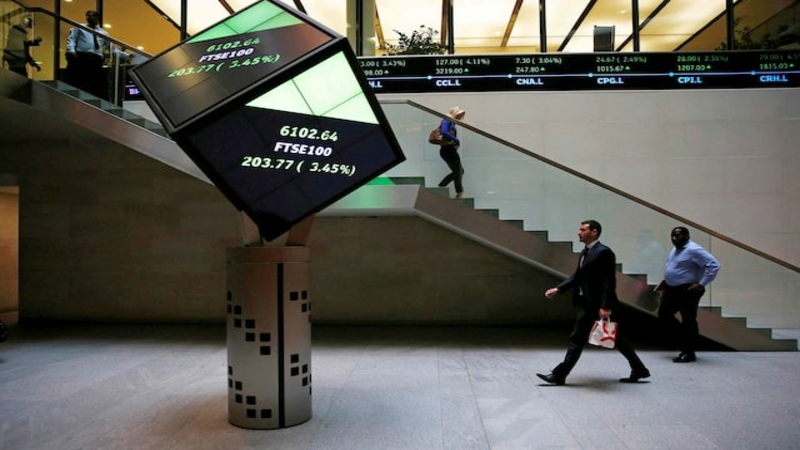
London equities finished at a record high as strength in metals and mining stocks outweighed broader market unease tied to global policy tensions. Early pressure on the benchmark index faded as investors rotated toward resource linked names, benefiting from a surge in precious and industrial metals prices. The shift reflected a familiar pattern in periods of uncertainty, where commodity producers attract inflows as hedges against volatility and currency swings. While concerns around U.S. monetary governance initially weighed on sentiment, the FTSE 100’s heavy exposure to globally priced commodities helped stabilize performance. The contrast with the domestically focused mid cap index, which edged lower, underscored how international revenue exposure continues to shape outcomes in UK equity markets.
Gold miners led gains after bullion prices pushed to fresh records, reinforcing the appeal of safe haven assets amid elevated geopolitical and institutional risk. Industrial metals producers also advanced as copper prices moved closer to historic highs, supported by expectations of sustained demand linked to electrification, infrastructure spending, and supply constraints. These moves provided a strong tailwind for London’s resource heavy index composition. However, the rally masked underlying crosscurrents, including pressure on exporters from a stronger pound and caution across interest rate sensitive sectors. The session illustrated how commodity momentum can dominate index performance even as broader macro signals remain mixed.
Sterling strengthened against the dollar, reflecting a partial unwinding of risk premiums as investors reassessed currency positioning. While the firmer pound added some headwinds for export oriented stocks, it also signaled improving confidence in UK assets relative to U.S. counterparts amid global policy uncertainty. At the same time, banking shares lagged after renewed discussion of a proposed cap on U.S. credit card interest rates revived concerns about profitability across financial institutions with international exposure. The divergence between sectors highlighted how political developments abroad can ripple through UK markets, influencing both equity and currency dynamics in tandem.
Attention is now turning toward domestic economic signals for further direction. Recent data showed continued cooling in the UK labor market, reinforcing expectations that monetary policy may remain supportive as growth momentum softens. Investors are watching upcoming output figures closely for clues on how the economy is responding following recent fiscal decisions. Against this backdrop, stock specific developments also drove sharp moves, with select technology and biotech names posting outsized gains on improved outlooks. The record close for the FTSE 100 reflects a market balancing global uncertainty with selective optimism, where commodity exposure and earnings visibility continue to anchor performance despite lingering macro risks.