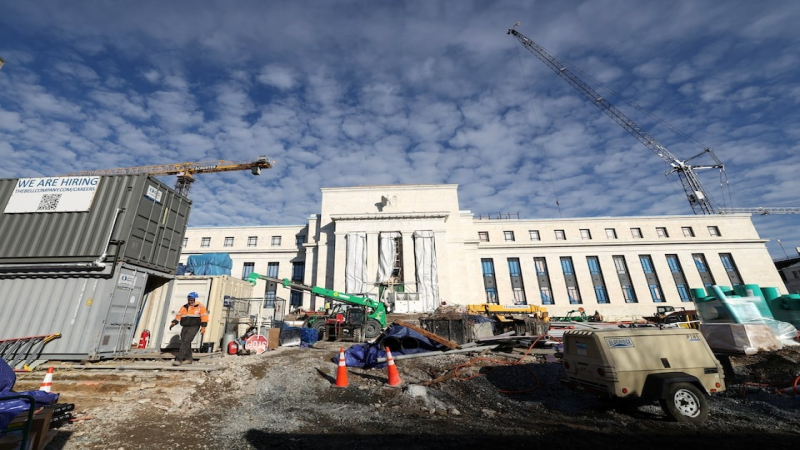
Tensions between the White House and the Federal Reserve escalated after the Trump administration intensified pressure on central bank leadership, raising the prospect of criminal charges tied to Federal Reserve Chair Jerome Powell’s past testimony to Congress. The dispute centers on comments Powell made regarding cost overruns linked to a major renovation of the Fed’s headquarters, an issue the administration has framed as a matter of accountability. Powell pushed back publicly, describing the legal threats as a pretext aimed at influencing monetary policy decisions rather than a genuine oversight concern. The development has amplified unease in Washington and financial markets, where the independence of the central bank is viewed as a critical pillar supporting confidence in U.S. monetary governance and long term price stability.
Market reaction was swift as investors weighed the implications of a potentially weakened Federal Reserve. Longer dated Treasury yields moved higher as traders assessed the risk that political pressure could interfere with inflation control and rate setting credibility. At the same time, the dollar softened and demand for safe assets increased, signaling concern that institutional norms could be under strain. For global markets, the Federal Reserve’s autonomy is closely tied to the stability of dollar denominated assets and the predictability of U.S. policy. Any perception that rate decisions could be shaped by political objectives rather than economic conditions introduces uncertainty that can ripple through bond markets, equities, and foreign exchange.
The confrontation comes against the backdrop of renewed calls from the administration for sharply lower interest rates, framed as part of a broader effort to address affordability pressures across the economy. Critics argue that attempts to exert leverage over the central bank risk undermining the very mechanisms designed to manage inflation over the long term. Powell, whose current term as chair ends later this year, is not required to step down from the Board of Governors for several more years, raising the possibility of an extended standoff. Investors have been closely monitoring these dynamics, aware that sustained conflict between elected officials and monetary authorities could reshape expectations for future policy consistency.
Beyond immediate market moves, the episode has revived debate over the legal and institutional safeguards protecting the Federal Reserve from political interference. Central bank independence has long been regarded as a cornerstone of economic credibility, allowing policymakers to take unpopular decisions when needed to maintain price stability. The threat of legal action against a sitting chair has heightened concern that precedent could be set, affecting how future officials approach policy decisions. For markets, the core issue is not the outcome of any investigation, but whether confidence in the neutrality of U.S. monetary policy can be preserved amid intensifying political pressure.