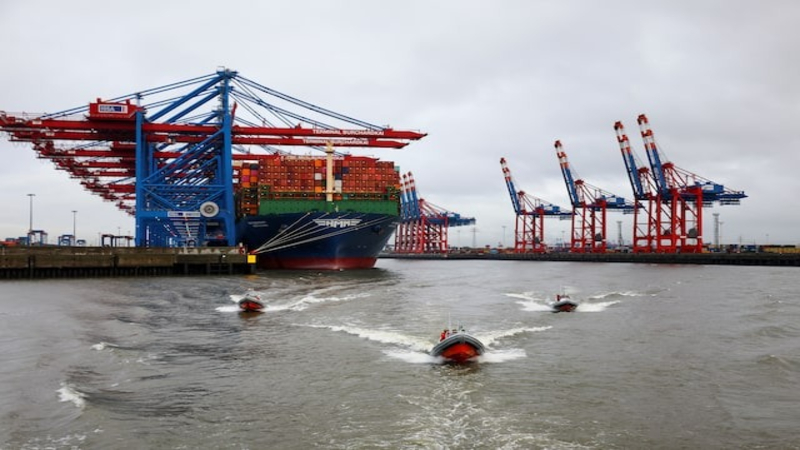
Germany’s external sector showed renewed strain as exports declined unexpectedly, reinforcing concerns about the durability of its traditional growth model in a more fragmented global trade environment. Shipments fell month on month, driven by weaker demand from both European partners and the United States, underscoring how external headwinds continue to weigh on Europe’s largest economy. The decline highlights the growing impact of tariff barriers and shifting trade patterns, particularly as US demand softens under new trade policies. Imports, by contrast, rose modestly, narrowing the trade surplus and signaling a rebalancing that reflects weaker export momentum rather than stronger domestic demand. For markets, the data point to an economy increasingly exposed to global policy shifts and less able to rely on exports as a stabilizing force.
At the same time, industrial production delivered a positive surprise, rising for a third consecutive month and defying expectations of a renewed contraction. The increase was supported by a rebound in industrial orders, particularly large scale contracts, suggesting some normalization after a prolonged downturn. These signs have improved near term sentiment around manufacturing activity, but confidence remains fragile. Analysts caution that the pickup may reflect timing effects rather than a broad based recovery, especially given the challenging external environment. While domestic conditions appear to be stabilizing at the margin, the lack of sustained foreign demand limits the scope for a durable industrial upswing.
Trade flows illustrate the structural challenges Germany faces. Exports to the United States declined sharply on both a monthly and annual basis, reflecting the drag from higher tariffs and softer demand. At the same time, imports from China increased, highlighting how global trade diversion is reshaping supply chains within Europe. This shift has reduced the overall trade surplus, a development that carries implications for growth, fiscal balances, and regional capital flows. Germany’s reliance on external markets leaves it particularly vulnerable to these changes, especially as geopolitical and trade tensions persist.
From a broader macro perspective, the data reinforce a picture of cautious stabilization rather than recovery. Industrial activity may be finding a floor, supported by selective order growth and potential fiscal support, but export weakness remains a structural constraint. For currency and global macro observers, Germany’s performance reflects wider euro area challenges, where domestic resilience is offset by external fragility. Until global trade conditions improve, Germany’s economy is likely to remain in a low growth equilibrium, with industrial gains vulnerable to reversal and exports unable to reclaim their former role as the primary growth engine.