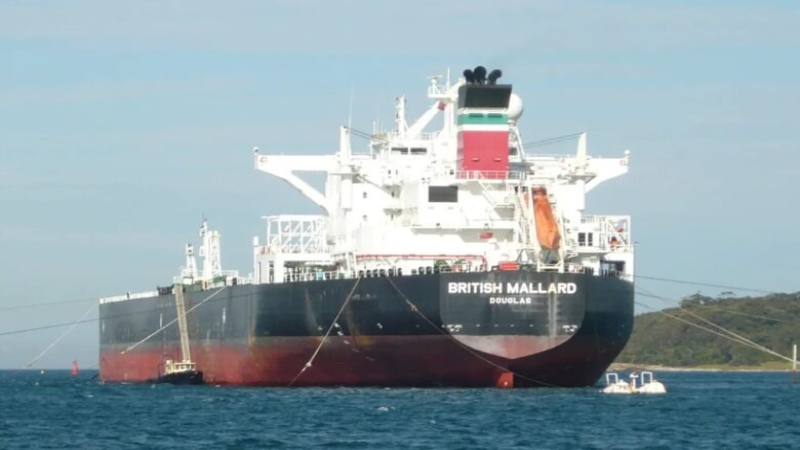
US enforcement actions against Venezuelan oil exports intensified after authorities seized a tanker in the Caribbean, underscoring Washington’s determination to maintain pressure on sanctioned crude flows. The move marked another step in a broader campaign to disrupt shipments linked to Venezuelan state oil, signaling that maritime enforcement remains central to the strategy. Market participants interpreted the seizure as confirmation that the blockade is being applied aggressively across international waters rather than limited to specific jurisdictions. The action adds to uncertainty around near term Venezuelan supply availability, even as global inventories remain elevated. For energy markets, the development reinforces the role of policy driven constraints rather than production capacity as the key variable shaping export volumes from Venezuela.
The tanker had been operating under disputed registration and was linked to a network of vessels associated with sanctioned oil movements. Its interception follows a series of similar actions, indicating a sustained operational tempo rather than an isolated incident. Industry observers note that such seizures increase logistical risk for shippers, insurers, and intermediaries involved in moving Venezuelan crude. Even vessels not directly targeted face higher compliance costs and routing challenges, which can slow flows without formally reducing production. The message to markets is that enforcement risk has become a material factor in pricing Venezuelan barrels, pushing them further to the margins of global trade and reinforcing discounts where transactions still occur.
The broader implications extend beyond a single shipment. By demonstrating reach and consistency, the United States is reinforcing the credibility of its sanctions framework, affecting how traders assess exposure to sanctioned oil globally. For consuming nations and refiners, uncertainty around delivery reliability adds complexity to procurement strategies, particularly in regions already navigating geopolitical supply risks. The situation also highlights how maritime monitoring and interdiction have become critical tools in energy policy. While some vessels have reportedly returned toward Venezuelan waters, the possibility of further action keeps the market cautious about assuming a rapid normalization of exports.
From a macro perspective, the seizure underscores how geopolitical enforcement can influence oil markets even in an environment of ample supply. Prices remain sensitive to disruptions that are policy driven rather than geological, especially when they intersect with broader tensions across producing regions. For dollar and commodity watchers, the episode illustrates how US financial and security reach continues to shape global energy flows. As long as enforcement remains active, Venezuelan oil is likely to stay constrained by risk premiums and operational uncertainty, reinforcing a market where politics, not just fundamentals, determines access and pricing.