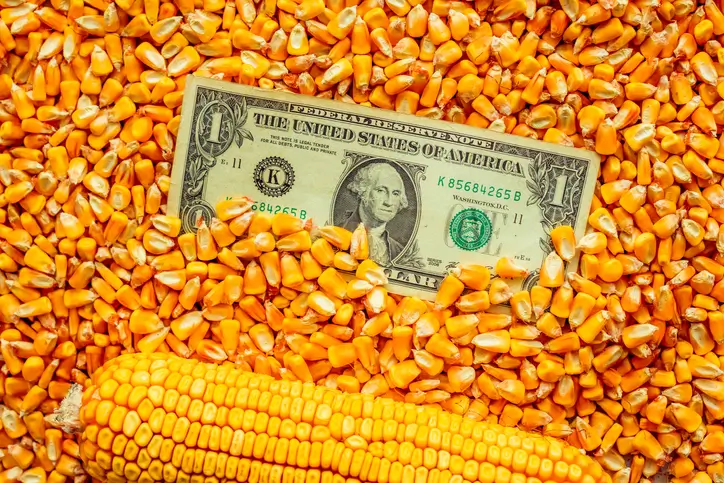
Chicago, August 27 – The global agricultural markets — wheat, corn, soybeans, and coffee — may seem far removed from foreign exchange trading desks. Yet, for decades, analysts have pointed to one consistent driver in these markets: the U.S. dollar (USD). Because most agricultural commodities are priced and traded in dollars, shifts in the greenback’s value ripple across global food markets, shaping both prices and demand. In today’s era of heightened volatility, understanding the dollar’s impact on agricultural commodities has become more important than ever.
Why the Dollar Matters in Agriculture
The link between agricultural commodities and the USD is structural. International buyers purchase grains, oilseeds, and soft commodities in dollar terms. When the dollar strengthens, it raises the cost of imports for countries whose currencies are weaker, often leading to reduced demand. Conversely, when the dollar weakens, foreign buyers find U.S.-priced commodities cheaper, supporting higher global demand and often lifting prices.
For example, a surge in the dollar index in 2022, driven by aggressive Federal Reserve rate hikes, coincided with falling demand for U.S. agricultural exports. Nations from Asia to Africa struggled with higher import bills, even as supply concerns mounted due to geopolitical tensions and climate-driven disruptions.
Historical Patterns of Correlation
Analysts often highlight the negative correlation between the dollar and agricultural commodities. When the dollar index falls, commodity indices — particularly the S&P GSCI Agriculture Index — tend to rise. A clear case was during the 2007–2008 commodity boom: as the dollar weakened, agricultural prices surged, with wheat hitting record highs amid global shortages. Conversely, the dollar’s rebound during 2014–2016 put pressure on soybean and corn prices, despite strong consumption trends in China and other emerging markets.
This inverse relationship is not perfect, but over multi-year cycles, the trend remains consistent enough for traders to use the dollar as a macro barometer for agricultural markets.
Emerging Markets and Food Inflation
Perhaps the most critical impact of dollar movements is on emerging markets. A strong dollar often translates into higher local prices for imported staples, fueling food inflation and political instability. Countries reliant on U.S. grain, such as Egypt for wheat or Mexico for corn, find themselves squeezed when their local currencies fall against the dollar.
The 2022–2023 period highlighted this challenge vividly. As the dollar surged to two-decade highs, food-importing nations faced surging bills, exacerbating inflationary pressures already heightened by the Russia-Ukraine war. For policymakers, the dollar’s strength became not just a currency story but a food security issue.
Beyond Demand: Input Costs and Fertilizers
The dollar’s influence also extends to agricultural production costs. Fertilizers, many of which are dollar-denominated, become more expensive for non-U.S. farmers when the dollar is strong. This can reduce planting in the following season, further tightening supply and creating longer-term impacts on global food markets. Similarly, energy prices, closely tied to dollar movements, affect costs of transportation and processing, feeding back into commodity pricing.
Weather Shocks and the Dollar Overlay
Of course, agricultural markets are heavily influenced by weather — from droughts in the U.S. Midwest to floods in South Asia. However, the dollar acts as an amplifier. For example, when drought cut U.S. soybean yields in 2012, the simultaneous weakness in the dollar added to the rally, pushing soybean prices above $17 per bushel. In contrast, recent drought-driven rallies in 2023 were tempered by a strong dollar, which capped global demand despite supply concerns.
The Role of Speculators and Funds
Institutional investors and hedge funds also track the dollar when positioning in agricultural futures. Commodity trading advisors (CTAs) often use dollar trends as part of their macro strategies, building long positions in agricultural commodities during periods of dollar weakness. The rise of index funds linking commodities to broader inflation hedging has further cemented the dollar’s role in agricultural markets.
Looking Forward: Policy, Climate, and Trade Flows
Analysts suggest the agricultural-dollar correlation will only grow more important in the coming decade. With climate change amplifying weather volatility and geopolitical conflicts disrupting supply chains, the dollar’s status as the world’s pricing currency remains central. Any move by countries to shift trade settlements into alternative currencies, such as China’s yuan, could reshape this dynamic. However, for now, the dollar’s dominance ensures its correlation with agricultural prices remains intact.
If the Federal Reserve begins easing in 2025 as inflation cools, a weaker dollar could spur renewed agricultural demand, especially from Asia and Africa. On the flip side, should inflation remain sticky and keep the Fed hawkish, the dollar’s resilience may again dampen agricultural markets, even in the face of tight supplies.
Bottom Line
For traders and analysts, agricultural commodities and the U.S. dollar remain inseparable. From influencing global demand and food security to shaping production costs and speculative flows, the dollar acts as both a driver and a mirror of agricultural price trends. While weather, geopolitics, and supply shocks remain critical variables, it is the dollar that sets the global baseline. In a world increasingly defined by uncertainty, keeping an eye on the greenback may be the most reliable guide to navigating agricultural markets.