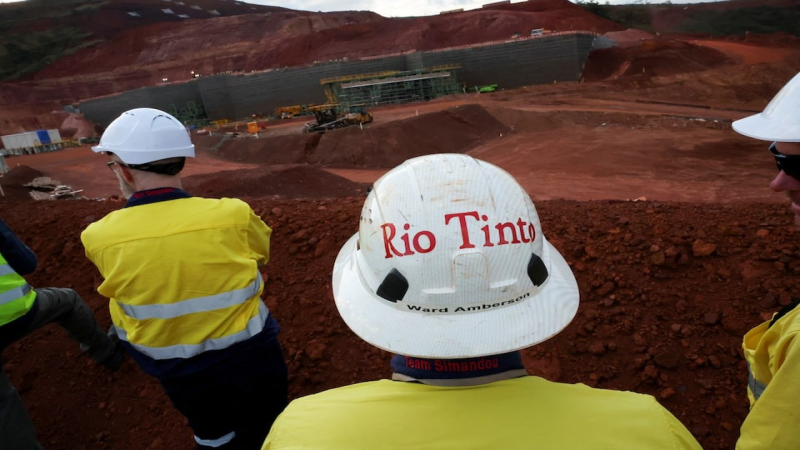
Renewed merger discussions between two of the world’s largest mining groups have refocused market attention on consolidation risks and strategic priorities in the global resources sector. The prospect of a combination large enough to reshape industry rankings triggered sharply divergent share price reactions, reflecting investor concern over execution and valuation rather than headline scale. Markets interpreted the talks as part of a broader push by major producers to secure long life assets in metals viewed as structurally scarce. While the transaction remains uncertain, its potential size alone has elevated debate around whether growth through acquisition offers better risk adjusted returns than internal project development. For investors, the immediate reaction underscored skepticism toward mega deals, especially when commodity cycles and capital discipline are already under scrutiny.
At the core of the strategic rationale sits copper, a metal increasingly treated as a foundation input for energy systems and data driven infrastructure. Demand projections linked to electrification and artificial intelligence have tightened long term supply expectations, encouraging miners to accelerate access to producing assets rather than wait for new capacity to come online. This environment has fueled competition for reserves and encouraged companies to revisit deals previously considered unattractive. However, history has left investors cautious, as large scale mergers in the sector have often coincided with cyclical peaks and subsequent write downs. The current debate reflects a tension between securing future relevance and avoiding overpayment in an already elevated pricing environment.
Beyond assets, the potential combination raises questions about portfolio composition and strategic alignment. Differences in exposure to coal, trading activities, and operational culture complicate integration prospects and increase regulatory sensitivity. Investors are particularly focused on whether non core assets would need to be divested to maintain shareholder support and political acceptance. Antitrust considerations also loom large given the influence of major consuming regions in industrial metals markets. The reaction suggests markets are pricing in a lengthy and complex process rather than a swift transaction, with uncertainty itself acting as a drag on confidence for the acquiring side.
From a macro and capital flow perspective, the talks illustrate how resource security is becoming intertwined with long term industrial planning. As metals linked to energy transition gain strategic importance, scale and control increasingly influence market power and investment appeal. For global markets, consolidation at this level signals confidence in sustained demand even as short term growth remains uneven. At the same time, the mixed investor response highlights that size alone is no longer sufficient to justify risk. Discipline, pricing, and strategic clarity remain decisive. The episode reinforces a broader theme in commodities where structural optimism must still contend with financial realism.