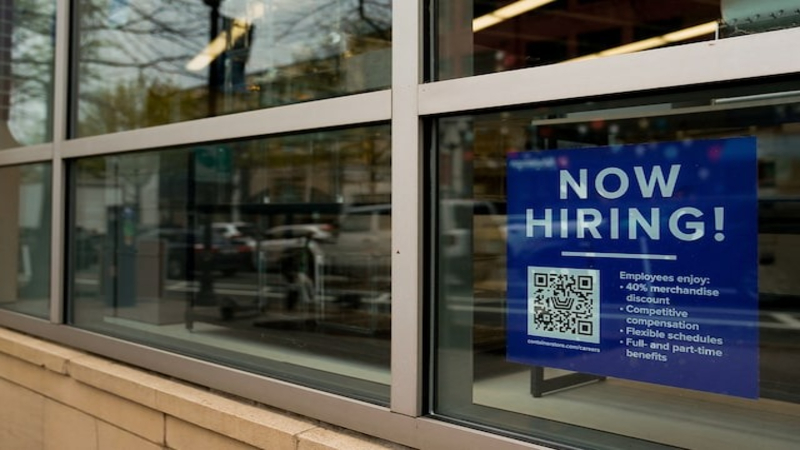
US jobless claims edged higher last week, pointing to a labor market that remains stable on the surface but increasingly constrained beneath it. New filings for unemployment benefits rose modestly, staying within a range consistent with low layoffs, even as hiring momentum remains subdued. Employers appear reluctant to expand payrolls amid policy uncertainty and structural shifts in how work is organized. The data reinforced the view of a labor market that is neither overheating nor collapsing, but instead locked in a holding pattern as businesses focus on efficiency rather than expansion.
Continuing claims rose more sharply, suggesting that once workers lose jobs, they are taking longer to find new positions. That trend reflects a slowdown in hiring rather than a surge in layoffs, underscoring the growing disconnect between headline labor stability and the lived experience of job seekers. Recent data on job openings has shown fewer vacancies relative to the number of unemployed workers, the weakest balance in nearly four years. Together, the figures point to a labor market that is gradually cooling without tipping into outright weakness, keeping policymakers and investors focused on what comes next rather than what has already occurred.
The more striking development came from productivity data, which showed output per worker rising at the fastest pace in two years during the third quarter. Companies are producing significantly more with their existing workforce, helped by technology adoption, operational restructuring, and early gains linked to artificial intelligence. This surge in productivity has driven unit labor costs lower, easing inflationary pressure even as economic growth remains robust. The dynamic helps explain why strong gross domestic product growth has not translated into stronger job creation, reinforcing the narrative of a job light expansion.
For policymakers, the productivity gains complicate the outlook. On one hand, faster productivity growth allows the economy to expand without triggering inflation, giving the central bank more flexibility to ease policy later in the year. On the other, weak hiring and rising long term unemployment risks could weigh on consumer confidence and spending if prolonged. Markets are increasingly focused on whether productivity gains are sustainable or whether they represent a temporary adjustment phase as firms integrate new technologies and streamline operations.
The claims data comes just ahead of the monthly employment report, which is expected to show modest job growth and a slight improvement in the unemployment rate. While weekly claims do not directly feed into the payrolls report, they shape broader expectations around labor market momentum. Investors are watching closely for confirmation that the economy can maintain growth while absorbing slower hiring, a balance that would support risk assets while keeping rate cut expectations intact.
Overall, the picture that emerges is one of an economy growing faster than its labor market. Businesses are prioritizing margins, efficiency, and output gains over headcount, leaving workers with fewer opportunities even as aggregate growth remains strong. For markets, this environment supports the case for eventual monetary easing without signaling an imminent downturn. The key question is how long productivity can carry the expansion before labor market softness becomes a more meaningful drag on demand.