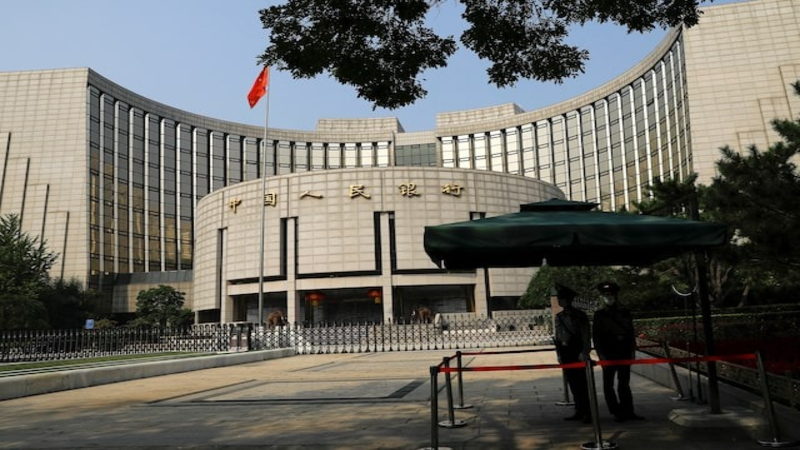
China’s central bank signaled a clear shift toward monetary easing in 2026, pledging to cut both reserve requirements and interest rates as part of a broader effort to stabilize growth and maintain ample liquidity. The guidance reflects growing concern among policymakers about domestic demand, credit transmission, and lingering financial risks as the economy enters a new five year planning cycle. Officials emphasized that policy will remain appropriately loose, with counter cyclical and cross cyclical tools deployed more actively to smooth economic fluctuations. The message suggests a willingness to lean against downside pressures early rather than react after conditions deteriorate. Markets interpreted the pledge as confirmation that authorities are prioritizing stability over restraint, particularly as global monetary conditions remain uneven and external demand uncertain.
The policy framework outlined by the central bank points to flexible use of multiple instruments rather than reliance on a single lever. Cuts to the reserve requirement ratio are expected to release long term liquidity into the banking system, while lower policy rates would aim to reduce borrowing costs for households and businesses. By guiding reasonable growth in total credit and more balanced loan issuance, policymakers appear focused on improving the quality of financial support rather than fueling indiscriminate expansion. The approach also reflects an effort to avoid sharp currency volatility while easing domestically. Maintaining sufficient liquidity without triggering asset bubbles remains a central challenge, especially as confidence in private sector investment has yet to fully recover.
The statement followed signals from senior leadership late last year that monetary policy would play a supportive role in the early stages of the new economic plan. Despite that guidance, benchmark lending rates have remained unchanged for several months, underscoring the cautious sequencing authorities have adopted. The latest commitment suggests that restraint may give way to action as conditions evolve. Analysts view the pledge as an attempt to anchor expectations and reassure markets that policymakers are prepared to respond decisively if growth momentum falters. It also highlights a contrast with other major economies where easing cycles are more constrained by inflation risks and political pressures.
Currency stability remains an explicit objective alongside domestic easing. The central bank reiterated its intention to keep the yuan broadly stable at a reasonable and balanced level, signaling that rate cuts will be calibrated to avoid destabilizing capital flows. This balancing act places China’s monetary stance in a global context where divergent policies are shaping exchange rates and liquidity conditions. For global markets, the outlook points to sustained policy accommodation from the People’s Bank of China as it seeks to underpin growth, manage risks, and reinforce confidence during a period of structural adjustment and external uncertainty.