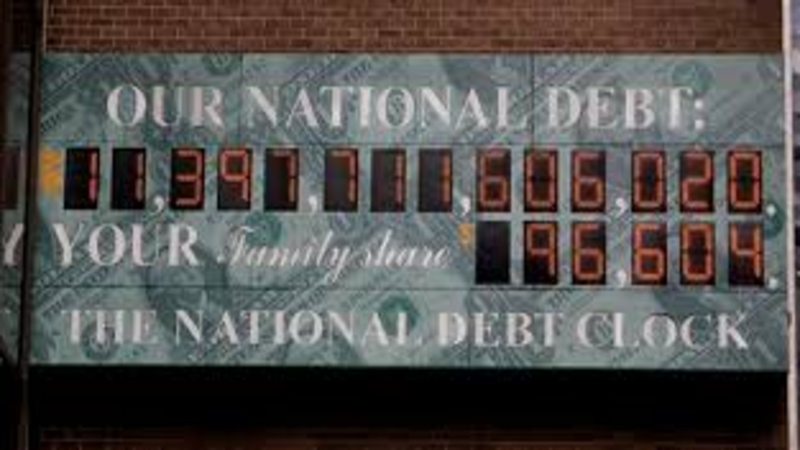
Debt clocks have become a familiar visual in macro analysis, ticking upward as a reminder of how much the world owes. For years, those clocks were unsettling but abstract. As long as growth kept pace with borrowing costs, the numbers felt manageable. In 2026, that comfort has faded. The issue is no longer the size of the clock, but the speed at which interest costs outrun economic growth.
This imbalance is often described as the r g problem, where the interest rate on debt exceeds the growth rate of the economy. When this condition persists, debt dynamics change fundamentally. It alters fiscal behavior, investor confidence, and, crucially, foreign exchange regimes. FX markets are where the consequences of the r g problem often surface first.
Why the r g gap now defines debt sustainability
The most important macro shift in 2026 is that borrowing costs remain high while growth has moderated. This widens the r g gap across many economies. When r exceeds g, debt ratios tend to rise unless governments run large primary surpluses.
Achieving those surpluses is politically and economically difficult. Spending cuts slow growth further. Tax increases face resistance. As a result, debt dynamics become unstable even without new shocks.
Markets understand this arithmetic. When they see r g turning persistently negative, they reassess risk. That reassessment often begins in currency markets before it shows up elsewhere.
Why FX markets react before bond markets do
Bond markets are anchored by domestic institutions, regulations, and central bank presence. These factors can delay repricing. FX markets are more flexible and faster to adjust.
When debt sustainability comes into question, currencies absorb the pressure. Investors demand higher risk premiums or shift capital elsewhere. The exchange rate becomes the release valve.
This is especially true for economies that rely on external financing. Even if bond yields move slowly, currencies can adjust quickly to reflect changing confidence.
From fixed narratives to flexible regimes
The r g problem forces policy choices. Governments must decide how to absorb the adjustment. Some tighten fiscal policy. Others rely on inflation. Others allow currency depreciation.
Over time, these choices reshape FX regimes. Economies that once defended stable exchange rates may tolerate more flexibility. Managed regimes become looser. Pegs face pressure.
This transition is rarely announced. It unfolds through incremental policy decisions and market responses. FX regimes shift because the old framework no longer fits the arithmetic.
Inflation as an implicit adjustment mechanism
One response to the r g problem is inflation tolerance. Higher inflation reduces the real value of debt and can narrow the gap temporarily.
FX markets price this risk quickly. If investors believe inflation will be used as a tool, currencies weaken in anticipation. The adjustment occurs even before inflation rises materially.
This dynamic reinforces FX volatility. Expectations about policy intent matter as much as actual outcomes.
External balances become more important
As debt sustainability weakens, external balances gain prominence. Economies with current account surpluses have more room to manage r g pressure. Those with deficits are more exposed.
Currencies reflect this distinction. Surplus economies maintain stronger FX positions. Deficit economies face depreciation pressure as financing becomes more uncertain.
This differentiation leads to regime divergence. FX markets stop treating economies uniformly and focus on balance of payments resilience.
Reserve adequacy and credibility come into focus
Foreign exchange reserves play a critical role in managing r g stress. Adequate reserves buy time and stabilize expectations. Limited reserves accelerate adjustment.
Markets watch reserve trends closely. Declining reserves signal pressure and increase volatility. Stable reserves support credibility even under strain.
This is why debt clocks and reserve metrics are increasingly linked in FX analysis. Together, they reveal how much room policymakers have to maneuver.
Spillovers across regions
The r g problem is not confined to one country. When many economies face it simultaneously, FX adjustments can become correlated.
Capital flows toward perceived safe havens. Funding currencies strengthen. Others weaken in clusters. This reshapes global FX regimes rather than producing isolated moves.
In 2026, this synchronization increases the importance of relative positioning. FX is about comparison, not absolutes.
Why markets underestimated the shift
For years, low rates masked the r g problem. Growth did not need to be strong because interest costs were minimal. That era shaped expectations.
The shift to higher rates happened quickly. Growth slowed gradually. The gap widened before markets fully adapted.
Debt clocks kept ticking, but the meaning changed. What was once a long term concern became a near term constraint. FX markets are now reflecting that reality.
Implications for policymakers
Policymakers face limited choices. Fiscal tightening risks recession. Inflation tolerance risks credibility. FX flexibility risks volatility.
There is no painless option. The r g problem forces trade offs rather than solutions. FX regimes adjust because something must give.
Clear communication can help, but arithmetic cannot be negotiated. Markets will price the path chosen, not the intent expressed.
What to watch in 2026
Key indicators include real interest rates, trend growth estimates, primary balances, and reserve trends. Together, they show whether r g pressure is intensifying or easing.
FX behavior around policy announcements often reveals more than statements themselves. Currency moves signal whether markets believe the adjustment path is credible.
In 2026, watching the debt clock without watching FX tells only half the story.
Conclusion
The r g problem has moved from theory to reality in 2026. When interest rates exceed growth, debt dynamics force adjustment, and FX regimes are where that adjustment often occurs. Currencies weaken, regimes become more flexible, and volatility rises not because of crisis, but because arithmetic demands it. Understanding this shift is essential for interpreting why debt clocks now change how currencies behave, not just how much the world owes.