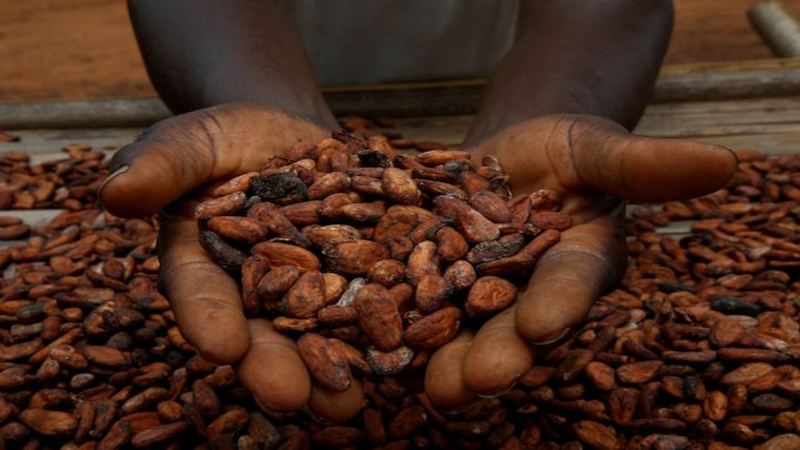
Unseasonal rainfall across key cocoa growing regions in Ivory Coast is raising expectations that the main harvest will finish the season on a stronger footing than previously anticipated. Farmers report that rainfall during what is typically the dry season has improved soil moisture and pod development, supporting healthier trees as the crop approaches its peak production window. The improved weather conditions are expected to sustain harvesting activity well into the later months of the campaign, reducing the risk of an abrupt slowdown. For global commodity markets, the development introduces a potential shift in supply expectations after a period marked by weather driven disruptions. With Ivory Coast accounting for a significant share of global cocoa output, changes in local growing conditions carry implications for prices, trade flows, and downstream food producers closely tied to bean availability.
Producers across western and central regions indicate that rainfall levels have exceeded historical averages, contributing to improved bean quality and higher expected volumes. Farmers note that cocoa trees are showing stronger pod formation, suggesting that output in February and March could surpass levels seen during the same period last season. This sustained production outlook contrasts with earlier concerns that dry conditions would limit yields toward the end of the campaign. In several regions, farmers expect harvesting to continue steadily rather than tapering sharply, allowing more beans to reach market. These conditions may help stabilize supply chains that have been strained by volatility in recent years. For traders and processors, improved visibility on output timing reduces uncertainty around procurement and inventory planning.
The favorable weather is also shaping expectations for the upcoming mid crop, which typically begins development early in the year. Adequate rainfall at this stage supports tree health beyond the current harvest, laying groundwork for the next production cycle. While temperatures have remained within seasonal ranges, the combination of warmth and moisture has created conditions conducive to sustained agricultural activity. Farmers emphasize that the absence of prolonged dry spells lowers stress on crops, which can otherwise reduce yields and quality. As attention gradually shifts toward the mid crop, current conditions suggest continuity rather than disruption. This stability is closely watched by markets given cocoa’s sensitivity to climate patterns and the outsized role of West African production.
From a broader market perspective, improved crop prospects could temper some of the supply side pressures that have contributed to elevated cocoa prices. While demand trends and inventory levels will continue to influence pricing, weather driven production gains offer a counterbalance to earlier supply concerns. Analysts caution that weather patterns can change quickly, but the current outlook supports expectations of stronger near term availability. For commodity investors, the development underscores how localized climate events can have global pricing implications. As the season progresses, attention will remain focused on whether favorable conditions persist and translate into realized output gains that meaningfully affect global supply balances.