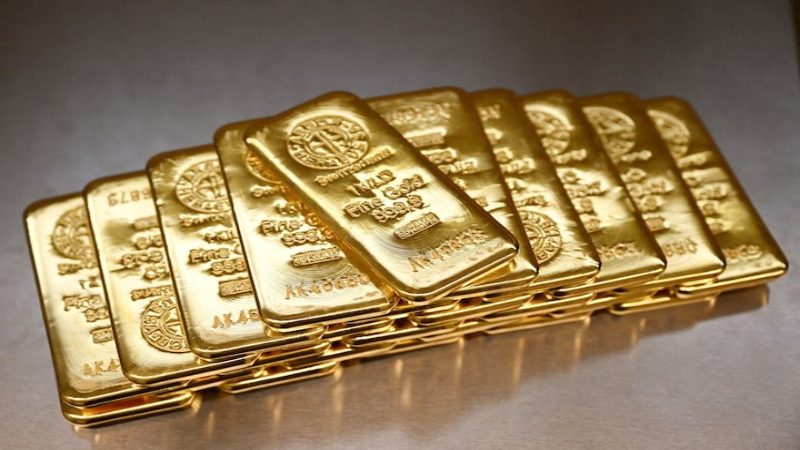
Gold prices moved sharply higher at the start of the week as investors sought protection following renewed geopolitical tension tied to U.S. military action in Venezuela. The advance pushed bullion toward recent record territory, reinforcing its role as a primary hedge during periods of political and policy uncertainty. Market participants responded to a combination of rising geopolitical risk and expectations that global monetary conditions will remain supportive for non yielding assets. The latest move reflects how quickly capital can rotate into defensive positioning when geopolitical developments introduce uncertainty around energy supply, regional stability, and policy responses. With risk appetite still elevated across equities, the rise in gold suggests investors are adding protection rather than exiting risk entirely. This pattern points to portfolio hedging rather than panic, with gold acting as insurance against tail risks rather than a signal of systemic stress.
Safe haven demand has been reinforced by broader macro forces that have supported precious metals over the past year. Expectations that the Federal Reserve will continue easing policy have reduced the opportunity cost of holding gold, while central bank purchases and investment flows have provided a steady underlying bid. The latest geopolitical developments add to existing concerns around global security, fiscal expansion, and inflation persistence. Comments from Donald Trump regarding potential further action have increased uncertainty around the trajectory of regional tensions, encouraging investors to maintain defensive exposure. Markets are also positioning ahead of key U.S. economic data, which could influence rate expectations and reinforce gold’s appeal if signs of slowing growth or softer labor conditions emerge.
The rally has not been limited to gold alone, with silver and other precious metals also benefiting from a surge in demand. Silver’s move reflects both its monetary characteristics and its growing industrial role, particularly in sectors tied to energy transition and technology. Platinum and palladium prices also advanced as investors reassessed supply dynamics and the broader impact of geopolitical risk on commodity markets. The synchronized move across precious metals highlights a market environment where investors are increasingly sensitive to supply constraints and policy uncertainty. Despite the sharp gains, positioning suggests that flows remain orderly, with no signs of forced buying or liquidity stress. Instead, the metals complex appears to be responding to a reassessment of risk rather than a disorderly flight to safety.
Looking ahead, gold’s trajectory will likely be shaped by how geopolitical tensions evolve and whether monetary policy expectations shift meaningfully. A further escalation could strengthen demand for defensive assets, while confirmation of aggressive rate cuts would reinforce gold’s attractiveness relative to yield bearing alternatives. Conversely, signs of de-escalation or stronger than expected economic data could temper the rally without reversing the broader trend. For now, gold’s strength underscores its role as a barometer of geopolitical and policy risk rather than a reflection of immediate economic deterioration. Investors appear focused on maintaining balance, using precious metals to hedge uncertainty while remaining engaged in risk assets.