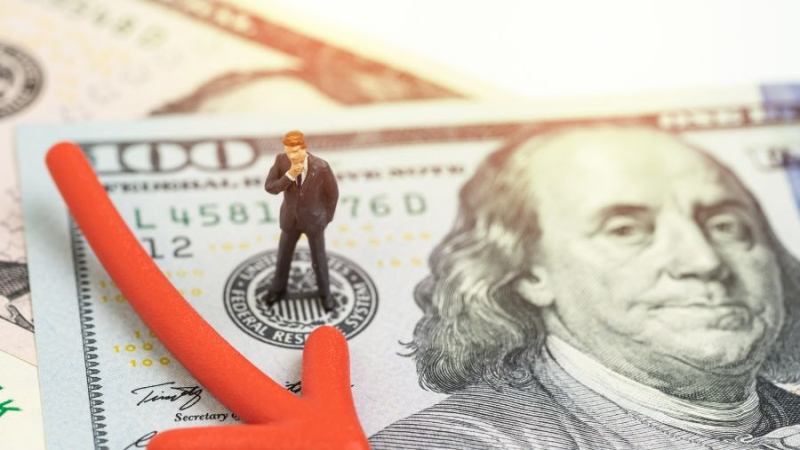
As expectations for U.S. interest rate cuts become more firmly embedded in market pricing, many investors assume the dollar should weaken in a straight line. The logic appears simple: lower rates reduce yield support, encouraging capital to move elsewhere. Yet currency markets rarely follow such clean logic, especially during transition phases in monetary policy.
Instead of a sustained dollar downtrend, the more realistic base case for 2026 is a choppy, range bound USD environment. As rate cuts move from speculation to pricing, the drivers of the dollar shift away from direction and toward relative growth, risk sentiment, and global policy divergence. These forces tend to create volatility without commitment, rather than clean trends.
Why Rate Cuts Do Not Automatically Mean a Weaker Dollar
The assumption that rate cuts equal dollar weakness ignores how markets price future policy. By the time cuts are discussed openly, much of the adjustment has already occurred in yields and FX markets. What matters next is not the direction of rates, but whether expectations overshoot or undershoot reality.
If rate cuts arrive gradually and are framed as insurance rather than emergency support, the dollar can remain resilient. In such cases, the U.S. economy is still outperforming peers, and capital flows remain anchored by relative stability. This dynamic often produces sideways trading as markets wait for clearer confirmation.
Relative Growth Matters More Than Absolute Policy
Currency valuation is comparative by nature. Even if U.S. rates fall, the dollar can hold its ground if growth abroad weakens more or recovers more slowly. This is particularly relevant when other major economies face structural challenges or limited policy flexibility.
In a world where multiple central banks are easing simultaneously, the dollar loses its clear rate advantage but retains its role as a benchmark. That keeps capital from exiting decisively. Instead, flows rotate between regions based on data surprises, reinforcing range behavior rather than sustained moves.
Risk Sentiment Keeps Interrupting Dollar Moves
Another reason the dollar struggles to trend during easing cycles is its dual role as both a growth currency and a defensive asset. When risk sentiment improves, the dollar may weaken modestly. When risk sentiment deteriorates, even briefly, the dollar often rebounds.
This push and pull creates uneven price action. Equity volatility, geopolitical tensions, and credit market stress can all interrupt attempts at trend formation. As long as global uncertainty remains elevated, the dollar’s downside is likely to be capped by periodic demand for safety.
Why Volatility Rises Even Without Direction
Choppy markets are often misunderstood as quiet markets. In reality, range bound environments can produce frequent sharp moves that fail to follow through. These conditions are challenging for trend followers but rewarding for traders who adapt to mean reversion and short term signals.
As cuts start pricing in, markets become hypersensitive to data that challenges the pace or scale of easing. Each inflation print or labor report can trigger repricing, only to be reversed by the next release. This is the hallmark of a transitional FX regime.
Conclusion
The start of a rate cutting cycle rarely delivers a clean currency trend. For the U.S. dollar in 2026, the more durable expectation is range driven volatility shaped by relative growth, shifting risk sentiment, and uneven global recovery. Recognizing a choppy USD environment early allows traders and analysts to adjust strategies away from conviction trades and toward flexibility, timing, and risk management.