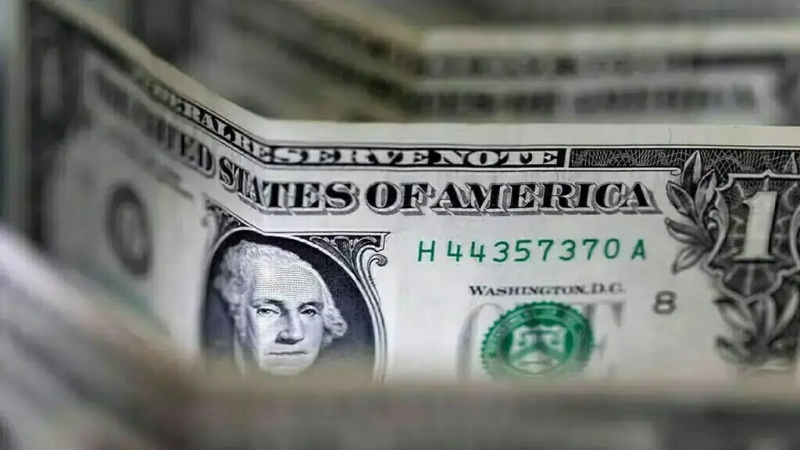
The U.S. dollar enters early 2026 under a widely held assumption that its strongest phase is already behind it. Many market participants believe slowing inflation, expected rate cuts, and improving global growth will keep the greenback under steady pressure through the year. That view has become widely accepted, comfortable, and heavily entrenched.
However, the opening weeks of 2026 bring a dense economic calendar that may force traders to reassess that consensus. When expectations are uniform, even modest data surprises can have outsized effects. The dollar is not responding to narratives anymore but to confirmation or contradiction, and the first major data window of the year could determine whether the soft USD view survives contact with reality.
Why the First Data Window of 2026 Matters Most
The early January data cycle has a unique role because it resets expectations built late in the prior year. Labor market updates, inflation readings, and activity indicators released in a short span shape the baseline for how markets price growth, policy, and risk for months ahead. This cluster does not just inform forecasts but also forces positioning adjustments.
When investors begin a year leaning in one direction, the cost of being wrong rises quickly. If the data confirms economic cooling, markets will likely extend expectations for rate cuts and test lower dollar levels. If the data surprises on resilience, the repricing can be sharp, particularly in short-duration yields and high-beta currency pairs. This is why early-year data tends to generate volatility even when long-term trends appear settled.
Labor and Inflation as the Primary USD Triggers
Employment and inflation remain the most powerful drivers of near-term dollar moves. A clear slowdown in hiring would support the idea that restrictive policy is working, reinforcing expectations for monetary easing. In that scenario, the dollar could weaken further against both developed and emerging market currencies.
However, if labor data shows continued tightness or only gradual cooling, markets may reassess how quickly policy can ease. At the same time, inflation that decelerates unevenly, especially in core services, would complicate the outlook. The dollar does not require rising rates to strengthen. It only needs relative growth or policy expectations to look less dovish than priced in.
Risk Sentiment Can Override Rate Logic
One of the most misunderstood dynamics in currency markets is the relationship between yields and the dollar during periods of uncertainty. Even when yields fall, the dollar can hold firm or strengthen if risk appetite deteriorates. Equity volatility, credit spreads, and geopolitical uncertainty all feed into this channel.
If early 2026 data weakens confidence in global growth rather than just U.S. growth, the dollar may benefit from its defensive characteristics. This is especially relevant if weakness is more pronounced in Europe or parts of Asia, keeping the U.S. economy relatively stronger by comparison. In such cases, the dollar trades less like a rate instrument and more like a risk hedge.
Why Range Trading May Define the Next Phase
The most likely outcome of a mixed data picture is not a clear trend but a broad trading range. Markets may oscillate between soft data expectations and episodic resilience, producing sharp but short-lived moves. For traders, this environment rewards flexibility rather than conviction.
Range-driven markets also expose overconfidence. When consensus becomes crowded, even neutral data can force adjustments. The dollar’s 2026 reset week may therefore be less about direction and more about redefining limits. Identifying where expectations break down is more valuable than predicting a single outcome.
Conclusion
The dollar’s early 2026 test is not about headlines but about alignment between belief and evidence. A soft USD consensus only holds if incoming data consistently supports it. As the year begins, the first concentrated data window has the power to reshape positioning, volatility, and expectations across currency markets. For traders and analysts, the key is not choosing a side too early but understanding which signals truly change the dollar’s trajectory.