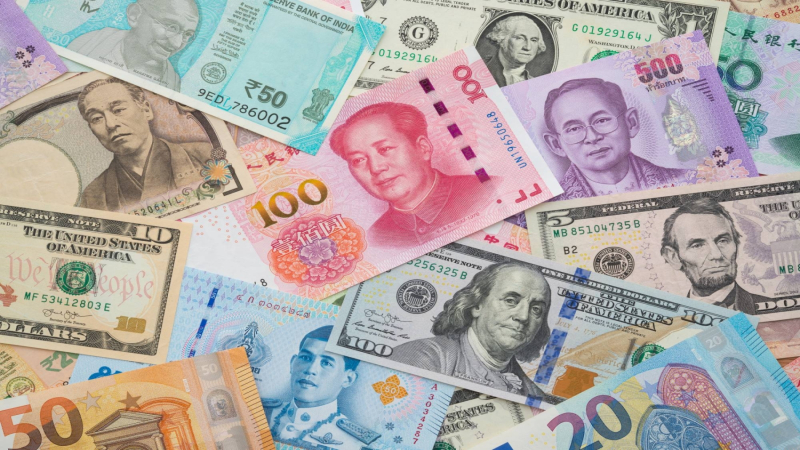
Asian currency markets ended 2025 in a notably calmer state than many expected, with the Indian rupee offering a clear example of how stability can emerge even when global conditions remain uncertain. Rather than experiencing sharp swings, the rupee spent much of the year trading within a controlled range, supported by policy management and balanced capital flows.
This pattern reflects a broader Asia FX theme. Instead of reacting aggressively to every shift in U.S. monetary expectations, regional currencies increasingly responded to local fundamentals and funding conditions. The result was a more measured currency environment, where range trading replaced trend chasing and volatility remained contained.
Why the Rupee Stayed Range Bound in 2025
The Indian rupee’s range bound behavior was not accidental. It was the outcome of active policy management combined with improving structural buffers. While global flows softened at times, authorities prioritized stability over short term appreciation or depreciation, smoothing excess volatility rather than targeting a specific level.
Domestic demand remained resilient enough to offset weaker external inflows, while reserves provided confidence that disorderly moves would be resisted. This encouraged market participants to trade the rupee tactically rather than position for large directional breaks. Over time, that behavior reinforced the range itself.
For investors, the message was clear. The rupee was not offering trend driven returns, but it was also not presenting systemic risk. That balance made it suitable for carry strategies and hedged exposure rather than speculative positioning.
Sliding Forward Premiums and What They Signal
One of the most important developments beneath the surface was the steady decline in forward premiums. This reflected easing demand for dollar hedging and a more balanced supply of foreign exchange. When forward premiums fall, it often signals that dollar scarcity is easing and that funding stress is receding.
In India’s case, this trend suggested that local institutions and corporates were less pressured to lock in expensive dollar cover. As hedging costs declined, the urgency to source dollars in the spot market also diminished. This helped reinforce rupee stability even during periods of global uncertainty.
Lower forward premiums also influenced portfolio behavior. Foreign investors became more comfortable maintaining exposure without excessive hedging costs, supporting steady inflows rather than volatile swings.
The Broader USD Funding Angle in Asia
Across Asia, dollar funding conditions played a central role in shaping FX outcomes. When dollar liquidity is tight, regional currencies often weaken as institutions scramble for funding. In 2025, that dynamic was less pronounced. Funding markets functioned more smoothly, reducing spillover pressure into spot FX.
This shift reflects changes in global market structure. Asian financial systems now rely less on short term external borrowing and more on domestic funding sources. As a result, dollar funding stress no longer translates automatically into currency stress.
For Asia FX, this represents an important evolution. It means currencies can trade more on domestic fundamentals and less on global liquidity shocks. That does not eliminate risk, but it does change how and when volatility emerges.
What Asia FX Traders Should Watch Into 2026
Looking ahead, the durability of this environment depends on whether funding conditions remain orderly. A sharp tightening in global liquidity or unexpected shifts in U.S. policy could still disrupt range trading behavior. However, the baseline outlook favors continued stability rather than abrupt dislocation.
Key indicators to monitor include forward premium trends, reserve adequacy, and cross border banking flows. These metrics often signal stress before it appears in spot prices. For the rupee specifically, maintaining inflation control and fiscal discipline will remain critical to preserving confidence.
Traders should approach Asia FX with a mindset focused on relative value and carry rather than directional bets. The region is offering fewer extremes, but more consistency.
Conclusion
The Indian rupee’s range trading in 2025 highlights how Asia FX has matured in its response to global forces. Sliding forward premiums and smoother dollar funding reduced pressure, allowing currencies to trade on fundamentals rather than fear. As 2026 approaches, stability rather than volatility remains the defining feature of the Asia FX landscape.