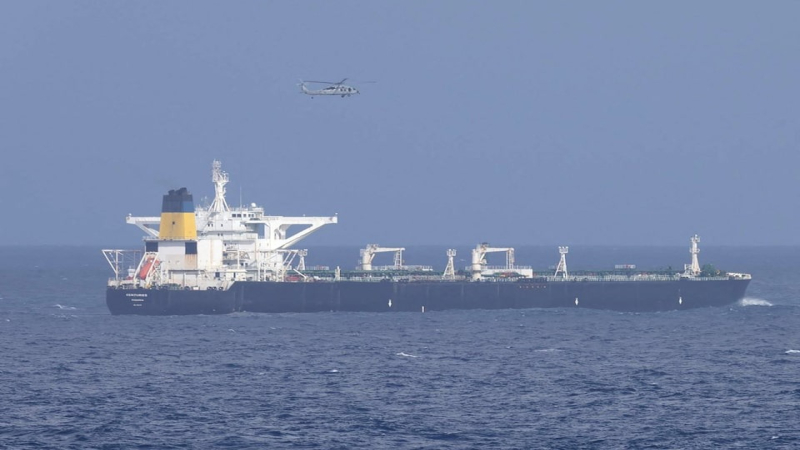
China has sharply criticized the United States over the interception of foreign oil tankers near Venezuela, warning that the actions undermine international law and threaten global trade stability. Beijing said the seizure of vessels carrying sanctioned crude represents a unilateral escalation that risks disrupting legitimate commercial activity. The remarks followed the interception of a China bound tanker in international waters, an episode that has drawn attention across diplomatic and energy markets. Chinese officials emphasized that Venezuela retains the right to trade freely with international partners and reiterated opposition to sanctions imposed outside multilateral frameworks. The incident highlights how enforcement actions tied to sanctions policy are increasingly spilling into contested maritime zones, raising questions over jurisdiction, legal precedent, and the limits of unilateral power in global shipping lanes.
The interception came days after Washington announced tougher measures targeting tankers linked to Venezuelan oil exports. U.S. officials have argued that such vessels form part of a sanctions evasion network, operating under false registrations and flags of convenience. According to official statements, the seized tanker was carrying a substantial volume of Venezuelan crude intended for delivery to Asian buyers. Caracas has condemned the move as an act of piracy, adding to the diplomatic fallout. The dispute underscores how energy sanctions are no longer confined to financial channels but increasingly enforced through physical control of transport routes, a shift that raises operational and legal risks for traders, insurers, and shipping firms involved in sensitive supply chains.
For China, the issue carries both legal and economic significance. The country remains the largest buyer of Venezuelan crude, relying on intermediaries to secure supplies amid longstanding restrictions. Any disruption to these flows could complicate procurement strategies and increase costs, even if volumes represent a small share of overall imports. More broadly, Beijing views the seizures as setting a dangerous precedent for international commerce, particularly for energy trade that depends on open sea lanes. The situation also feeds into wider tensions between major powers over the use of sanctions as a policy tool, with China consistently arguing that such measures distort markets and erode trust in global governance structures.
The episode adds another layer of uncertainty to already fragile energy and trade dynamics. Markets are watching closely to see whether enforcement actions expand further or provoke retaliation through diplomatic or economic channels. For shipping and commodity markets, the risk lies less in immediate supply loss and more in the chilling effect on trade flows as companies reassess exposure to politically sensitive routes. As geopolitical frictions intensify, the line between sanctions enforcement and maritime security is becoming increasingly blurred. The outcome of this dispute may influence how future sanctions are implemented and contested, with implications that extend well beyond Venezuela and into the broader architecture of global trade.