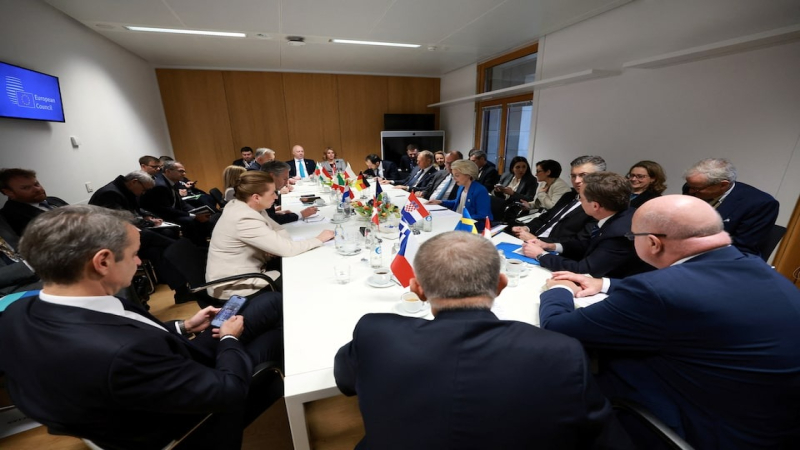
European Union leaders agreed to provide Ukraine with up to 90 billion euros in financial support over the next two years, offering Kyiv a critical funding lifeline as the war with Russia continues to strain public finances. The decision was reached after intense discussions at a summit in Brussels, where leaders opted for a loan financed through EU borrowing rather than an earlier proposal to use frozen Russian sovereign assets. Ukrainian officials welcomed the outcome, describing it as a significant boost to economic resilience at a time when budget pressures are mounting and external financing remains essential. Without continued European support, officials warned that Ukraine would face severe fiscal stress next year, undermining its ability to sustain military operations and basic state functions. The agreement underscores the EU’s commitment to maintaining long term backing for Ukraine despite internal political and legal constraints.
The original proposal to fund the loan using frozen Russian assets proved too divisive, particularly due to concerns over legal exposure and potential retaliation. A large share of those assets is held in Belgium, raising fears about financial stability and the precedent such a move could set for reserve holdings in the euro zone. Russian officials openly welcomed the lack of an agreement on asset confiscation, arguing that such measures would damage trust in European financial institutions. EU leaders acknowledged these risks and instead chose a more conventional borrowing structure that could attract sufficient investor demand. While some policymakers expressed disappointment that a bolder solution was not achieved, others emphasized that securing reliable funding quickly was more important than pursuing a legally complex approach that could delay support for Ukraine.
The loan package also carries broader implications for European fiscal policy and debt coordination. By borrowing collectively, the EU is reinforcing its role as a central financial actor during periods of geopolitical stress, following precedents set during previous crises. Analysts noted that market appetite for EU backed debt remains strong, reducing concerns about financing costs despite already elevated borrowing levels across the bloc. For Ukraine, the funds are expected to cover essential budget needs and stabilize the economy as the conflict drags on. Politically, the compromise reflects a balancing act between solidarity with Kyiv and safeguarding the integrity of Europe’s financial system. While the debate over Russian assets may resurface in the future, the immediate outcome delivers tangible support that EU leaders believe is sufficient to maintain momentum and credibility in their backing of Ukraine.