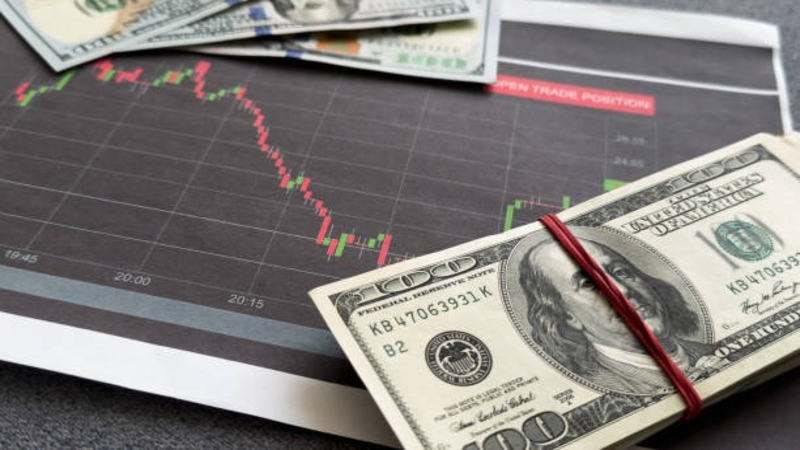
Currency markets are showing an unusual calm even as the global policy calendar grows crowded. Major central bank meetings, key economic releases, and fiscal updates are approaching, yet price swings in foreign exchange remain muted. This disconnect between event risk and realized volatility has become one of the defining features of current FX conditions.
The subdued response is not a sign that risks have disappeared. Instead, it reflects abundant liquidity and cautious positioning across markets. Participants are prepared for uncertainty, but they are not yet convinced that upcoming events will deliver a decisive shift in the macro outlook. As a result, currencies are trading within tight ranges despite a heavy flow of potential catalysts.
Ample Liquidity Is Dampening Market Reactions
The primary force keeping currency volatility contained is liquidity. Global financial conditions remain sufficiently loose to absorb shocks without forcing abrupt repricing. Even when data surprises or policy signals emerge, there is enough depth in markets to prevent disorderly moves.
Liquidity acts as a buffer by allowing participants to adjust positions gradually. Rather than rushing to hedge or unwind exposure, investors can wait for confirmation. This reduces the urgency that typically fuels volatility during high risk periods.
In this environment, markets prioritize stability over speed. Price discovery still occurs, but it unfolds over time instead of through sharp intraday swings. This dynamic explains why volatility measures remain low even as uncertainty persists.
Positioning Remains Light Ahead of Key Events
Another factor restraining volatility is cautious positioning. Many investors have reduced directional bets ahead of major policy decisions. Instead of committing to strong views, they are holding flexible positions that can be adjusted quickly once clarity improves.
Light positioning limits forced activity. When fewer participants are crowded into the same trade, there is less risk of sudden unwinds. This keeps price movements orderly, even when headlines suggest elevated risk.
The result is a market that appears calm on the surface but remains highly sensitive beneath. Volatility is not absent, it is deferred. Traders are waiting for signals that justify a more aggressive allocation of capital.
Policy Uncertainty Encourages a Wait and See Approach
While policy events are numerous, their expected outcomes are uncertain. Central banks are navigating complex trade offs between inflation control, growth support, and financial stability. This makes it harder for markets to anticipate clear directional guidance.
When outcomes are unclear, participants are less willing to price in extreme scenarios. Instead, they adopt a wait and see approach that favors range trading and reduced leverage. This behavior suppresses volatility even when the policy backdrop is active.
Currencies are therefore reflecting uncertainty through indecision rather than turbulence. Prices move, but they do not accelerate until expectations become more defined.
Volatility Shifts From Spot to Underlying Conditions
Although spot currency volatility is subdued, this does not mean risk has vanished. Volatility is shifting into less visible areas such as liquidity premiums, funding costs, and cross currency basis dynamics. These structural signals often move ahead of spot prices.
Investors focused solely on headline FX levels may miss these early warnings. Subtle changes in liquidity conditions can precede larger market adjustments once confidence shifts. Monitoring these indicators provides a clearer picture of underlying stress.
This quiet phase can persist longer than expected, but it rarely lasts indefinitely. When liquidity tightens or positioning rebuilds, volatility can return quickly and forcefully.
Conclusion
Currency volatility remains low despite a dense schedule of policy events because liquidity is abundant and positioning is cautious. Markets are absorbing uncertainty without dramatic price moves, choosing patience over reaction. However, subdued volatility does not eliminate risk. It masks it. As liquidity conditions evolve and policy outcomes become clearer, the calm in FX markets may give way to sharper adjustments.