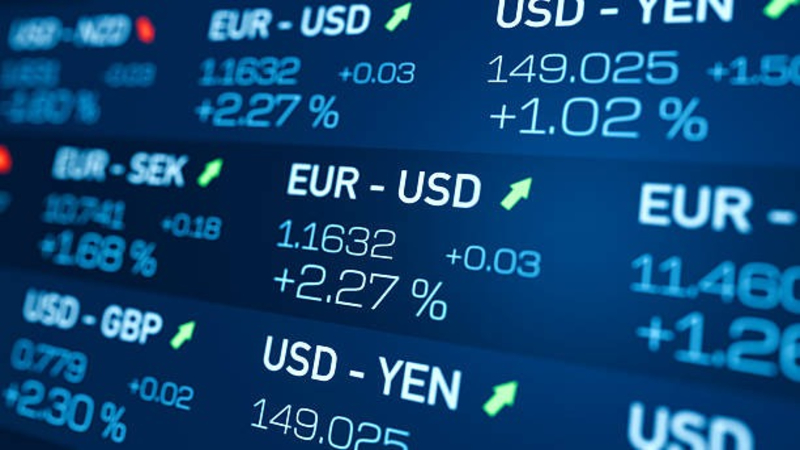
Foreign exchange markets are undergoing a structural shift as FX forwards increasingly dominate price discovery. While spot trading still sets headline levels, it is no longer the primary arena where risk is managed. Corporates, asset managers, and macro funds are relying more heavily on forward contracts to navigate currency exposure in an environment defined by policy uncertainty and uneven growth.
This change reflects a deeper adjustment in how market participants think about risk. Instead of reacting to daily price moves, participants are locking in future currency outcomes. As a result, forward curves, implied carry, and rollover costs are playing a larger role in shaping FX behavior than short term spot flows.
Hedging Demand Is Reshaping FX Market Structure
The rise in forward market activity is being driven by persistent hedging demand. Companies with cross border revenues and costs are prioritizing protection over opportunistic gains. Rather than timing spot conversions, they are choosing certainty through forward contracts that reduce earnings volatility.
This behavior alters the balance of the FX market. When hedging demand increases, forward pricing absorbs much of the flow that would otherwise hit spot markets. This reduces spot volatility while increasing the importance of forward points and curve dynamics.
As hedging becomes more systematic, it also becomes less sensitive to daily news. This dampens immediate reactions in spot FX and shifts attention toward longer dated expectations embedded in forward markets.
Spot Volumes Decline as Structural Flows Rise
Spot trading remains active, but its role has changed. Short term traders still operate in spot markets, yet they account for a smaller share of overall FX flow. Larger institutional players increasingly execute through forwards, swaps, and rolling hedges.
This shift explains why spot currencies can appear disconnected from macro headlines. When the majority of risk is managed off spot, price reactions become more muted and less directional. Spot levels often reflect residual positioning rather than dominant market conviction.
Forward markets, by contrast, capture structural demand. They reveal where participants are willing to commit capital over time, offering a clearer view of underlying currency preferences.
Forward Curves Carry the Policy Signal
As spot markets lose dominance, forward curves have become more informative. Interest rate differentials, expected policy paths, and funding conditions are directly embedded in forward pricing. Traders now watch these curves as closely as economic data releases.
When expectations shift, they often show up first in forward points rather than spot rates. This is especially true in periods of policy uncertainty, when markets are unsure how central banks will respond to evolving conditions.
In this context, the shape of the forward curve acts as a barometer of confidence. Steeper or flatter curves signal how markets are positioning for future rate environments, even when spot prices remain range bound.
Volatility Shifts From Price to Structure
Another consequence of rising forward usage is a change in how volatility manifests. Instead of sharp spot moves, volatility increasingly appears in carry returns, hedge costs, and roll dynamics. This makes FX risk less visible but not necessarily smaller.
For investors, this requires a different analytical approach. Monitoring spot charts alone is no longer sufficient. Understanding FX structure means tracking hedging ratios, forward spreads, and changes in implied funding conditions.
This structural volatility can persist even when headline FX levels appear stable. It reflects deeper uncertainty about growth, rates, and capital flows that is being managed quietly through forward markets.
Conclusion
FX forwards are no longer a secondary tool but a central driver of currency market behavior. As hedging demand overtakes speculative spot trading, market structure has shifted toward longer dated positioning and curve based signals. This reduces spot volatility while increasing the importance of forward pricing, carry dynamics, and structural analysis. Understanding FX today requires looking beyond spot levels and recognizing where risk is truly being managed.