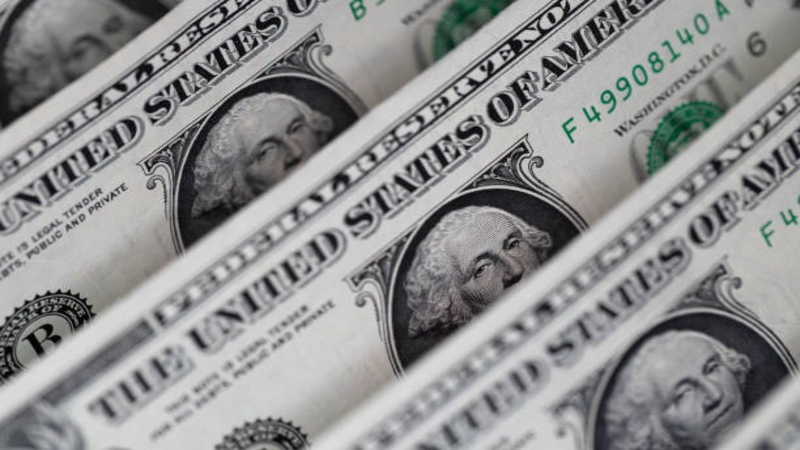
The US dollar is trading close to its quarterly lows as markets reassess the strength and durability of the current interest rate outlook. After months of positioning around a higher for longer narrative, recent data flow has weakened confidence in that assumption. Currency markets are responding less to isolated economic releases and more to the growing uncertainty around the policy path itself.
What stands out is not a single shock, but a gradual erosion of conviction. Traders are no longer confident that rate differentials alone can support the dollar at elevated levels. As expectations shift, the dollar’s sensitivity to yields has become less predictable, creating a more fragile pricing environment across major currency pairs.
Rate Expectations Are No Longer Anchoring the Dollar
For much of the past year, US rate expectations acted as a reliable anchor for the dollar. Higher yields and a resilient economy provided clear support, especially against lower yielding peers. That relationship has weakened as incoming data sends mixed signals about growth momentum, inflation persistence, and the timing of policy adjustments.
Markets are now pricing a narrower range of possible outcomes, not because risks have diminished, but because conviction has faded. When expectations lose clarity, the dollar struggles to attract directional flows. This has pushed the currency closer to recent lows even without a dramatic shift in headline rates.
The result is a dollar that reacts less forcefully to individual data points. Employment reports, inflation prints, and growth indicators are increasingly offset by doubts about their durability. This environment favors consolidation and gradual drift rather than decisive trend moves.
Yield Moves Matter Less When Confidence Erodes
Traditionally, falling yields would point to a weaker dollar, while rising yields would reinforce strength. That relationship has become less consistent. Recent moves in Treasury yields have not translated into proportional currency reactions, suggesting that markets are questioning the signal quality of rates themselves.
This disconnect reflects uncertainty over whether yield changes represent genuine shifts in policy outlook or short term positioning adjustments. When traders doubt the message behind yield movements, the dollar loses one of its most reliable drivers.
As a result, currency pricing becomes more vulnerable to broader risk sentiment. Instead of leading markets, rates are increasingly reacting to the same uncertainties that are weighing on the dollar.
Global Rate Differentials Are Narrowing
Another factor pressuring the dollar is the gradual narrowing of global rate differentials. Several major central banks have already adjusted policy or signaled a willingness to respond to slowing growth. As the gap between US rates and those abroad stabilizes, the relative advantage that supported the dollar fades.
This does not imply an immediate reversal, but it does reduce the incentive for aggressive dollar long positions. When carry advantages plateau, investors become more selective and less willing to overlook other risks such as fiscal pressures or growth uncertainty.
The dollar’s current position reflects this recalibration. It is not collapsing, but it is no longer commanding the same premium based purely on yield appeal.
Markets Shift Toward Patience and Optionality
With conviction low, market behavior has shifted toward patience. Positioning is lighter, reactions are smaller, and traders are more cautious about extrapolating trends. This dynamic keeps the dollar close to key support levels without triggering a decisive breakdown.
In this environment, optionality becomes valuable. Markets are waiting for clearer confirmation before committing to a new directional bias. Until rate expectations regain clarity, the dollar is likely to remain range bound, sensitive to sentiment shifts rather than fundamentals alone.
This phase often precedes larger moves, but timing depends on whether policy signals regain coherence or uncertainty deepens further.
Conclusion
The dollar’s move toward quarterly lows reflects a deeper issue than short term data surprises. Rate expectations have lost their ability to anchor currency pricing with confidence. As yields send mixed signals and global differentials stabilize, the dollar faces a more fragile support structure. Until markets regain conviction in the policy outlook, dollar strength is likely to remain constrained and reactive rather than decisive.