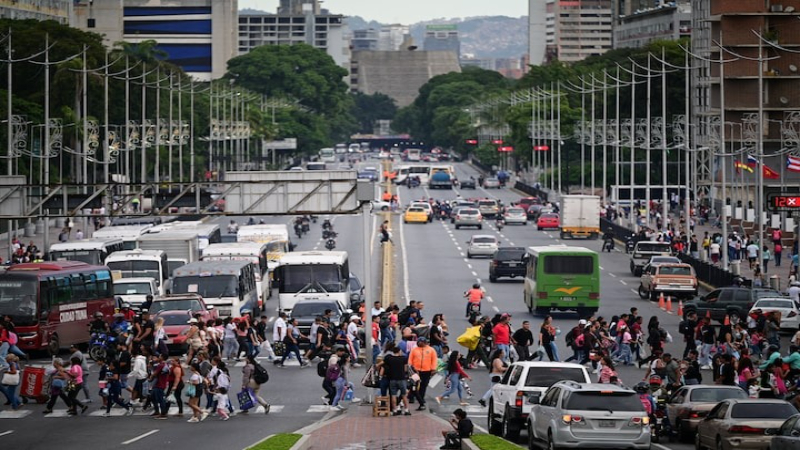
Washington’s decision to blockade sanctioned oil tankers moving in and out of Venezuela is likely to further restrict foreign currency inflows into the economy, reinforcing inflationary pressure and weakening private sector liquidity. Oil exports remain Venezuela’s primary source of dollars, and any disruption to shipments directly reduces the pool of foreign currency circulating through official and informal channels. Analysts and business leaders warn that the move could sharply limit access to dollars and dollar linked instruments used for imports, wages, and pricing. With sanctions already constraining revenue, the blockade introduces an additional choke point in the country’s external accounts. Inflation, already among the highest globally, is expected to accelerate as fewer hard currency flows filter into domestic markets and businesses face higher costs to secure imported inputs.
The transmission channel runs primarily through oil revenues that are exchanged via central bank mechanisms and parallel markets. Companies operating in Venezuela are required to convert bolivars into dollars generated by crude exports and foreign card transactions, a system that depends on steady export flows. As buyers demand deeper discounts and adjust contract terms to reflect higher risk, net proceeds to the country are likely to fall even if shipments continue. Estimates suggest that government allocations of foreign currency to the private sector have already declined year over year, and further reductions would tighten conditions for manufacturers and retailers. The effect is not limited to cash dollars, as access to dollar linked cryptocurrencies has also become an important liquidity source, particularly for trade settlement and savings.
From a macro perspective, the situation highlights how external pressure translates rapidly into domestic price instability in economies with limited monetary credibility. Reduced dollar availability tends to push more transactions into informal channels, weaken the local currency, and accelerate price adjustments. Even as authorities signal that exports are ongoing, uncertainty alone can dampen supply and hoarding behavior can amplify shortages. For dollar observers, Venezuela’s case underscores the power of external financial constraints in shaping inflation dynamics without direct intervention in monetary policy. As oil revenue remains the dominant conduit for foreign exchange, any sustained disruption is likely to reinforce the feedback loop between dollar scarcity, currency weakness, and rising prices across the economy.