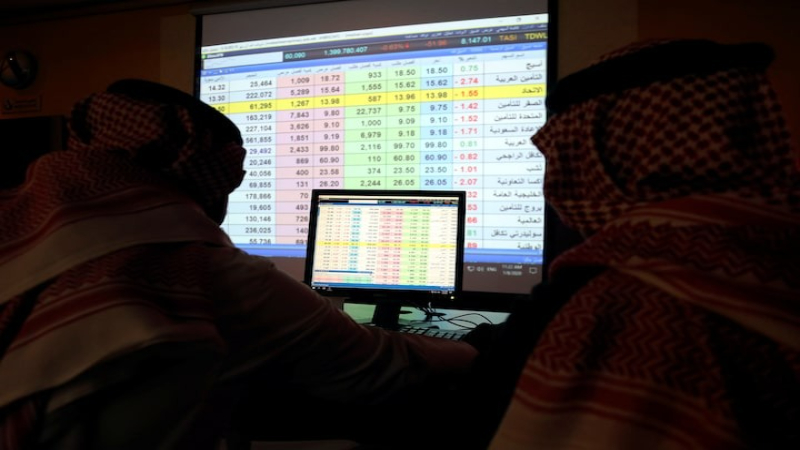
Equity markets across the Gulf region traded with limited direction as investors turned cautious ahead of key US economic data that is expected to shape near term expectations for interest rates and global liquidity conditions. The subdued performance reflected a broader wait and see approach as markets absorb the implications of delayed US indicators following the recent government shutdown. For Gulf economies, the upcoming data carries added significance because local currencies are closely tied to the US dollar, making shifts in US monetary policy a direct influence on financial conditions across the region. As a result, investor positioning remained restrained, with market participants avoiding aggressive bets until greater clarity emerges on the direction of US growth and inflation.
The link between US policy and Gulf markets remains structural. Most regional currencies are pegged to the dollar, meaning changes in US interest rates transmit quickly through local funding costs, asset valuations, and capital flows. Recent signals from the Federal Reserve suggesting a pause after a series of rate cuts have reinforced caution, particularly in equity markets sensitive to liquidity conditions. Sector level moves reflected this balance, with gains in select defensive and domestic focused stocks offset by weakness in banking and industrial names. The overall tone suggested that investors are prioritizing capital preservation as they assess whether US data will validate expectations of policy stability or introduce renewed uncertainty.
Beyond the Gulf, developments in neighboring markets offered a contrast. Egyptian equities extended gains, supported by company specific developments and improving sentiment toward domestic growth prospects. This divergence highlights how markets with more flexible currency regimes can react differently to the same global signals. For the US dollar, these dynamics underline its continued role as a central anchor in regional financial systems. Even modest changes in expectations around US data can influence equity and currency markets far beyond US borders, reinforcing the dollar’s importance in shaping global risk appetite and investment flows.
As the week progresses, attention will remain firmly on US employment and inflation figures. These releases are expected to clarify whether recent policy adjustments have succeeded in cooling the economy without undermining growth. For Gulf markets, the outcome matters less for local fundamentals and more for what it implies about dollar stability and interest rate alignment. Until that picture becomes clearer, muted trading conditions are likely to persist, reflecting a cautious approach to risk in an environment where global signals remain tightly linked to US macro outcomes.