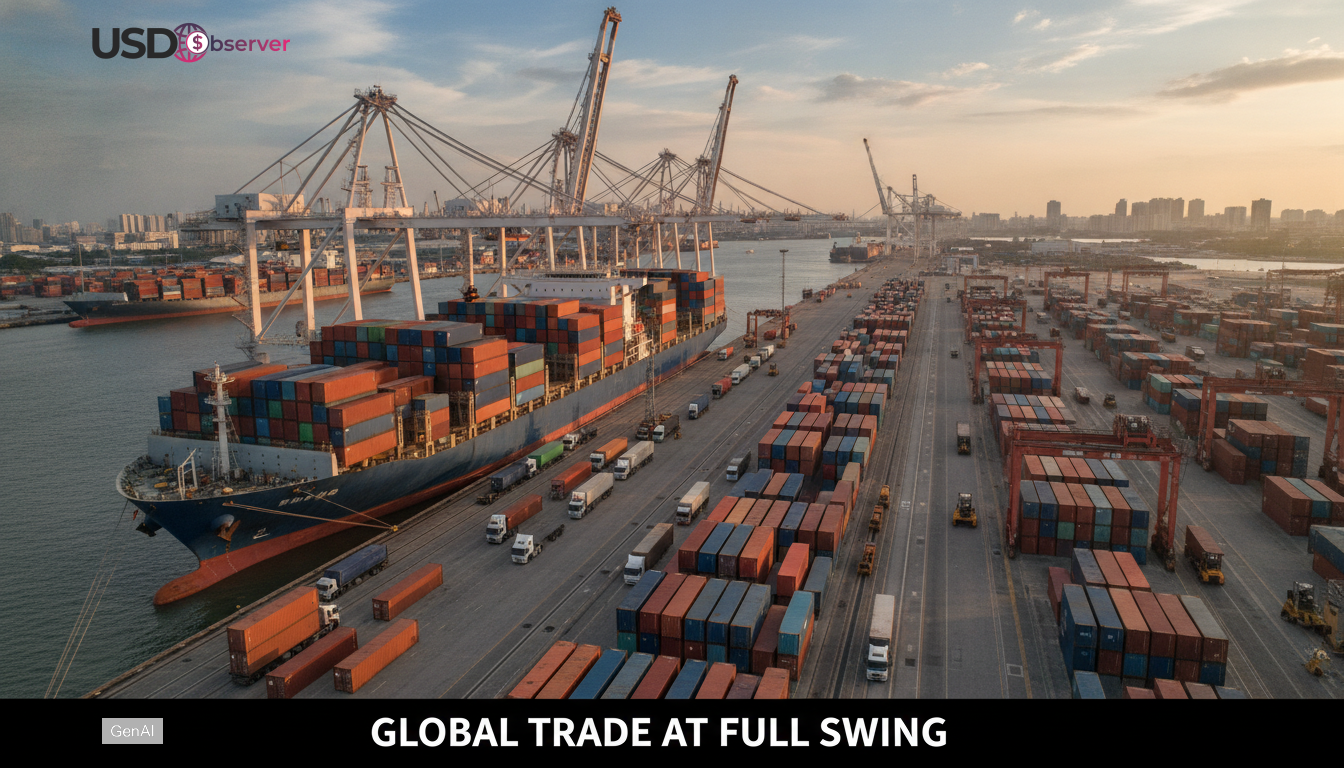
Global financial markets continue to rely on the US dollar as their primary anchor, even as discussions around multipolar currencies and diversification grow louder. During periods of calm, this dependence may seem less visible. However, when uncertainty rises, market behavior consistently reveals where trust and liquidity ultimately concentrate.
The dollar’s anchoring role is not driven by sentiment alone. It is reinforced by decades of institutional development, deep financial markets, and predictable legal frameworks. These foundations ensure that when global systems are tested, participants instinctively move toward the dollar rather than away from it.
Safe Haven Demand Strengthens Dollar Centrality
The dollar consistently attracts safe haven flows during periods of geopolitical tension, financial stress, or economic uncertainty. Investors seek assets that preserve value, maintain liquidity, and allow rapid repositioning. Dollar based assets fulfill these needs more effectively than any alternative at scale.
This behavior extends beyond private investors. Governments, central banks, and multinational institutions also increase dollar exposure when risks rise. The repetition of this pattern across cycles reinforces the perception that the dollar is the default refuge when confidence weakens elsewhere. Safe haven demand is therefore both a cause and a consequence of dollar dominance.
Crisis Liquidity Favors The Dollar
Liquidity becomes the most valuable asset during financial crises. The dollar benefits from the deepest and most flexible liquidity pools in the world, spanning government bonds, money markets, and global banking networks. This allows large volumes of capital to move without destabilizing prices.
In moments of stress, market participants prioritize access over yield. Dollar liquidity ensures that obligations can be met and positions can be adjusted quickly. Other currencies may remain stable, but few offer the same capacity to absorb global demand during crisis conditions. This reinforces the dollar’s role as the ultimate liquidity backstop.
Structural Trust Underpins Market Behavior
Trust in the dollar is built on institutional credibility rather than short term performance. Investors rely on transparent legal systems, consistent policy frameworks, and long established market practices. These elements reduce uncertainty and support long term confidence in dollar based assets.
Structural trust also reflects expectations about future behavior. Market participants believe that dollar markets will remain open, liquid, and governed by predictable rules. This expectation influences decision making during periods of stress, when trust matters more than marginal returns.
Reserve Management Reinforces The Anchor Role
Central banks play a critical role in sustaining the dollar’s position as a global anchor. Reserve portfolios prioritize assets that can be mobilized quickly and reliably. Dollar reserves offer unmatched functionality for currency stabilization, trade settlement, and financial intervention.
Even as reserve diversification progresses gradually, the dollar remains central because alternatives cannot yet provide comparable scale or operational flexibility. This reinforces a feedback loop where reserve accumulation supports dollar liquidity, which in turn strengthens trust in the system.
Global Financial Infrastructure Remains Dollar Centered
Payment systems, trade invoicing, debt markets, and derivatives infrastructure are all heavily dollar based. This embedded role makes rapid transition away from the dollar costly and complex. Market participants prefer adapting within existing systems rather than replacing them entirely.
As new technologies and financial instruments emerge, they often integrate with dollar infrastructure rather than bypass it. This continuity ensures that innovation strengthens the existing framework instead of dismantling it. The dollar remains the reference point around which global finance evolves.
Alternatives Face Structural Constraints
While other currencies and assets gain regional relevance, they face limitations in liquidity, accessibility, and trust. Fragmented markets, capital controls, or limited financial depth reduce their ability to function as global anchors. These constraints become most apparent during periods of stress.
As a result, diversification efforts tend to complement rather than replace the dollar. Markets may reduce marginal exposure, but they continue to rely on the dollar for core stability. Structural constraints ensure that alternatives cannot easily assume the same role.
Conclusion
Global markets continue to treat the dollar as the ultimate anchor because it provides safe haven reliability, crisis liquidity, and deep structural trust. Reserve behavior, financial infrastructure, and repeated stress cycles reinforce this role. Until another system offers comparable scale, liquidity, and credibility, the dollar will remain the foundation of global financial stability.