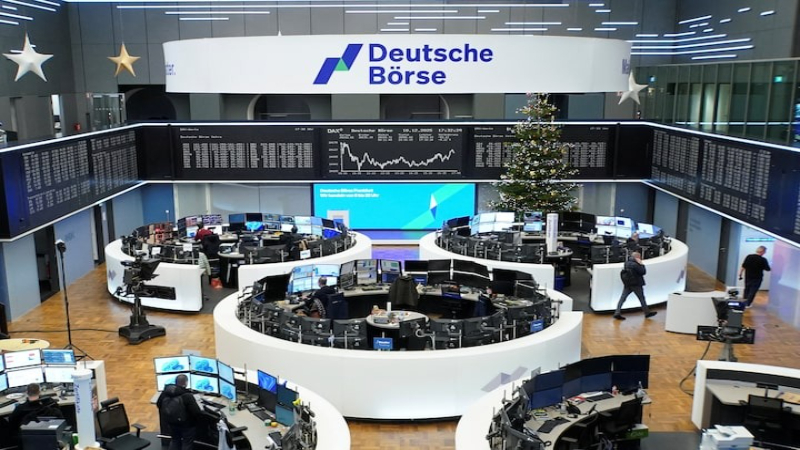
European equity markets closed higher as investors reacted to the Federal Reserve’s latest rate cut and assessed signals from central banks that are shaping expectations for global monetary conditions. The STOXX 600 advanced after several muted sessions, supported by optimism that the Fed’s incremental easing could provide near term stability even as policymakers adopt a more cautious tone about future reductions. Gains across major regional indices, including France’s CAC 40 and the FTSE 100, helped offset pressure from weakness in technology stocks triggered by concerns about elevated valuations. Analysts noted that the interplay between US monetary adjustments and European rate expectations remains central to market positioning, especially as investors evaluate how the Fed’s message aligns with evolving inflation dynamics and the trajectory of global yields. With nearly three quarters of STOXX sectors in positive territory, the market response reflected renewed appetite for cyclical and financial names that tend to benefit from improving growth prospects.
The Swiss National Bank’s decision to hold rates steady at zero added another layer to the day’s broader assessment of global policy trends. Its acknowledgment that reduced US tariffs on Swiss goods had improved the economic outlook supported gains in domestic equities while the franc strengthened modestly against the euro. This development occurred as European banks gained momentum, bolstered by strong outlooks for returns on tangible equity and supportive analysis from major brokerages. Italian and Dutch lenders performed particularly well, contributing to sector leadership within the index. Market observers highlighted that relative currency stability in Europe, combined with constructive economic signals, has helped offset some of the uncertainty stemming from global geopolitical tensions and sector specific concerns. The combination of supportive policy cues and resilient earnings expectations provided investors with a clearer gauge of near term risks and opportunities across European assets.
The broader rate environment continued to influence equity and currency flows as traders positioned around expectations for future moves by the Fed and European Central Bank. Investors see a rising probability that White House economic adviser Kevin Hassett may become the next Fed chair, a prospect that many believe could accelerate the path of easing next year. Meanwhile, European regulators signaled a willingness to simplify aspects of bank oversight, though concerns about the broader cost burden persisted. The market also saw mixed performance across sectors, including declines in utilities following a major stake sale in Naturgy and weakness in aerospace and defense names amid heightened geopolitical sensitivity. Construction and travel stocks rallied on improving sentiment, while luxury names recovered slightly after recent losses. As investors continue to assess how shifting global rate expectations influence asset pricing, the dollar’s direction and relative yield outlook remain central to understanding capital flows between the United States and Europe.