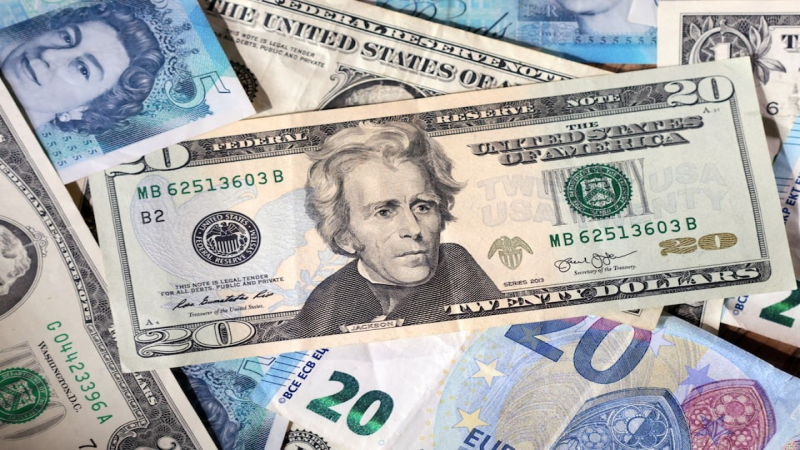
The dollar extended its decline as global currency markets reassessed the Federal Reserve’s latest policy signals, with many traders viewing the central bank’s communication as less hawkish than anticipated. The greenback’s pullback came after a volatile session marked by shifting expectations around the Fed’s interest rate trajectory and a broader rotation into currencies outperforming the USD. Market sentiment tilted toward caution as major indices softened, partly due to weaker risk appetite triggered by disappointing earnings in the US technology sector. This combination of softer economic signals and recalibrated policy expectations kept the dollar under pressure against the euro and sterling, which both advanced to multi week highs. Analysts noted that traders had positioned for stronger hawkish language, and the absence of that tone encouraged further unwinding of long dollar positions.
The yen and Swiss franc also strengthened as investors moved into currencies typically favored during periods of reduced US yield advantage. The dollar dipped against the yen following a previous day’s decline as US short term rates adjusted lower after the Fed’s decision. Meanwhile, the Swiss National Bank’s decision to keep interest rates steady supported the franc, helping it reach a three week high against the dollar. Switzerland’s improved economic outlook, supported by reduced tariff exposure and stable inflation trends, added to the franc’s bullish momentum. Traders observed that the SNB’s steady stance reinforced the appeal of the currency at a time when US policymakers signaled a more balanced posture toward future moves. With key central banks diverging in tone and forward guidance, currency markets saw increased two way activity that reflected shifting views on global monetary alignment.
Additional pressure on the dollar came from the Fed’s announcement that it will begin purchasing short dated Treasury bills to stabilize liquidity conditions beginning December 12. The initial round of purchases is set at approximately 40 billion dollars, prompting renewed demand for Treasuries and pushing yields lower across the curve. Lower yields typically weaken the dollar’s relative appeal, and this dynamic played out as buyers stepped into the bond market. The recalibration in dollar strength also intersected with reduced risk appetite across commodities and crypto assets. The Australian dollar fell after weak employment data, while major cryptocurrencies declined as investors reacted to broader market softness. Analysts pointed out that even with a softer policy backdrop, leveraged positions in digital assets remain vulnerable to macro shifts, contributing to slower reactions in crypto markets. Overall, traders continued evaluating how evolving global conditions may influence the dollar’s near term trajectory.