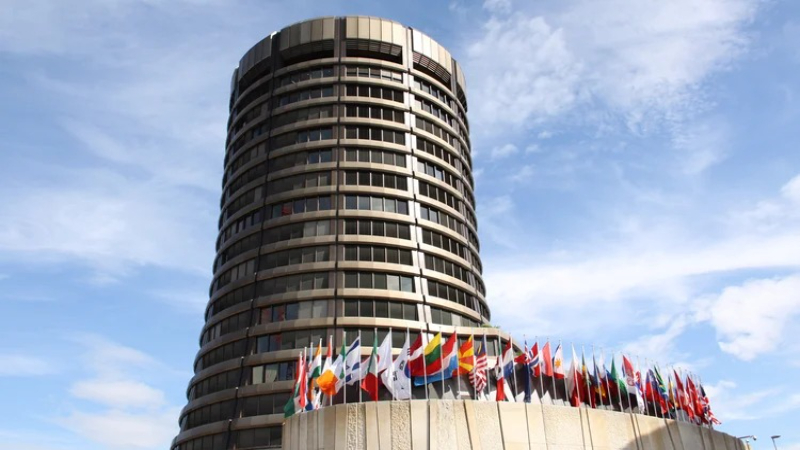
The Bank for International Settlements has issued a new warning about rising short term USD funding risks across global banks as liquidity conditions tighten and refinancing costs increase. The latest assessment highlights growing reliance on wholesale dollar markets at a time when elevated US interest rates and shifting capital flows are reshaping international funding dynamics. Banks operating outside the United States are particularly exposed due to their dependence on offshore dollar markets, swap lines, and short duration borrowing channels.
The report comes as financial institutions adjust to a landscape defined by high funding costs, stronger regulatory scrutiny, and persistent macroeconomic uncertainty. While the global banking system remains stable, the BIS notes that short term funding pressures can escalate rapidly if market sentiment turns or if large institutions face unexpected liquidity demands. These conditions require renewed attention to liquidity buffers, risk management strategies, and the structure of cross border funding networks.
Dollar liquidity tightens as global banks rely more on short term markets
The most important concern is the increased dependence on short term dollar funding at a time when global liquidity has become more constrained. Banks outside the United States continue to borrow dollars through instruments such as commercial paper, certificates of deposit, and repo transactions. Elevated US interest rates have made these channels more expensive and more sensitive to market shifts.
As dollar yields remain high, the cost of rolling over short term funding has increased sharply. Banks that rely on frequent refinancing face greater vulnerability during periods of market stress. Any disruption in short term funding markets could create liquidity gaps that require emergency measures or central bank support. The BIS stresses that these vulnerabilities are more pronounced for institutions operating in smaller financial centers or those with limited access to stable dollar funding sources.
Demand for dollar liquidity has also risen across global markets as companies seek to manage trade flows, service external debt, and protect against currency volatility. This adds pressure to an already tight funding environment and increases competition for short term financing.
Cross currency swap markets show signs of stress
Cross currency basis swap markets, which allow banks to obtain dollars by exchanging foreign currency funding, have shown renewed signs of stress. Wider swap spreads indicate that institutions are paying a premium to secure dollar liquidity. These premiums tend to rise during periods of financial uncertainty and reflect both market conditions and perceived counterparty risk.
The reliance on swap markets is a longstanding feature of international banking. However, when spreads widen sharply, it signals that participants are facing difficulty accessing dollars through regular channels. This increases overall funding risk and can spill over into other segments of the financial system. The BIS notes that swap market tensions must be monitored closely, particularly during periods of high volatility in global interest rates.
For banks with significant dollar liabilities, elevated swap costs can erode profitability and influence lending decisions. Some institutions may reduce USD denominated lending or tighten credit conditions to preserve liquidity, affecting broader economic activity in their home markets.
Regulatory reforms have strengthened buffers but challenges remain
Post crisis regulatory reforms have improved the resilience of global banks, with stronger liquidity coverage ratios, higher capital requirements, and more rigorous stress testing. These measures have helped limit systemic risk and provide more stability during sudden disruptions. However, the BIS cautions that regulatory buffers cannot fully eliminate the challenges posed by rapid shifts in dollar funding markets.
Short term funding risks require not only capital strength but also diversified access to stable dollar markets. Banks that depend heavily on wholesale funding remain exposed to abrupt changes in investor sentiment. The BIS suggests that institutions continue strengthening liquidity reserves and improving their monitoring of intraday funding flows to reduce the likelihood of sudden stress.
Policymakers may also need to evaluate whether current frameworks adequately account for cross border dollar funding dynamics, especially as global financial conditions tighten.
Central bank swap lines provide stability but are not a permanent solution
The BIS notes that central bank swap lines, especially those involving the Federal Reserve, remain a critical backstop during periods of market turmoil. These lines help provide emergency dollar liquidity to foreign banks when private funding markets become strained. However, the BIS emphasizes that swap lines are temporary tools and should not be viewed as substitutes for strong internal liquidity risk management.
While swap lines reduce the risk of systemic contagion, they depend on broad international cooperation. Their usage also requires careful coordination to avoid market distortions or perceptions of reliance on central banks for routine funding needs.
Conclusion
The BIS warning reflects growing concern about rising short term USD funding risks as global liquidity tightens and financing costs remain elevated. Banks outside the United States face increasing pressure from swap market stresses, higher refinancing costs, and strong demand for dollar liquidity. Strengthening buffers, improving funding diversification, and maintaining close coordination with regulators will be essential for managing risks as global financial conditions evolve.