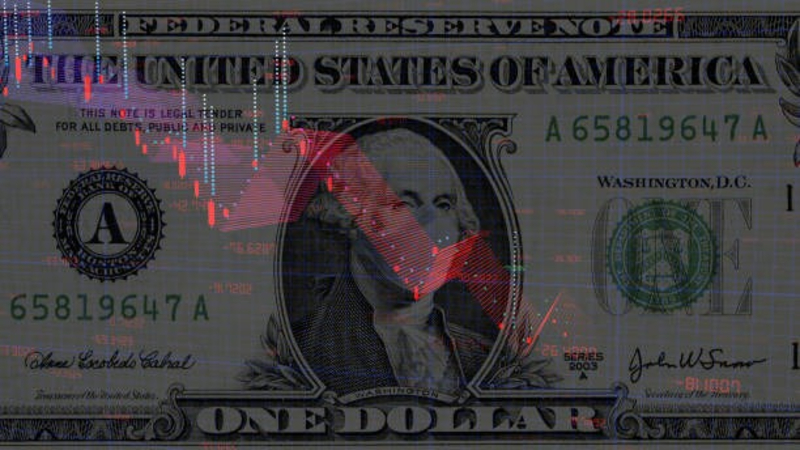
The dollar continued to weaken as investors increased their expectations that the Federal Reserve will move more aggressively on interest rate cuts in the coming months. The shift follows a series of softer labor and inflation readings that suggest the US economy is cooling at a faster pace than previously anticipated. Traders are now positioning around the view that monetary easing may begin earlier and proceed more quickly, putting downward pressure on the dollar across major currency pairs.
Market sentiment turned noticeably more cautious as Treasury yields fell and the dollar index recorded one of its longest streaks of consecutive daily declines this year. The recalibration of rate expectations is reshaping global currency flows, triggering renewed strength in several major currencies that had been under pressure through much of the year. The combination of weaker US data and shifting yield differentials is creating new dynamics in global forex trading that analysts expect will remain in focus throughout the quarter.
How the Shift in Federal Reserve Expectations Is Driving USD Weakness
The most significant catalyst behind the dollar’s decline is the growing belief that the Federal Reserve will cut rates sooner than previously anticipated. Softer consumer inflation, slower wage growth and signs of easing labor demand have boosted confidence that inflationary pressures are stabilizing. This reduces the urgency for the Fed to maintain restrictive policy levels. With rate cuts now being priced into the forward curve, the appeal of US assets relative to other major economies has diminished.
Lower yields typically reduce support for the dollar because investors receive smaller returns for holding US fixed income products. This effect becomes more pronounced when other central banks signal a willingness to maintain or even raise rates, narrowing or reversing yield differentials. As expectations shift, the dollar index moves in response, reflecting reduced demand for dollar denominated assets and greater interest in alternative currencies.
FX Markets Respond as Major Currencies Strengthen
The weakening dollar has provided a boost to currencies such as the euro, yen and several emerging market units. The euro responded to improving sentiment in the eurozone and gained additional traction as investors reassessed the relative policy stance between the Federal Reserve and the European Central Bank. Meanwhile, the yen strengthened as global risk appetite softened and as investors speculated that Japan may gradually adjust its monetary approach if domestic inflation maintains its recent trend.
Emerging market currencies also benefited from the softer dollar environment. Countries with high carry returns have historically seen inflows when the dollar weakens because investors feel more comfortable taking on additional currency exposure. The combination of rising risk appetite, improved local economic indicators and reduced dollar dominance has helped support these markets.
Global Bond Markets Reinforce Dollar Downtrend
A shift in global bond markets strengthened the downward pressure on the dollar. US Treasury yields continued to fall as investors priced in economic softness and higher odds of monetary easing. Declining yields typically signal that investors expect slower growth ahead, which can weaken a currency if it reduces foreign investment into government debt.
At the same time, several global bond markets experienced renewed interest. Investors seeking diversification added positions in European and Asian bonds as yield spreads narrowed. These flows also contributed to the dollar’s decline, as capital rotated out of the United States and into a broader mix of global assets.
What the Dollar’s Decline Means for Global Markets
A sustained weakening in the dollar carries far reaching implications. A softer dollar can help ease financial conditions for emerging economies that rely heavily on dollar denominated borrowing, reducing repayment burdens and improving liquidity. It can also influence commodity markets, where key assets like oil and gold typically move inversely to the dollar. For multinational corporations, currency shifts may affect earnings, trade competitiveness and cross border investment strategies.
Investors are now watching for additional economic data and upcoming Federal Reserve communications to determine whether the trend will continue. The path of the dollar will depend largely on the pace and scale of anticipated rate cuts and on how global economies respond to the shifting policy landscape.
Conclusion
The dollar’s extended decline reflects a meaningful recalibration of expectations surrounding Federal Reserve policy and the broader economic outlook. Softer US data, falling Treasury yields and shifting global capital flows have created a market environment that favors other major currencies while pressuring the dollar. Investors will now focus on incoming economic indicators and central bank signals to assess whether the dollar’s downtrend marks a temporary adjustment or the beginning of a longer cycle.