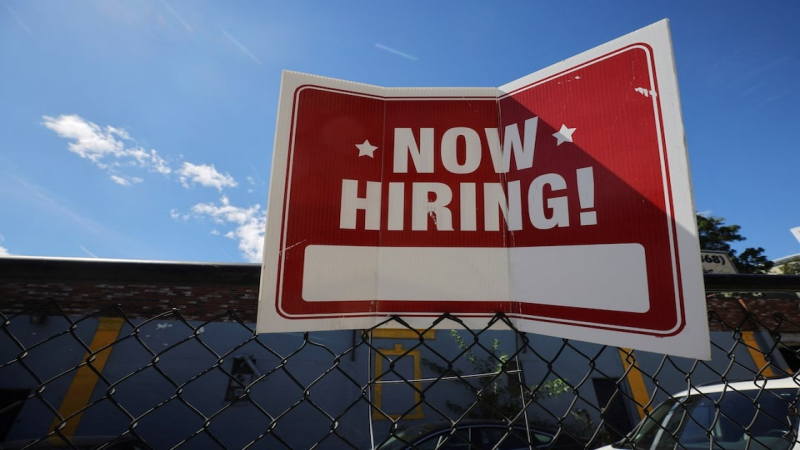
Weekly jobless claims in the United States fell to their lowest level in more than three years, easing concerns that the labor market was sliding into a sharper downturn and offering a mixed signal to investors assessing the Federal Reserve’s policy direction. Initial filings dropped by twenty seven thousand to a seasonally adjusted one hundred ninety one thousand for the week ending November twenty ninth, well below expectations and pointing to a labor market that remains stable despite softer readings from private payroll surveys. Analysts noted that distortions linked to the Thanksgiving holiday may have exaggerated the scale of the decline, though the broader trend still reflects resilience in hiring across major states. Unadjusted claims mirrored the improvement with sizeable drops across California, Texas, New York, Washington and Florida. The data reinforced the perception that the job market is cooling gradually rather than contracting abruptly, a key distinction for markets that are preparing for the central bank to begin trimming rates next week as growth moderates.
Economists said the decline in claims countered more pessimistic signals from alternative labor metrics that had suggested negative employment growth in November. Both private payroll data and independent assessments showed job losses, raising fears that economic momentum was weakening faster than anticipated. Despite this, the claims figures portray a labor market that remains in a holding pattern with companies cautious but not yet cutting staff at a pace associated with recessionary periods. Planned layoffs reported by Challenger, Gray and Christmas fell fifty three percent in November, though overall job cut announcements for the year remain significantly higher than in 2024 as sectors such as technology adjust headcount in response to increased integration of artificial intelligence tools. Employers have announced more than one point one million job cuts so far this year, indicating a significant level of restructuring even as the broader hiring environment avoids a steep decline. The divergence in data sources has added complexity for policymakers and investors attempting to determine the true strength of domestic labor conditions.
Financial markets have viewed the claims report through a macro lens as they weigh the implications for the dollar, yields and expectations ahead of the delayed November employment report now scheduled for December sixteenth. A persistently tight labor market could limit the extent of policy easing next year, while signs of further cooling may strengthen the argument for additional rate cuts. For the dollar, the latest decline in jobless claims contributes to a more nuanced outlook since short term resilience may temper downward pressure even as broader indicators point toward slowing economic activity. Currency traders are monitoring whether data continues to align with a soft landing narrative that would keep the dollar supported against some peers while easing against others as the rate cycle turns. With investors awaiting both the PCE inflation reading and the full employment report, the jobless claims data adds an important layer to the evolving assessment of the United States economic trajectory and its influence on global currency markets.