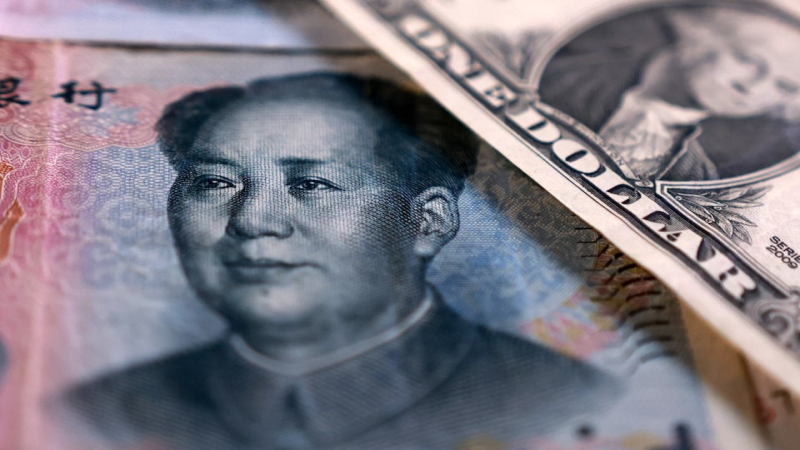
China’s major state owned banks stepped into the onshore market this week to absorb dollars and slow the yuan’s rapid appreciation, marking one of the more assertive interventions seen in recent months. The currency had surged to a fourteen month high before easing after reports of the dollar buying, highlighting how authorities sought to cool the pace of gains rather than reverse the overall upward trend. Market participants noted a meaningful shift in trading behavior as the banks held on to the dollars instead of recycling them through the swap market, a move that effectively tightened dollar liquidity and raised funding costs for traders attempting to maintain long yuan positions. This adjustment in strategy narrowed the profitability of yuan carry positions and signaled a more deliberate approach to smoothing its trajectory amid rising foreign interest in the currency. Following the intervention the yuan slipped toward 7.07 after an already softer than expected fixing contributed to early session weakness.
The broader context behind the move is linked to a steady strengthening of the yuan throughout the year as authorities consistently guided the midpoint higher than market expectations. The currency has gained more than three percent against the dollar year to date and is on track for its largest annual rise since 2020. Policymakers have signaled comfort with a firmer yuan as the country seeks to present stability to exporters, encourage cross border settlement and bolster the currency’s role in global transactions. However maintaining a controlled pace of appreciation remains critical as a sudden surge could prompt exporters to delay conversions or create volatility in inflows. The decision by state banks to temporarily tighten dollar liquidity appears aligned with this calibrated approach and adds to speculation that authorities are aiming to engineer a gradual, predictable rise that avoids sharp movements capable of unsettling corporate hedging behavior. Traders have also highlighted that long yuan positions have become harder to sustain as swap points fall, increasing the negative carry of holding the currency relative to the dollar.
The evolving dynamics between the dollar and yuan also come at a time when the global macro backdrop is exerting downward pressure on the greenback. With expectations firming for a Federal Reserve rate cut next week and the dollar index trading near a five week low, the environment has supported stronger performance among Asian currencies. Yet China’s authorities appear intent on ensuring that the yuan’s gains unfold in an orderly manner in line with macro objectives rather than market momentum alone. The combination of domestic policy guidance, deliberate smoothing operations and shifting global dollar sentiment has created a unique setup where the yuan’s appreciation remains intact but carefully moderated. For global investors tracking USD CNY, the latest actions provide insight into how finely tuned China’s currency management has become as it balances external perceptions of stability with internal considerations on liquidity, positioning and international adoption.