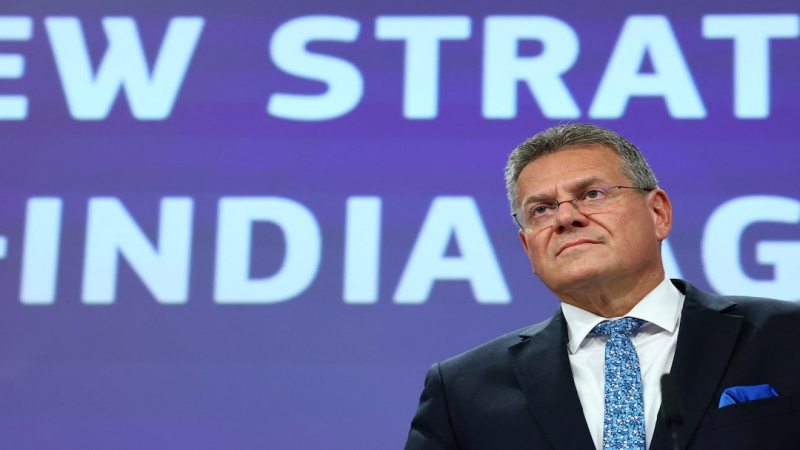
The European Commission outlined a sweeping strategy to strengthen the bloc’s economic security as persistent supply disruptions, geopolitical tensions and dependencies on critical Chinese exports reshape global trade priorities. The plan reflects a broader shift within Europe toward reducing reliance on single source supply chains, particularly for rare earths and advanced technologies where China maintains dominant market control. Recent years have exposed structural vulnerabilities across the bloc, from energy shocks triggered by Russia’s war in Ukraine to disruptions in semiconductor and metals supply during COVID and ongoing pressure from U.S. tariff measures. The new doctrine seeks to build a coordinated framework across member states to reinforce resilience, accelerate trade enforcement tools and direct investment toward sectors deemed strategically essential. Policymakers argue that Europe must act proactively to maintain competitiveness in industries such as batteries, artificial intelligence and advanced manufacturing, where both the United States and China are moving aggressively to expand domestic capacity.
Central to the Commission’s approach is an expansion of trade measures designed to counter market distortions and overcapacity, particularly in sectors increasingly shaped by subsidized competition. Officials aim to shorten timelines for implementing anti dumping and anti subsidy duties, which currently require lengthy investigations that often leave European firms exposed before corrective action is taken. The Commission also intends to review inbound investment rules, strengthen screening of high risk supply chains and provide targeted support to companies working to reduce reliance on foreign suppliers for critical inputs. Employment of diversification mandates is being considered, a policy shift that would require firms in strategic industries to source beyond a single high risk origin. EU leaders point to Japan’s post 2010 strategy following China’s rare earth export suspension as a model, highlighting successful diversification, recycling initiatives and long term partnership building that helped stabilize access to essential materials. Brussels is now targeting similar resilience efforts, including building reserves, encouraging domestic extraction and developing alternative supplier networks.
The new framework arrives at a moment when global currency and trade dynamics are increasingly influenced by geopolitical alignment, supply chain security and competitive industrial policy. For the United States, Europe’s shift carries implications for dollar denominated trade flows, commodity demand patterns and cross border investment strategies involving critical technologies. Europe’s decision to accelerate its REsourceEU plan and phase out Russian gas imports by 2027 reflects a continued pivot toward autonomy in energy and raw materials, trends that could alter traditional trade balances. Policymakers also emphasized the need to favor EU based firms in strategic public procurement, a move that may reshape competition across highly technical sectors. As global markets respond to ongoing tensions between major economies, the EU’s doctrine signals a coordinated effort to prioritize security and resilience alongside economic growth. The next two years will determine how swiftly the bloc can implement these measures and how effectively it can recalibrate long standing dependencies that have become central risks in an evolving global landscape.