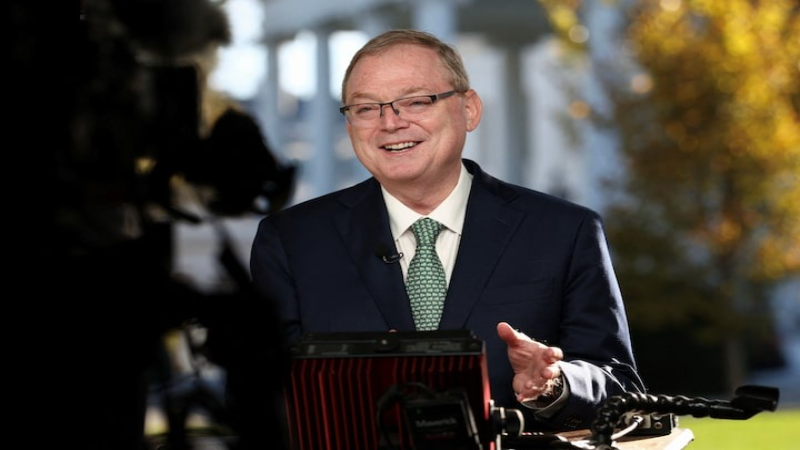
Growing expectations that Kevin Hassett may be nominated as the next Federal Reserve Chair have prompted markets to treat him as an early policy influencer, creating a rare window in which investors must track two potential leaders simultaneously. Discussions intensified after reports indicated Hassett is now the frontrunner, lifting his odds significantly in prediction markets and narrowing the timeline for a formal announcement. The situation deepens speculation around the direction of US monetary policy as President Trump signals dissatisfaction with the current chair’s approach and pushes for more aggressive rate reductions. Investors are analyzing the potential implications of a five month overlap between the current and likely future leadership, a circumstance that could shape market sentiment, Treasury yields, and global currency flows. The growing expectation of a more politically aligned Federal Reserve board strengthens the view that policy may shift toward steeper rate cuts even as inflation remains above the two percent target, reshaping the outlook for the dollar as traders weigh whether the currency’s early year weakness could accelerate.
The evolving leadership landscape comes at a time when several board seats could soon tilt the institution decisively toward appointees aligned with the administration’s policy views. Analysts have raised concerns about how such a shift may influence the long term direction of interest rates, financial conditions, and the credibility of the central bank’s independence. The possibility that the central bank could prioritize faster growth and looser financial conditions has generated mixed reactions across the fixed income market. Some sectors, such as housing and equities, may benefit from cheaper borrowing costs, while bond markets could face widening risk premiums if investors grow uneasy about the inflation outlook. The potential for steeper cuts advocated by certain advisers, combined with an already dovish tilt among several board members, has added weight to expectations that the dollar may encounter renewed selling pressure as global investors hedge against shifts in real yield dynamics. These developments have pushed traders into a more cautious stance as they watch for confirmation of the nomination and its effect on policy signaling.
In global markets, the prospect of extended uncertainty increases attention on how central banks around the world may respond to a more politically shaped Federal Reserve. While many officials emphasize that institutional credibility can temper overt policy influence, the concentration of like minded appointees raises questions about how the Fed will balance price stability with political priorities. With inflation still above target and growth indicators mixed, traders are now monitoring the potential for more pronounced volatility in the dollar, particularly if markets perceive reduced commitment to a restrictive stance. Analysts note that a shift toward lower rates may temporarily support growth sensitive assets, yet could widen the yield curve and lift long term inflation expectations. As speculation intensifies, the upcoming announcement window is seen as a pivotal moment that may set the tone for global currency performance through early 2026. The dollar’s ability to stabilize will depend heavily on how markets interpret the balance between political influence and monetary discipline in this evolving environment.