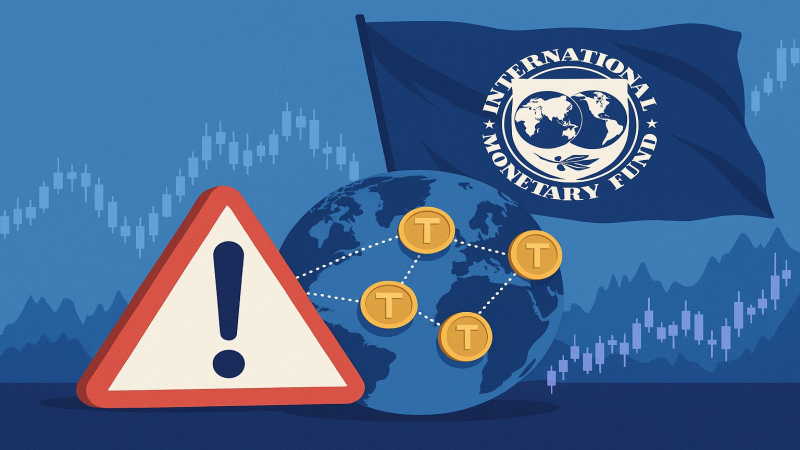
The latest warning from international policymakers has intensified debate around how rapidly expanding tokenized markets could influence global financial stability and future dollar behavior. New analysis highlights the benefits of near instant settlement and programmable digital assets, but also stresses that the speed and automation behind these systems may allow volatility to spread faster than traditional safeguards can react. The concern is rooted in how smart contract based execution can magnify sudden market imbalances, potentially causing sharp liquidity distortions similar to earlier flash crash style episodes. For dollar focused traders, the discussion is significant because tokenized platforms increasingly interact with USD denominated instruments and settlement networks. Any instability within these systems could affect how global participants assess dollar liquidity, especially as more asset classes migrate to programmable environments that rely on automated clearing.
Researchers point to mounting evidence that several tokenized platforms, while efficient, remain fragmented and operate on isolated digital rails. This fragmentation can weaken liquidity if platforms fail to interoperate, producing pockets of inefficiency that shape how capital moves between currencies and digital assets. The IMF notes that the history of major monetary transitions shows governments eventually intervene when new technology alters the architecture of markets. That expectation is resurfacing as regulators explore frameworks for managing the risks of tokenization rather than attempting to halt its growth. Institutions in major financial hubs are already drafting stricter classifications for tokenized assets and updating rules to strengthen investor protections. These developments influence how demand for USD denominated digital instruments evolves, particularly if regulated structures push more traders toward platforms with higher compliance standards.
Momentum for greater oversight is accelerating as global agencies observe the rapid scaling of tokenized real world assets, including experiments with tokenized government bills and wholesale settlement systems. Regulatory bodies in Europe, Asia, and North America are seeking clearer definitions for digital representations of traditional securities, especially as many offerings imitate equity like features without providing the accompanying rights found in conventional markets. This shift is drawing attention from market analysts who track currency flows tied to evolving financial infrastructure. As more governments test state backed tokenized instruments, the link between traditional finance and digital settlement layers deepens, expanding the range of markets influenced by USD performance. Institutional expectations that a large share of global assets will eventually migrate to tokenized formats suggest that the dollar’s role in digital markets could grow more complex as regulatory, technological, and liquidity structures evolve in parallel.