Recent flow-mapping models are highlighting a notable redistribution of USD activity across global financial hubs as capital responds to shifting macro signals and evolving policy expectations. These models, which aggregate data from cross-border transactions, institutional flows, and liquidity channels, provide insight into how the dollar is being allocated and repositioned internationally. The patterns emerging in recent weeks indicate a more dynamic landscape for USD movement, influenced by changes in regional growth prospects, monetary policy cycles, and risk sentiment. Traders and analysts are increasingly referencing these flow models to understand how global positioning is taking shape ahead of key policy periods.
Flow-mapping tools have become essential for monitoring the behavior of large institutional players, especially during times of transition in global markets. As economies navigate uneven disinflation and varying growth trajectories, the shifts in USD distribution reflect how investors are adapting their strategies. The latest readings show that several hubs are experiencing increased activity while others are seeing more muted flow momentum. These changes offer early signals of where capital may be rotating throughout the remainder of the year.
Shifting capital allocations reshape regional USD activity
The most important trend shown in current flow-mapping models is an increase in USD redistribution from traditional financial centers toward a broader set of regional hubs. As global institutions adjust their exposure based on evolving monetary policy expectations, some regions are receiving stronger inflows related to improved risk outlooks and more stable domestic conditions. These shifts highlight the influence of relative economic performance on currency demand, particularly in markets where clarity around policy direction is improving.
Analysts observe that North American and European hubs remain the primary anchors of USD liquidity, but parts of Asia and the Middle East are showing more noticeable increases in activity. These regions are benefiting from diversified investment strategies that emphasize resilient growth prospects and more predictable financial conditions. This redistribution does not signal a reduction in USD importance but rather an adaptation to global shifts in economic momentum. The models indicate that such flows reflect long-term positioning rather than short-lived responses to temporary volatility.
The increasing dispersion of USD flows underscores the global nature of current market dynamics. Investors are seeking balanced exposure, which encourages broader geographical participation in USD-linked activity and supports stability across major markets.
Institutional rotations influence short-term USD circulation
Institutional rebalancing is playing a central role in shaping short-term USD flow patterns. Asset managers are adjusting portfolios to reflect changes in bond yields, equity volatility, and projected returns across global markets. These adjustments influence how USD circulates between financial hubs as managers seek to optimize risk-adjusted performance. The movements are particularly visible in markets where interest rate expectations have become more predictable, creating clearer valuation frameworks.
Short-term rotations also account for tactical repositioning ahead of major policy events. When traders expect shifts in forward guidance or inflation assessments, USD flows often intensify within key liquidity centers. Flow-mapping models show that this movement has been more synchronized in recent weeks, suggesting that global investors are responding to similar macro signals. This coordinated behavior provides valuable insight into the structure of current positioning trends.
Trade-driven flows contribute to redistribution patterns
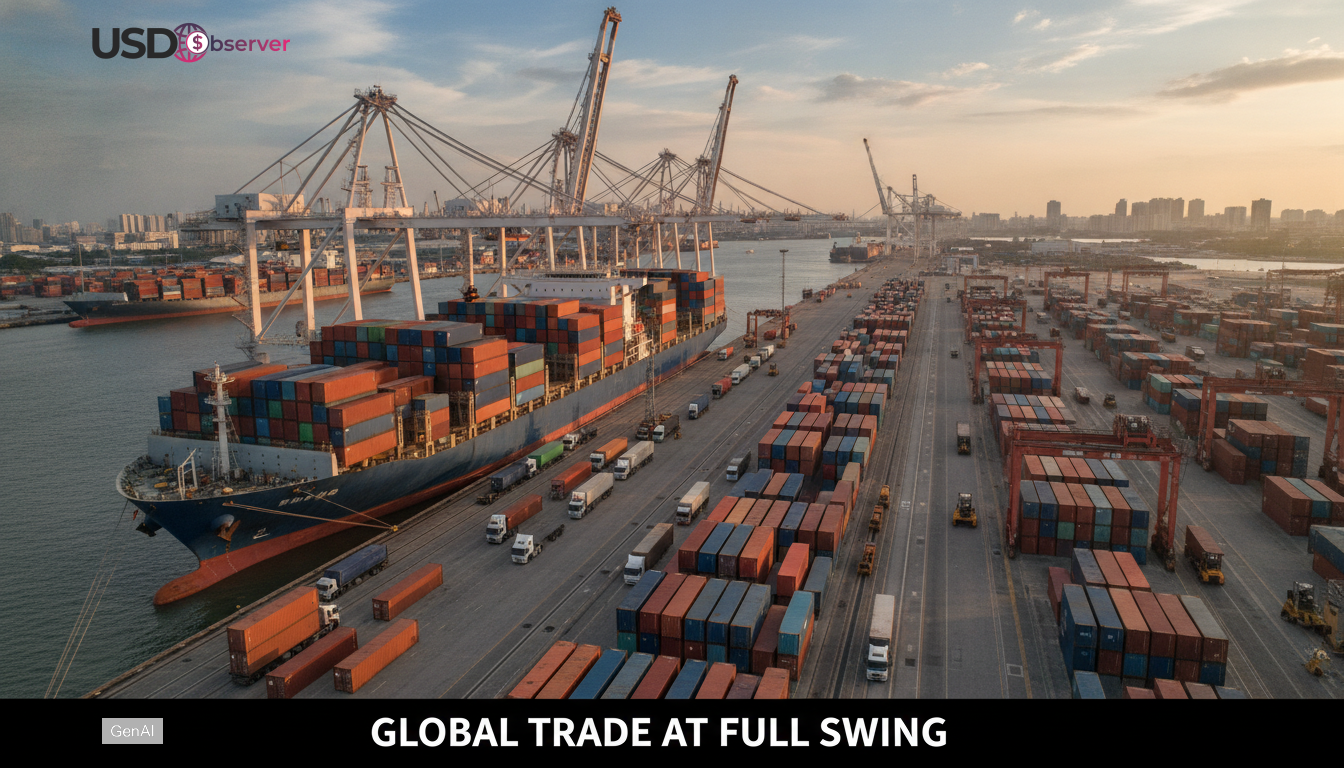
Trade-related USD flows remain an important component of global currency movement, and they are contributing to the redistribution captured in recent models. As global trade routes adapt to supply chain changes and shifting demand, the flow of dollars used for settlement has adjusted accordingly. Regions with stronger export activity or increased import demand are experiencing more consistent USD flow acceleration.
The influence of trade on USD circulation highlights the importance of real economic activity in shaping currency dynamics alongside financial variables. Recent trade data points to gradual improvement in certain key markets, which contributes to steadier USD movement across regional hubs. These developments reinforce the interconnectedness between trade patterns and broader flow-mapping observations.
Liquidity conditions shape medium-term flow expectations
Liquidity conditions across global markets continue to influence medium-term expectations for USD redistribution. As central banks maintain careful policy stances during shifting inflation cycles, the availability of high-quality USD assets remains central to flow dynamics. Hubs with deep markets and transparent regulatory environments continue to attract strong USD activity, supporting the broader redistribution trend.
Analysts expect liquidity conditions to remain a major driver of USD flows as markets move closer to upcoming policy phases. Stability in treasury markets and consistent demand for USD-denominated instruments contribute to a balanced global flow environment. These factors shape the medium-term outlook for how the dollar moves across markets.
Conclusion
Flow-mapping models show that USD redistribution across global hubs is being shaped by institutional rotations, shifting trade patterns, and evolving liquidity conditions. The broadened distribution of USD activity reflects a dynamic global environment where investors adjust to changes in growth and policy expectations. As markets navigate these transitions, flow-mapping insights will remain essential for understanding how positioning and capital movement evolve.