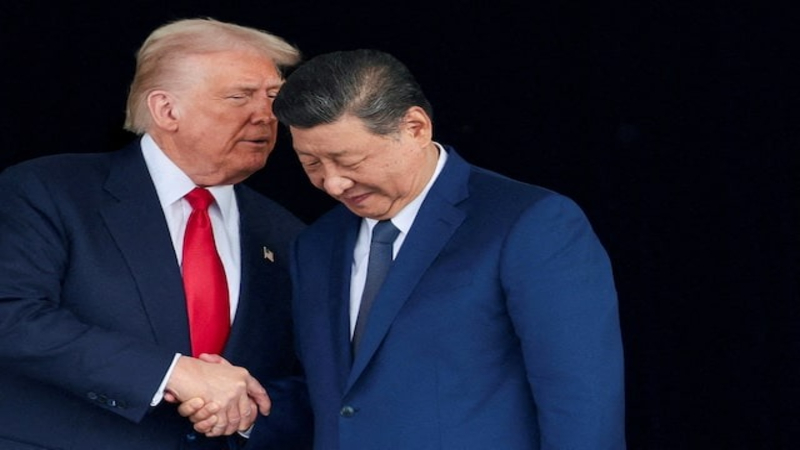
A call between President Donald Trump and Chinese President Xi Jinping injected a dose of diplomatic optimism into global markets, although currency traders remained cautious about reading too much into the exchange without additional policy clarity. Trump described the conversation as very good and highlighted discussions on Ukraine, fentanyl trafficking, and agricultural trade, noting that an agreement benefiting U.S. farmers had been reached with expectations for further improvements. While goodwill between Washington and Beijing can reduce geopolitical stress premiums that often support safe haven dollar flows, markets tend to look for concrete shifts in trade, technology, and supply chain policy before repositioning meaningfully. The announcement that Trump accepted an invitation to visit China in April, with Xi expected to visit the United States later in the year, signaled a willingness to re-engage diplomatically after periods of tension that have shaped global growth expectations. For now, FX markets appear to be incorporating the news cautiously, balancing improved sentiment with the reality that U.S. China dynamics continue to influence capital movement, tariff discussions, and commodity flows in ways that can directly affect the dollar.
The timing of the call is notable given that investors are already reevaluating the dollar’s near term prospects amid shifting Federal Reserve expectations and uneven global data. Diplomatic improvements between the world’s two largest economies often translate into short lived boosts for risk assets, particularly in Asia, where sentiment is sensitive to changes in bilateral cooperation on trade and technology. However, the broader macro environment suggests that the dollar’s direction will continue to depend heavily on upcoming economic releases and rate path signals rather than diplomatic headlines alone. Markets have repeatedly demonstrated that while geopolitical de escalation reduces volatility, it does not necessarily alter interest rate differentials or structural capital flows unless accompanied by tangible policy progress. The prospect of resumed high level exchanges between Washington and Beijing may help stabilize expectations surrounding supply chain coordination and commodity demand, but analysts are watching closely for whether any follow through emerges on trade arrangements or tariff revisions.
Investors also note that the call comes during a period in which currencies linked to Asian exports are responding to both domestic monetary policies and global demand concerns. Improved diplomatic communication can support those currencies temporarily, which in turn may influence dollar performance in pairs tied to China sensitive trade routes. Yet, without specific agreements or coordinated economic commitments, the dollar’s broader trajectory remains tied to U.S. inflation, labor market conditions, and evolving expectations for December’s Federal Reserve meeting. Traders continue to monitor whether reduced geopolitical friction could temper safe haven buying that has intermittently supported the dollar during periods of regional tension. For now, the diplomatic gesture serves primarily as a stabilizing headline rather than a catalyst for a major revaluation. Markets will be looking for concrete policy shifts in the months ahead, especially during the planned bilateral visits, before adjusting longer term USD positioning in response to U.S. China engagement.