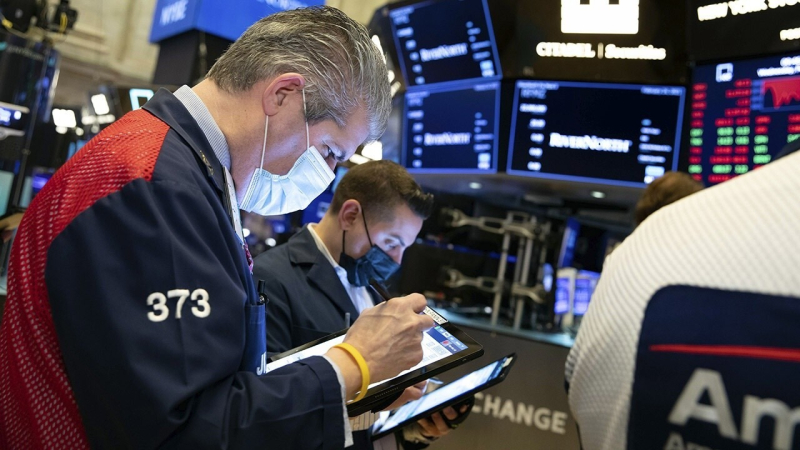
Financial markets saw a notable rise in volatility this week as traders positioned ahead of several major central bank meetings scheduled to take place in the coming days. With policymakers across the United States, Europe, and Asia preparing to update their economic assessments, global markets are adjusting in real time to shifting expectations around interest rates, inflation, and future policy direction. The uncertainty has led to wider trading ranges across equities, bonds, currencies, and commodities as investors brace for potential surprises.
This environment reflects how sensitive global markets have become to policy signals. With growth slowing in several regions and inflation progress remaining uneven, central banks face increasing pressure to communicate with precision. Traders are now weighing not only near term decisions, but also the language and tone that may shape expectations for the next several months. As anticipation builds, market volatility has become a defining feature of the current trading landscape.
Traders position defensively ahead of policy decisions
Ahead of the upcoming meetings, traders have adopted more defensive positioning across major asset classes. Short term investors reduced exposure in sectors sensitive to rate fluctuations, while institutions shifted capital into safer assets amid uncertainty around policy direction. This repositioning underscores the importance of central bank communication in an environment where economic signals remain mixed.
Bond markets have shown particularly reactive behavior. Yields across key maturities moved in broader intraday ranges, reflecting heightened sensitivity to speculation around potential policy shifts. Short term yields rose modestly as traders priced in the possibility of more cautious central bank messaging, while longer dated yields remained relatively stable as investors focused on long horizon inflation dynamics.
Equity markets experienced similar caution. Sectors with high sensitivity to borrowing costs, including real estate and certain technology segments, showed increased volatility as investors prepared for potential adjustments in policy guidance. Market sentiment across equities has turned more tactical, with traders favoring sectors supported by stable cash flows and defensive fundamentals.
Currency markets react to shifting expectations
Currency markets responded quickly to evolving rate expectations. The US dollar maintained a firm tone as traders viewed it as a safer alternative during periods of policy uncertainty. The prospect of sustained or slightly tighter US policy has supported dollar demand even as global growth signals show pockets of weakness.
European and Asian currencies experienced mixed performance as regional rate expectations fluctuated. Markets are closely watching whether central banks outside the US will maintain tighter policy stances or adopt more flexible approaches in response to slowing domestic growth. These cross regional divergences have contributed to higher FX volatility leading into the meetings.
Emerging market currencies remain particularly sensitive to shifts in global rate expectations. With capital flows turning more defensive, several EM currencies faced renewed pressure, especially in regions grappling with higher inflation or weaker fiscal positions.
Commodity markets show cautious trading patterns
Commodities displayed mixed but cautious price movements as energy and industrial metals responded to uncertainty around global demand. Oil markets experienced moderate swings, reflecting concerns that tighter financial conditions could weigh on consumption. Traders are watching whether central bank tone signals a more constrained demand outlook in coming months.
Gold benefited from rising volatility and risk aversion, attracting stronger safe haven interest. Traders increased allocations to metals as a hedge against policy uncertainty and potential market disruptions. The relationship between yields, the dollar, and gold pricing continues to play a central role in shaping sentiment within commodity markets.
Bond markets highlight global policy divergence
Global bond markets reflect broad divergence in policy expectations across regions. While some central banks are nearing pauses or moderate easing cycles, others remain concerned about lingering inflation pressures. This divergence has shaped yield spreads between regions, influencing cross-border capital flows and relative value strategies.
Traders emphasize that the upcoming meetings may help clarify the degree of alignment or divergence among major central banks. This clarity will play a significant role in shaping global portfolio allocation decisions over the next quarter.
Conclusion
Market volatility has increased as traders position ahead of key central bank meetings. Shifts in rate expectations, cautious investor sentiment, and cross market adjustments underscore the importance of upcoming policy communication. As global markets await clarity, traders will continue navigating volatility while adjusting strategies to reflect evolving macro signals.