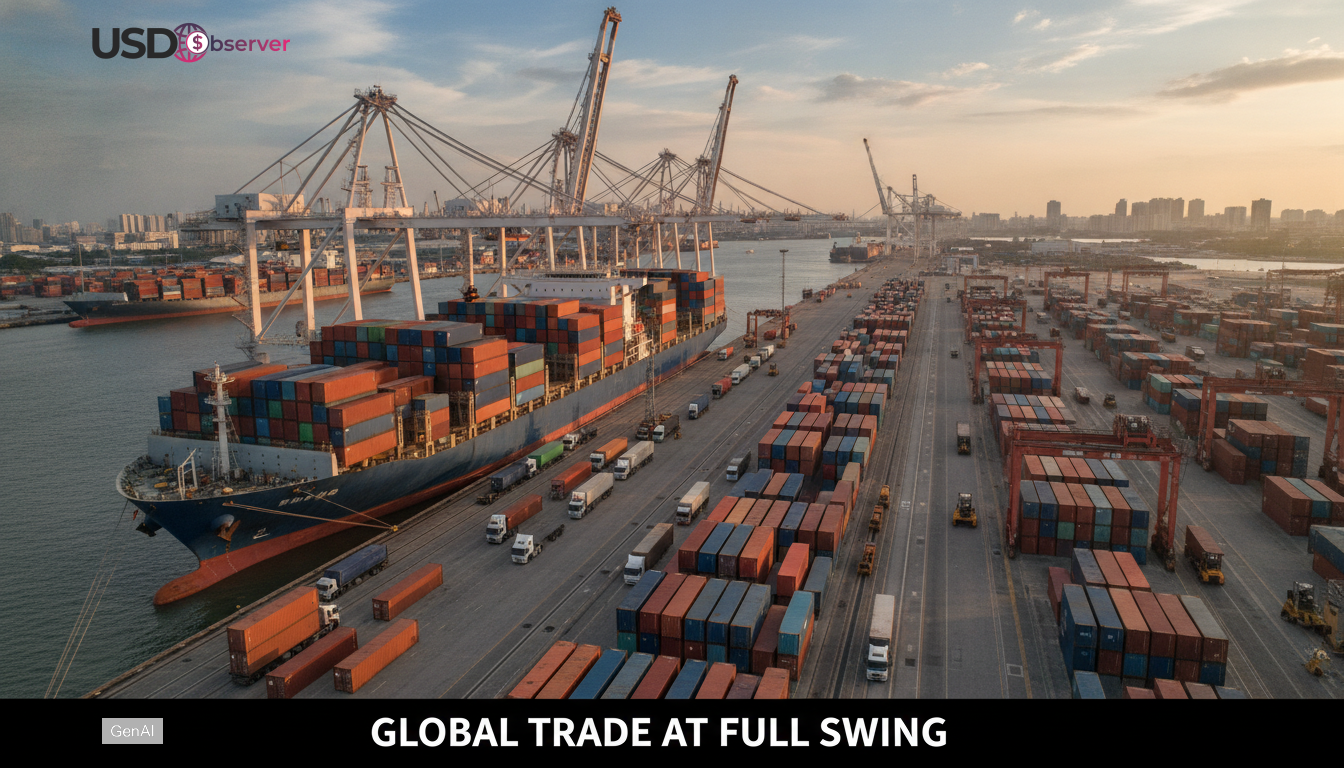
The United States is seeing a widening trade deficit as imports continue to outpace exports in several key sectors. This trend reflects shifting consumer demand, global supply chain changes and the strong U.S. dollar, which makes foreign goods cheaper for American buyers. While a trade deficit is not automatically negative, a deepening gap can influence economic growth, manufacturing competitiveness and long term financial stability. Policymakers and economists are now assessing how this trend may shape the economic outlook in the coming year.
This growing imbalance also highlights the challenges the U.S. faces in boosting domestic production. Strong consumer spending continues to drive demand for imported goods, especially in technology, automobiles and industrial materials. At the same time, slower global growth limits the demand for American exports. These forces combine to create a widening deficit that has implications for jobs, trade policy and market confidence.
Why the U.S. Trade Deficit Is Increasing
One of the biggest reasons for the deepening trade deficit is strong domestic consumption. American households continue to spend heavily on goods that are primarily produced abroad. Electronics, apparel, vehicles and household products are major contributors to rising import volumes. Even with slowing economic growth, consumer demand remains resilient, which increases the flow of foreign goods into the country.
The strong U.S. dollar also plays a major role. When the dollar appreciates, American goods become more expensive abroad, while imported goods become cheaper for consumers at home. This currency effect reduces export competitiveness and increases reliance on foreign supply. As global investors seek safety in dollar assets, the currency remains strong, adding pressure to the trade balance.
In addition, weakening demand in key international markets affects U.S. exports. Slower economic activity in Europe and parts of Asia has reduced the appetite for American products. This includes industrial equipment, agricultural goods and high value technology exports. When global partners face economic challenges, their import demand naturally declines, which further widens the U.S. deficit.
Impact on American Manufacturing
The trade deficit places stress on certain domestic industries, especially manufacturing. Companies that compete with lower cost foreign producers often struggle to maintain market share. This influences factory production levels, employment decisions and long term investment plans. Some industries have been able to adapt through automation and innovation, but many continue to face competitive pressure from cheaper imports.
Manufacturers also deal with higher costs when exporting goods in a strong dollar environment. Even if the product is high quality, the pricing disadvantage makes it difficult to compete globally. These challenges can discourage expansion and reduce incentives for domestic production in sectors that rely heavily on international markets.
Global Supply Chains and Structural Factors
Global supply chains are another important factor behind the trade deficit. Many U.S. companies rely on international suppliers for raw materials, components and finished products. This reliance is partly due to cost advantages abroad and the efficient structure of global logistics networks. Even with renewed efforts to localize production, shifting supply chains back to the U.S. requires time, investment and policy support.
Structural changes in the economy also influence trade patterns. The U.S. has transitioned toward a service based economy, where financial services, technology and healthcare dominate growth. While services can be exported, they do not always offset the high volume of imported physical goods. This creates a natural imbalance that is difficult to eliminate through trade strategies alone.
Policy Responses and Long Term Considerations
Trade policy remains a major tool for addressing the growing deficit. Some policymakers advocate for incentives that boost domestic manufacturing, while others push for new trade agreements that expand opportunities for American exporters. Tariffs and import restrictions are also used in certain cases, although these measures can raise prices for consumers and create tensions with global partners.
Long term improvements require a combination of strategic investment and international cooperation. Strengthening local supply chains, investing in modern manufacturing technologies and expanding export capacity can gradually reduce the deficit. At the same time, building strong trade relationships ensures stable access to global markets for U.S. goods and services.
Conclusion
The deepening U.S. trade deficit reflects strong domestic demand, a powerful dollar and shifting global economic conditions. While the deficit does not signal immediate danger, it highlights structural challenges that influence manufacturing, consumer behavior and long term economic strategy. Addressing these issues requires balanced policy decisions and continued investment in the competitiveness of American industries.