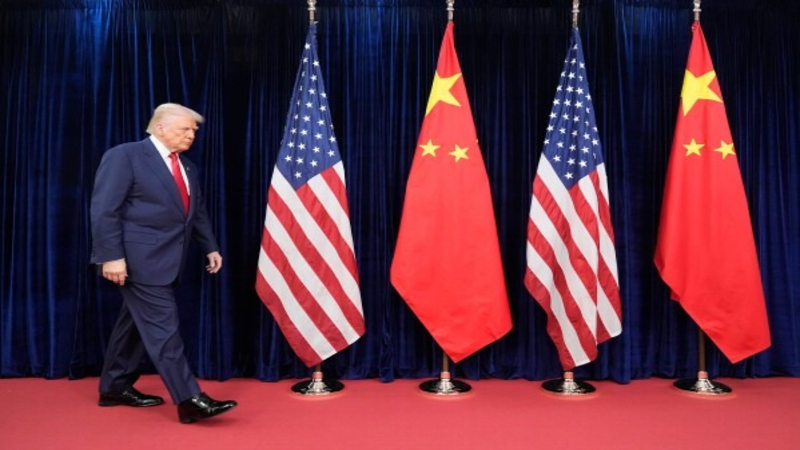
China has responded cautiously after United States President Donald Trump revived the term G2 to describe the relationship between Washington and Beijing ahead of his recent summit with President Xi Jinping. The phrase, which originally appeared in policy discussions more than a decade ago, refers to the idea of China and the United States acting as joint leaders in addressing global challenges. While the concept appears to place both nations on equal footing, analysts in Beijing suggest that the framing carries a tone that China considers strategically uncomfortable, particularly at a time when tensions remain elevated across multiple political and economic fronts. The hesitation reflects Beijing’s broader approach to US messaging that emphasizes partnership yet implies a hierarchy rooted in American leadership. As relations continue to cycle through periods of calm and confrontation, Chinese policymakers and scholars remain mindful that such labels often reflect expectations on global governance that do not fully align with China’s long term diplomatic preferences.
Experts noted that the term G2 has long been viewed in China as symbolizing a structure that risks overshadowing the interests of other nations and reinforcing what Beijing considers a unilateral global order. While the Chinese government has stressed its desire for stable relations, it has consistently promoted a vision of multipolarity in which global affairs are shaped through broader international participation rather than a two country framework. Trump’s decision to highlight the G2 idea, even as a rhetorical gesture, renews debates within China regarding how the United States interprets shared global responsibility. Analysts in Beijing argue that the phrase does not accurately represent the reality of current bilateral ties, which continue to be marked by deep strategic disagreements over trade, technology, regional security and economic governance. Although the summit was seen as a necessary engagement, China remains cautious about any suggestion that collaboration should occur within a label that carries historical associations with American influence.
The renewed reference to a G2 arrangement also raises questions about how both nations intend to navigate a landscape where global challenges require cooperation yet national interests frequently diverge. Chinese observers note that Beijing seeks balanced dialogue with Washington but is wary of frameworks that appear to limit the role of other major economies or emerging powers. As more countries take independent positions on global supply chains, security issues and economic partnerships, the idea of a two country steering group appears increasingly out of step with current geopolitical shifts. For USD focused readers, the cautious response from Beijing highlights the delicate nature of US China diplomacy and the continued influence of strategic language on market expectations, currency movements and investor sentiment. The reaction underscores how symbolic terms can affect perceptions of global leadership at a time when both nations remain central to international economic stability.