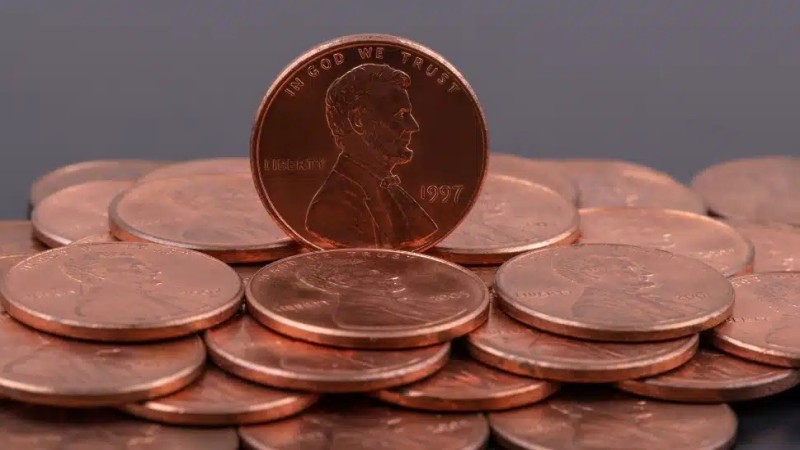
The end of a defining chapter in American currency became official on Wednesday as U.S. Treasurer Brandon Beach visited the Philadelphia Mint to strike the final five one cent coins for circulation. The event marked the conclusion of a 232 year era in which the penny functioned as the smallest unit of U.S. currency, a change accelerated by rising production costs and shifting consumer behavior. Treasury officials explained that manufacturing each penny now costs 3.69 cents, more than double the cost of a decade ago, making continued production financially unreasonable at a time when digital payments dominate daily transactions. The Mint confirmed that regular penny production was halted months earlier and that the last batch will include coins engraved with an Omega symbol before being auctioned in December. Officials expect the first and last coins in that group to draw significant collector interest, potentially reaching valuations near one hundred thousand dollars, with proceeds supporting Mint operations and surplus funds directed to the Treasury.
The Biden administration has argued that continuing penny production no longer serves the public, citing nearly 300 billion pennies already in circulation, vastly exceeding commercial need. Pennies will remain legal tender, and Americans are encouraged to recirculate them through banks and retailers as coin slowdowns have created localized shortages. Economic historians note that the retirement of the penny follows similar actions by Canada, Australia, Ireland and New Zealand, all of which now round cash transactions to the nearest five cents while leaving electronic payments unchanged. Despite the nostalgia attached to the coin, researchers say growing public frustration with excess pennies sitting in drawers and jars made the phaseout more acceptable to consumers. Mint officials also disclosed that limited edition collector pennies will continue to be produced, and early discussions about special gold penny projects remain underway.
Lawmakers have called attention to the cost burden associated with both pennies and nickels, with Representative Frank Lucas underscoring that the government has lost money minting both coins for nineteen consecutive years. His bipartisan legislation aims to meet the president’s instruction to reduce coin production costs while ensuring national currency needs remain intact. The banking industry has also expressed concern over slowed penny circulation, noting that fewer functioning coin terminals in some regions have complicated the process of recapturing coins already in the public’s hands. The American Bankers Association recently encouraged consumers to empty coin jars, vehicle compartments and household containers to help stabilize circulation until the remaining supply begins to consolidate naturally. As the government moves forward with updated processes, analysts say this transition reflects broader changes in cash usage and physical currency demand, with the final pennies symbolizing a shift toward cost efficiency and modernized payment behavior that has steadily reshaped the United States financial landscape.