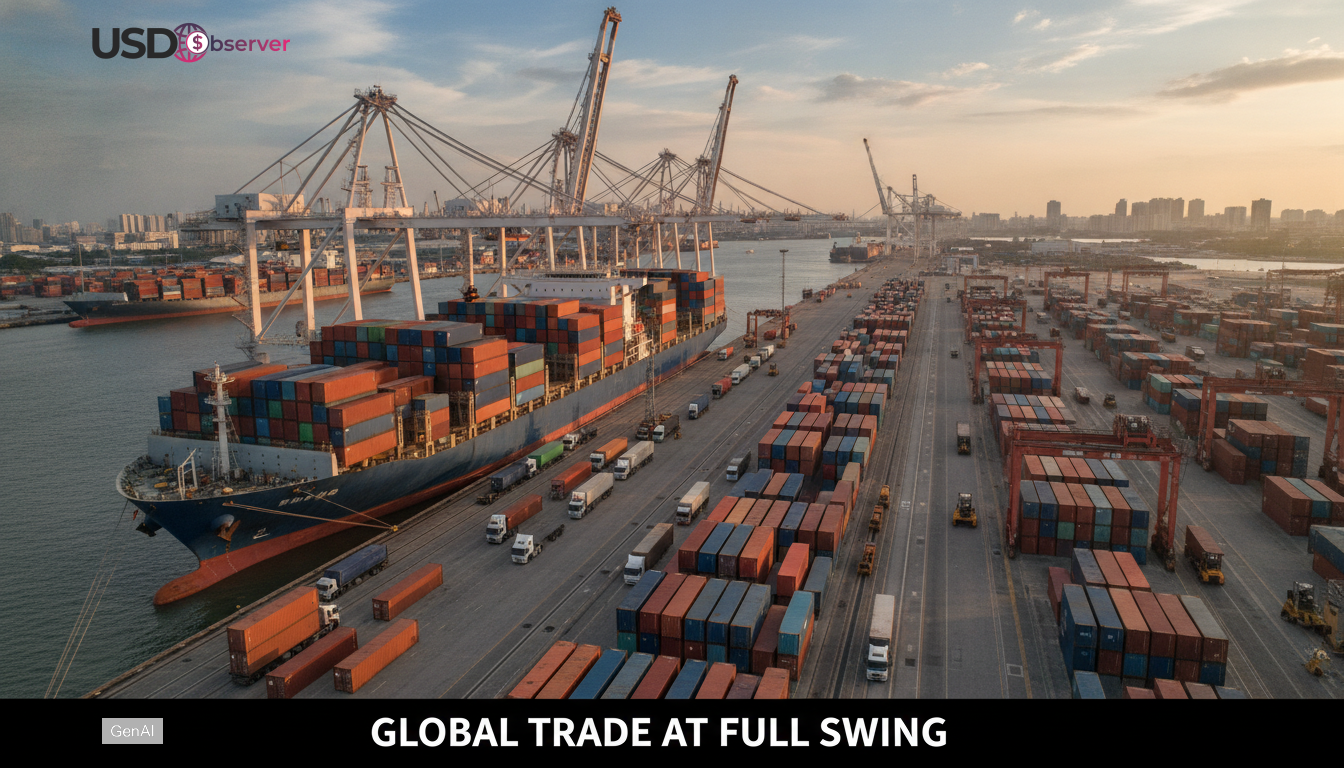
Emerging markets are entering a critical phase as dollar liquidity tightens and borrowing costs rise across global financial systems. The growing scarcity of affordable dollar credit is pressuring developing economies that rely heavily on external financing for trade and infrastructure. As the U.S. Federal Reserve maintains high interest rates and global capital flows shift toward safer assets, emerging nations face a challenging environment marked by weaker currencies and reduced investor confidence.
This dollar credit crunch is not just a short-term funding issue but a structural problem that exposes the financial dependence of emerging markets on U.S. monetary cycles. Nations in Asia, Africa, and Latin America are being forced to adapt by strengthening local capital markets and seeking new mechanisms to maintain liquidity stability.
The Mechanics of Dollar Tightening
The dollar remains the dominant currency in global trade, accounting for over 80 percent of international transactions. However, when the Federal Reserve raises rates, the cost of accessing dollar funding increases sharply for foreign borrowers. According to WSJ Economics, the current cycle of elevated yields has driven up debt servicing costs for emerging economies by double-digit percentages compared to pre-pandemic levels.
Banks and corporations that borrowed in dollars are now facing a squeeze as local currencies weaken against the greenback. This creates a feedback loop where depreciation increases repayment burdens, leading to capital flight and further currency declines. As a result, several central banks have resorted to using foreign reserves to stabilize exchange rates, risking depletion of their buffers if market pressures persist.
Regional Impact and Policy Responses
The hardest-hit regions are those with significant dollar-denominated debt exposure and limited access to alternative financing. Countries such as Indonesia, Turkey, and Brazil are confronting liquidity shortages and higher borrowing costs in global markets. In response, many have introduced swap lines with major central banks, raised domestic interest rates, or turned to multilateral lenders like the IMF for support.
Some governments are also exploring the use of local currency bonds and regional payment systems to reduce reliance on dollar-based funding. For example, Asian economies are accelerating the development of regional clearing arrangements to promote trade in domestic currencies. While these efforts provide partial relief, they cannot yet fully replace the deep liquidity and stability of the U.S. financial system.
Investor Sentiment and Risk Premiums
Investor sentiment toward emerging market debt has shifted as risk premiums climb and default concerns resurface. Global investors are demanding higher yields to compensate for currency risk and fiscal uncertainty. According to the BIS, cross-border lending volumes to developing economies have fallen to their lowest levels in five years, signaling a broad pullback in exposure.
This tightening of credit has direct social and economic implications. Reduced access to capital slows infrastructure development, limits job creation, and raises inflation through higher import costs. Policymakers must now balance stabilizing currencies with protecting domestic growth, a task made more difficult by the unpredictable nature of global capital flows.
The Path Toward Local Financial Resilience
Emerging economies are beginning to take lessons from previous credit shocks by building stronger domestic financial ecosystems. The development of local bond markets, digital finance tools, and regional cooperation frameworks is gradually improving resilience. Central banks are also enhancing transparency and communication to maintain investor trust even under stress.
While these steps cannot eliminate vulnerability to dollar cycles, they represent a strategic evolution in how emerging markets manage liquidity and risk. A more diversified funding base, supported by regional and multilateral institutions, may help these nations weather future global tightening cycles more effectively.
Conclusion
The emerging market dollar credit crunch reveals the deep interconnectedness of global finance. As the cost of dollar funding rises, countries that depend heavily on external liquidity are reminded of the importance of local resilience and diversification. Building sustainable financial systems that can withstand shifts in U.S. monetary policy will be essential for maintaining stability and growth in the years ahead.