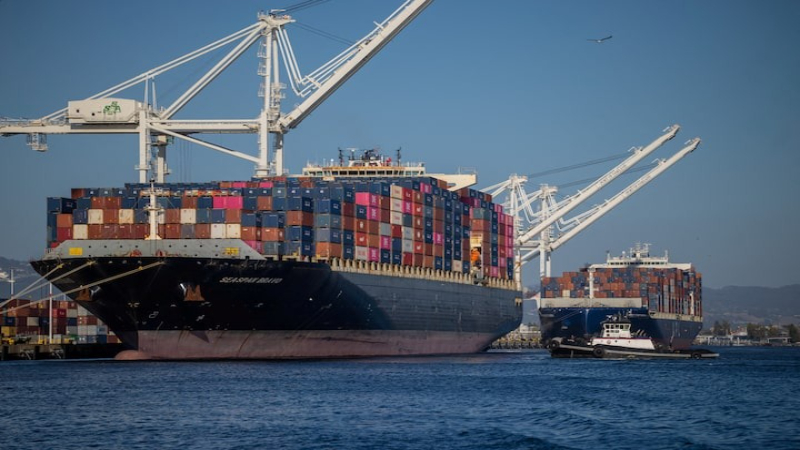
Global shipbuilding activity has slowed this year as trade demand softened, but orders for cleaner, less-polluting cargo vessels have held steady, underscoring a strong industry shift toward sustainability. Despite overall declines in new vessel construction, demand for environmentally efficient ships continues to represent a significant share of total orders, signaling long-term confidence in the green transition of maritime transport.
Industry data shows that while the total number of ships ordered globally fell in recent months, the proportion of low-emission and dual-fuel vessels remained resilient. These ships, designed to use alternative fuels such as liquefied natural gas (LNG) or methanol, now account for nearly half of new orders. Analysts say this trend reflects both regulatory pressure and strategic investment in cleaner operations amid rising climate standards.
Shipowners are increasingly prioritizing fuel efficiency to comply with global emissions goals set by the International Maritime Organization (IMO). The organization’s decarbonization strategy aims to cut greenhouse gas emissions from shipping by at least 70% by 2040. This has prompted major shipping companies to expand fleets with next-generation designs, even as freight rates and global trade volumes remain under pressure.
Financial incentives are also driving the adoption of sustainable vessels. Banks and institutional investors are directing more capital toward companies aligned with environmental and social governance (ESG) frameworks. Green finance products, including sustainability-linked loans and bonds, are playing an expanding role in funding ship construction and retrofitting projects.
Regional patterns in new orders show diverging trends. Asian shipyards, particularly in South Korea and China, remain global leaders in producing advanced, energy-efficient vessels. European buyers are leading in demand for cleaner tankers and container ships, reflecting regulatory leadership within the European Union’s carbon trading system.
Despite progress, challenges persist. The transition to cleaner shipping technology remains costly, and infrastructure for alternative fuels is still developing. Industry experts note that the cost differential between traditional and low-emission vessels can deter smaller operators from adopting cleaner fleets, especially during periods of weak freight demand.
However, the industry’s commitment to sustainability appears firm. Analysts say that companies continuing to invest in greener fleets today are better positioned to meet future compliance targets and avoid potential penalties. As climate policies tighten and consumer expectations evolve, environmentally focused fleet modernization is increasingly viewed as an essential competitive strategy rather than an optional expense.
The shipping industry’s steady pursuit of decarbonization, even amid slower trade activity, highlights the growing alignment between global finance and sustainability. The continued resilience of cleaner vessel orders demonstrates how environmental priorities are becoming deeply integrated into long-term trade and investment strategies, setting the tone for a more efficient and sustainable global shipping era.