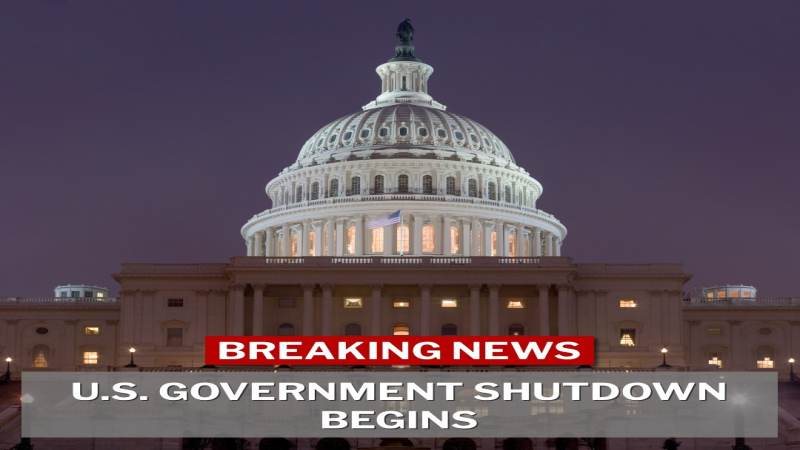
The U.S. government shutdown entered another week with no sign of resolution as talks between President Donald Trump and congressional Democrats remained stalled. Economists warned that the prolonged impasse could soon begin weighing on growth, consumer confidence, and financial markets.
Lawmakers have failed to agree on a funding plan amid disputes over spending priorities and deficit limits. The White House continues to push for increased defense and border security funding, while Democrats insist on protecting social and climate-related programs. The standoff has left large parts of the federal workforce furloughed and critical agencies operating on limited capacity.
Analysts estimate the shutdown has already delayed billions of dollars in federal payments and contracts. Tourism, transportation, and public sector supply chains are beginning to feel the strain. The Congressional Budget Office has cautioned that each week of government inactivity could trim up to 0.1 percentage point from quarterly GDP growth.
Financial markets have so far shown resilience, though volatility has increased in recent sessions. Treasury yields edged lower as investors shifted toward safer assets, while equity futures briefly weakened amid concerns about the potential economic fallout. Several investment banks have cut their short-term growth forecasts for the first quarter of 2026.
Business groups and labor leaders have urged Washington to reach a compromise before economic momentum stalls. A coalition of major trade associations said uncertainty was already slowing project approvals, especially in energy and infrastructure sectors that rely on federal permits.
Economists say the longer the shutdown lasts, the higher the risk of lasting damage. Extended disruptions to data collection and public services could complicate policymaking and reduce the effectiveness of future stimulus efforts. Small businesses depending on government contracts or loans are among the hardest hit.
The political divide remains wide. Democrats argue that current spending levels reflect fiscal responsibility and protect vital social programs, while Republicans counter that unchecked spending threatens long-term debt sustainability. Several moderates from both parties have floated temporary funding extensions to buy time for negotiations, but so far no framework has gained traction.
The Treasury Department has continued to assure markets that debt servicing will remain uninterrupted. Still, the agency’s cash buffer is tightening, and investors are monitoring whether extended gridlock could delay payments to federal contractors or state programs.
For now, markets are watching whether the stalemate begins to spill into broader consumer sentiment. A protracted shutdown could further erode household confidence and dampen holiday-season spending, particularly if uncertainty lingers into December.
With both sides entrenched and political pressure mounting, most analysts expect only a short-term deal to emerge. The real test, they say, will come early next year when Congress must address the next debt ceiling increase and longer-term fiscal reforms.