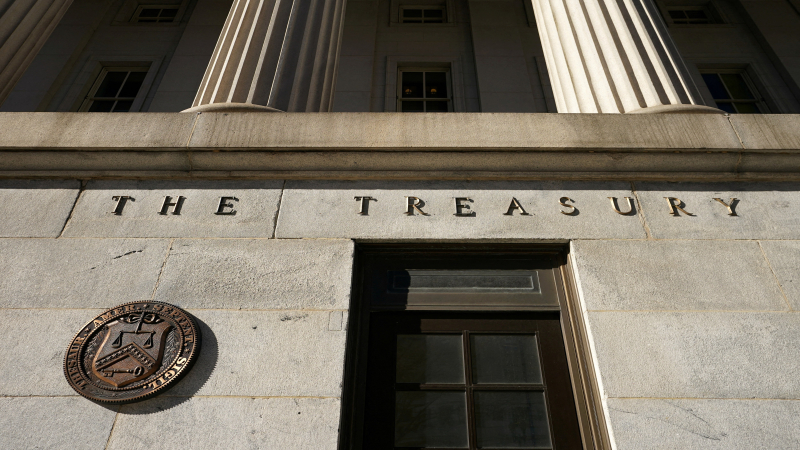
The U.S. Treasury Department announced on Tuesday that it will maintain the size of its upcoming note and bond auctions for several quarters, while signaling that future increases could be on the horizon as funding needs evolve. The decision underscores a cautious approach to debt management amid rising fiscal pressures and a steady demand for government securities.
According to the department’s quarterly refunding statement, the Treasury will auction $58 billion in three-year notes, $42 billion in ten-year notes, and $25 billion in thirty-year bonds—unchanged from the previous quarter. The total issuance will amount to roughly $125 billion, with $98.2 billion used to refinance maturing debt and $26.8 billion raised in new cash. The Treasury said it expects coupon auction sizes to remain unchanged for at least the next few quarters while it evaluates longer-term financing needs.
Short-term Treasury bill issuance is projected to decline slightly in December before picking up again in early 2026, driven by seasonal tax and spending flows. Officials noted that future adjustments could be required to accommodate expected growth in borrowing needs as the government continues to manage elevated deficits. Analysts said the Treasury’s approach reflects an effort to maintain market stability while preparing for potential adjustments to the debt trajectory.
In addition to its regular auctions, the Treasury confirmed that it will continue its buyback program, which includes $38 billion in off-the-run security repurchases and $25 billion in short-maturity buybacks. The initiative is designed to support market liquidity and ensure smoother functioning of the Treasury market, which has faced occasional strain during periods of high volatility.
Market strategists said the decision to hold issuance steady signals a desire to avoid adding pressure on long-term yields, which have fluctuated near multi-month highs. Maintaining issuance levels helps prevent an oversupply of long-duration debt that could raise borrowing costs for the government and weigh on the broader bond market. However, Treasury officials acknowledged that they are beginning to consider increases in coupon and floating-rate note sales in anticipation of higher funding requirements in the coming fiscal years.
The announcement’s implications extend beyond the bond market. For the U.S. dollar, the steady issuance plan reinforces perceptions of policy stability and disciplined debt management factors that tend to support investor confidence in U.S. assets. However, the possibility of future increases in debt issuance adds a note of caution for longer-term outlooks, as higher borrowing and interest costs could eventually moderate the dollar’s yield advantage.
Overall, the Treasury’s guidance reflects a careful balance between short-term funding stability and long-term fiscal prudence. While immediate borrowing conditions remain steady, markets are already pricing in the likelihood of larger issuance in 2026 as deficits widen and the government seeks to sustain its growing financing needs.