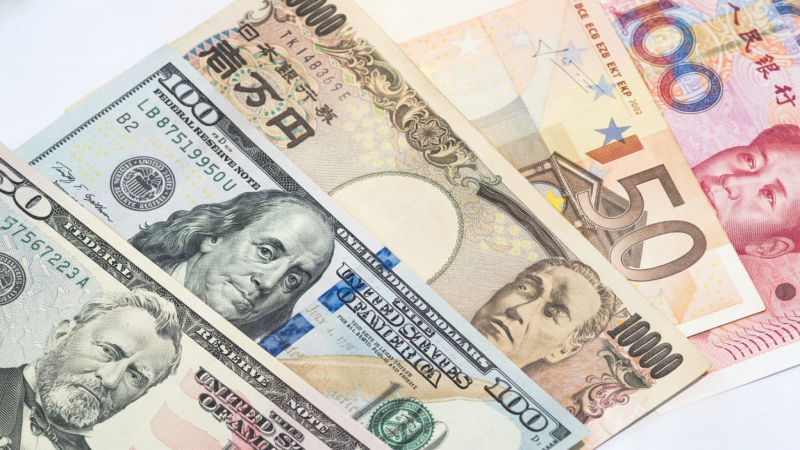
The U.S. dollar continues to assert its dominance in global currency markets as the euro and yen face renewed pressure from diverging monetary and growth trends. While American economic resilience has supported strong capital inflows, Europe and Japan remain caught between weak demand and policy constraints.
This imbalance has reshaped global currency flows. Investors seeking yield and security are consolidating around the dollar, reinforcing its central role in global finance even as concerns grow about long-term sustainability. For now, the greenback remains the anchor of stability in an uncertain world economy.
Dollar’s Resilience Amid Global Divergence
The dollar’s strength in 2026 is underpinned by a combination of robust growth, disciplined monetary policy, and global investor confidence. Despite concerns over fiscal deficits, the U.S. economy continues to outperform most advanced peers. Employment remains strong, consumer spending is resilient, and industrial production is stable. These conditions have allowed the Federal Reserve to maintain a cautious stance without signaling rapid rate cuts.
In contrast, Europe and Japan are contending with far weaker fundamentals. The eurozone economy has struggled to regain momentum amid persistent energy costs, aging infrastructure, and uneven productivity growth. Meanwhile, Japan faces low inflation but rising import costs, eroding purchasing power, and testing its long-standing monetary framework. This divergence in performance has driven investors toward the dollar as a haven.
Capital flows reflect this confidence gap. U.S. Treasury markets continue to absorb foreign demand, offering both yield and security. Dollar-denominated assets remain the preferred choice for global reserve managers, reinforcing liquidity advantages that competitors cannot match. For now, global monetary divergence remains the dollar’s greatest ally.
Pressure on the Euro and Yen
The euro’s weakness reflects both structural and cyclical challenges. The European Central Bank faces the difficult task of containing inflation while preventing recession. Although energy prices have eased from recent peaks, core inflation remains above target, limiting the bank’s ability to loosen policy. This tension has left European yields lower than their U.S. counterparts, encouraging capital outflows and dampening currency strength.
Political uncertainty has also weighed on confidence. Fiscal disputes within the eurozone and rising populist sentiment have created headwinds for cohesion. Investors worry that diverging fiscal priorities could hinder collective stability. This has added to the perception that the euro lacks the institutional depth needed to rival the dollar as a global anchor.
Japan’s currency challenges stem from a different source. The Bank of Japan’s cautious shift away from ultra-loose policy has led to volatile market reactions. While authorities have tried to stabilize the yen through gradual adjustments, interest-rate differentials remain significant. Capital continues to flow outward as investors seek higher returns abroad, putting persistent downward pressure on the yen.
The result is a widening divergence between the dollar and its major peers. For global corporations, this creates both risks and opportunities. Exporters benefit from weaker local currencies, but importers face rising costs. For policymakers, the challenge lies in managing volatility without losing competitiveness or credibility.
Global Capital Flows and Market Implications
The persistence of dollar strength has far-reaching consequences for global markets. Emerging economies, in particular, are feeling the strain as stronger dollar valuations tighten financial conditions. Many developing nations must now service external debts in a currency that continues to appreciate, increasing fiscal pressure and limiting policy flexibility.
In capital markets, the dollar’s dominance continues to shape investor behavior. Safe-haven flows remain elevated amid geopolitical uncertainty, reinforcing dollar liquidity and pushing yields higher. This has created a feedback loop: stronger yields attract more capital, which in turn supports the currency.
For commodities and global trade, a firm dollar acts as both a stabilizer and a constraint. While it anchors valuation benchmarks, it also raises import costs for dollar-priced goods in weaker currency regions. This dynamic influences everything from oil prices to food costs, indirectly affecting inflation trajectories across the world.
The question facing global investors is how long this strength can last. Some analysts believe the dollar may gradually moderate as U.S. growth slows and global risk appetite improves. Others argue that structural advantages—liquidity, depth, and institutional credibility will keep the currency at the center of global finance for the foreseeable future.
Monetary Coordination and Policy Outlook
The widening policy gap between the United States, Europe, and Japan underscores a deeper challenge: the lack of a coordinated global monetary strategy. The IMF and other institutions have warned that excessive divergence could amplify volatility in currency and bond markets. While the U.S. benefits from capital inflows, persistent imbalances could eventually strain the global financial system.
For Europe and Japan, restoring competitiveness requires more than currency intervention. Structural reforms to stimulate productivity, encourage investment, and expand fiscal flexibility are essential. Without these measures, monetary policy alone cannot close the performance gap.
In the U.S., policymakers face their own balancing act. While a strong dollar supports investor confidence, it also makes exports less competitive and raises trade deficits. The Treasury and the Federal Reserve must manage this tension carefully to prevent excessive tightening of financial conditions at home. The key will be sustaining stability without undermining the global role of the dollar.
Conclusion
The dollar’s continued dominance reflects both U.S. resilience and the weakness of its rivals. As the euro and yen struggle to find a footing, global capital continues to flow toward American assets, reinforcing the dollar’s unique role in international finance. For now, the world remains anchored to the strength of the U.S. currency, but maintaining that confidence will depend on disciplined policy and global coordination in the years ahead.