The World Bank has revised its global growth outlook for 2026, warning that persistent dollar strength and tightening financial conditions could constrain economic recovery in developing and advanced economies alike. The new forecast underscores that global momentum remains uneven, shaped by high borrowing costs, geopolitical uncertainty, and structural challenges in trade and investment.
While inflation is easing in most major economies, the combination of slower growth and elevated debt levels continues to weigh on fiscal stability. The report highlights the growing influence of U.S. monetary policy on global liquidity and warns that a strong dollar could amplify financial stress in emerging markets.
Global Growth Slows Under Tight Financial Conditions
The World Bank’s latest projections show global output expanding at a modest pace, reflecting weaker trade and cautious investment sentiment. Advanced economies are expected to experience subdued growth as monetary tightening and fiscal constraints take effect. Emerging markets face greater pressure from capital outflows and high debt-servicing costs.
Many developing nations that borrowed heavily during the pandemic are now confronting the dual challenge of repaying obligations while maintaining essential public spending. The rise in global interest rates has increased the cost of refinancing, forcing governments to prioritize debt stability over expansionary policy.
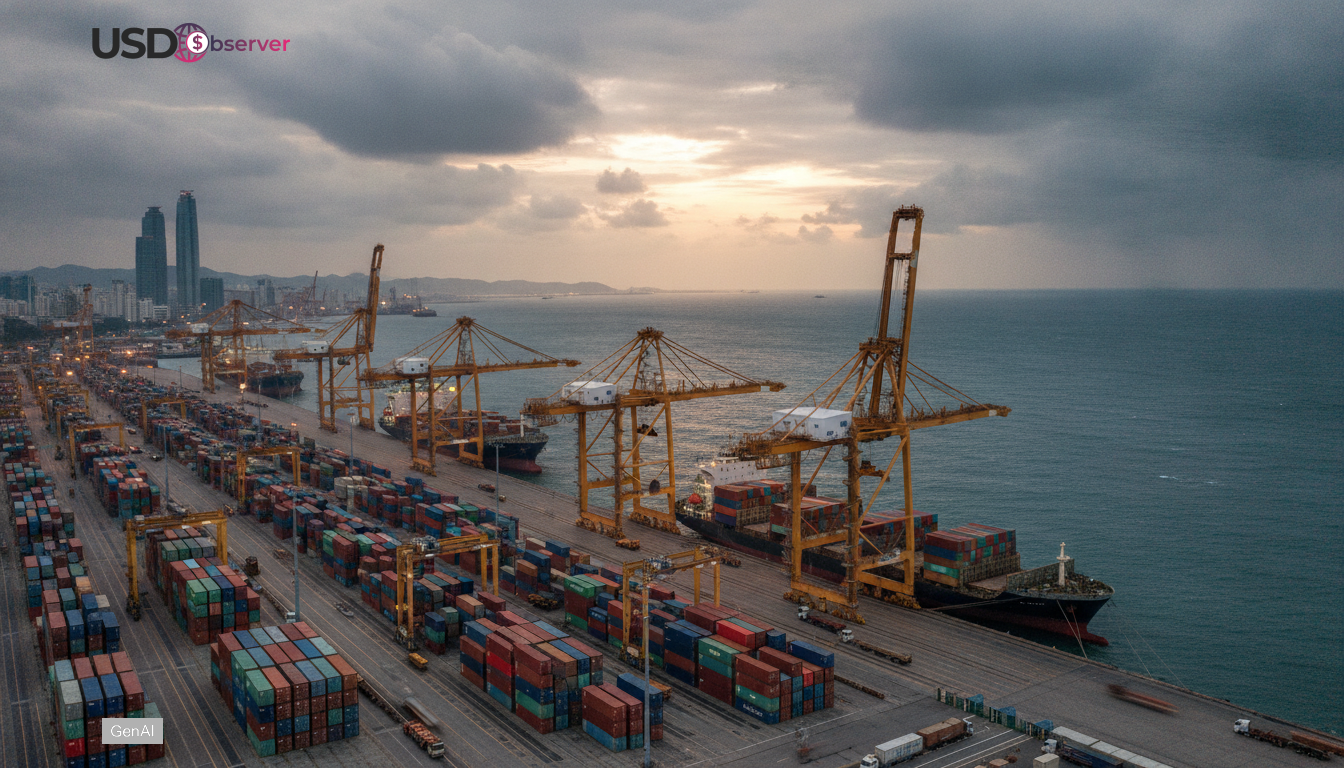
The slowdown in global trade has further limited export revenues, particularly for commodity-dependent economies. The World Bank notes that while inflation is gradually returning to target ranges, the recovery remains fragile and highly dependent on the trajectory of U.S. monetary policy.
The Dollar’s Dominant Role in Global Finance
A key focus of the report is the persistent dominance of the U.S. dollar in global transactions and reserve holdings. The dollar’s strength has been supported by higher yields, strong investor confidence, and the relative resilience of the U.S. economy. However, this dynamic has created ripple effects that complicate monetary management elsewhere.
For emerging markets, dollar appreciation increases the burden of external debt and makes imports more expensive. Central banks in these economies often respond by tightening domestic policy to defend their currencies, which can slow growth further. The result is a feedback loop where dollar strength reinforces global financial tightening.
Even in advanced economies, a stronger dollar affects competitiveness and inflation dynamics. European and Asian exporters face headwinds from a firmer greenback, while commodity prices denominated in dollars remain volatile. The World Bank cautions that global growth could weaken further if the dollar remains elevated through mid-2026.
Debt Pressures and Fiscal Vulnerabilities
Public and private debt remain at record levels in many countries, leaving limited fiscal space for stimulus. The World Bank estimates that debt-to-GDP ratios have stabilized in advanced economies but continue to rise in several developing regions. Higher interest rates have pushed debt-servicing costs to multi-decade highs.
Governments are under growing pressure to balance fiscal responsibility with social spending demands. In several emerging markets, debt repayments now consume a significant portion of national budgets, crowding out investment in health, education, and infrastructure. Without stronger growth or structural reforms, many of these economies risk long-term stagnation.
The report calls for enhanced debt transparency and coordinated international support to help vulnerable nations manage repayment obligations. Multilateral institutions are being urged to expand concessional financing and liquidity facilities to prevent a new wave of sovereign defaults.
Shifts in Capital Flows and Investment Patterns
Global capital flows have become increasingly selective, favoring markets with stable policy frameworks and sound governance. As risk appetite weakens, investors are channeling funds toward U.S. and European assets while reducing exposure to developing economies. This shift has widened yield spreads and intensified currency volatility.
Foreign direct investment has slowed as companies reassess supply-chain risks and geopolitical exposure. The reorganization of global trade networks, driven by nearshoring and regional integration, has further reshaped investment trends. While this transition could enhance resilience over time, it also delays the recovery of cross-border capital formation.
Commodity exporters face particular uncertainty. Demand for energy and raw materials has stabilized, but price fluctuations remain sensitive to global monetary conditions. The World Bank expects commodity markets to stay range-bound, limiting revenue growth for producers that rely heavily on exports.
Policy Priorities for Sustainable Growth
To restore momentum, the World Bank recommends a mix of targeted fiscal support, investment in productivity-enhancing infrastructure, and stronger international coordination. Policymakers are urged to focus on reforms that improve transparency, labor participation, and access to finance.
Monetary authorities must balance inflation control with support for credit expansion. For emerging markets, maintaining exchange-rate flexibility and building reserve buffers will be critical to absorbing external shocks. The World Bank emphasizes that long-term stability will depend on credible policy frameworks and global cooperation to manage debt and liquidity risks.
A key opportunity lies in digital transformation and energy transition investments, which could drive sustainable growth and attract private capital. However, without stable funding conditions and predictable exchange rates, many nations may struggle to implement such initiatives effectively.
Conclusion
The World Bank’s revised outlook paints a cautious picture for 2026, where global growth remains modest and dollar dominance continues to shape economic outcomes. While inflation is easing and financial systems are more resilient than in previous cycles, high debt and uneven recovery pose lasting challenges. The strength of the dollar remains both a stabilizing anchor and a constraint on global liquidity. How policymakers navigate this balance will determine whether the next phase of recovery is sustainable or short-lived.