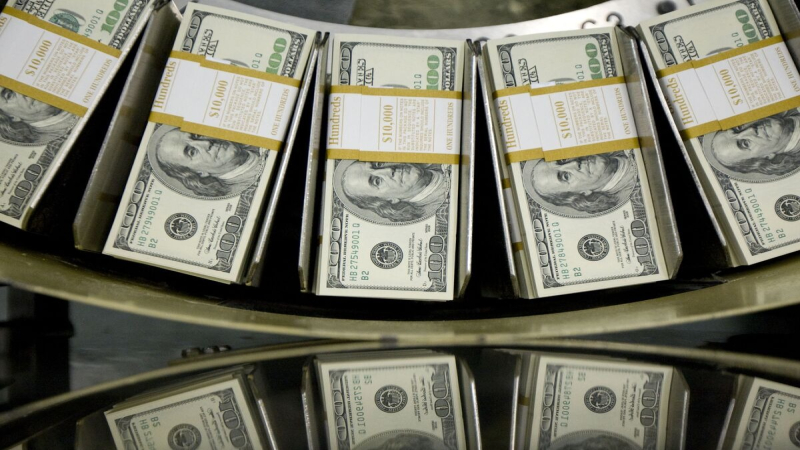
The U.S. dollar has climbed decisively above the 106 mark on the dollar index, extending its dominance across major and emerging-market currencies. This resurgence reflects a combination of strong U.S. economic data, firm Treasury yields, and cautious global sentiment. For policymakers and traders alike, the move reinforces the notion that the dollar remains the anchor of the global financial system.
The latest rally comes at a time when global growth is uneven and inflation remains persistent in many regions. Investors are once again finding refuge in dollar-denominated assets as uncertainty around fiscal discipline and trade flows deepens. For many foreign currencies, the challenge is less about immediate weakness and more about structural disadvantage.
Supply Side of Dollar Strength and the Fed’s Tone
The Federal Reserve’s firm stance on interest rates continues to support the dollar’s ascent. Markets now expect the central bank to maintain restrictive policy longer than peers, providing a sustained yield advantage for U.S. assets. Higher Treasury returns and continued investor inflows have made the dollar the preferred haven for global capital.
Fiscal factors are also reinforcing the trend. Even with large deficits and heavy debt issuance, demand for U.S. securities remains robust. Foreign institutions continue to buy Treasuries for safety and liquidity, effectively turning fiscal expansion into a short-term driver of currency strength.
The Fed’s communication style matters as well. Each signal suggesting patience on rate cuts strengthens expectations of tighter liquidity for longer. The result is a cycle where investors treat the dollar as both an income generator and a hedge against global instability.
Global Currencies Under Pressure and the Resilience Cycle
The dollar’s strength is exerting strain on other major currencies. The euro and yen are struggling to gain ground as their central banks maintain cautious policies. In Japan, authorities face renewed pressure to defend the yen near record lows, while in Europe, economic stagnation limits the scope for tighter monetary policy.
Emerging-market currencies are facing even greater pressure. Many of these economies have significant portions of their debt denominated in dollars, raising financing costs and eroding fiscal stability. Countries reliant on imported goods priced in dollars are also seeing inflationary pass-throughs, further complicating policy decisions.
This resilience cycle shows how the dollar’s dominance is self-reinforcing. When other currencies weaken, global investors seek more dollar exposure, amplifying the greenback’s strength. It becomes not just a currency story but a reflection of the broader power structure within global markets.
The Global Policy Divergence
Central banks outside the United States are being forced into uncomfortable positions. Some are intervening directly in currency markets to slow depreciation, while others are reluctantly hiking rates despite weak domestic demand. The divergence between the Fed’s firmness and other banks’ flexibility has widened interest-rate spreads, keeping capital flowing toward the U.S.
For countries like South Korea, Brazil, and India, this creates policy tension. They must balance defending their currencies against risking slower growth through tighter financial conditions. Even advanced economies such as the United Kingdom and Canada are feeling the weight of a dollar-driven tightening cycle that is effectively exporting U.S. monetary policy worldwide.
This environment also affects trade competitiveness. As the dollar strengthens, exporters from other nations find it harder to compete globally. The imbalance tilts trade flows further in favor of the U.S., deepening the currency’s dominance in both finance and real-world commerce.
Outlook and Strategic Considerations
The outlook for the dollar remains firm in the near term. Unless a clear catalyst emerges, such as a sharp drop in U.S. inflation, a policy pivot from the Fed, or a synchronized global recovery, the dollar index could stay elevated through the next quarter. Historical cycles show that once the dollar establishes strong upward momentum, it tends to persist for several months.
Yet structural factors could eventually limit its rise. A slowdown in U.S. growth, softer yields, or political uncertainty surrounding fiscal sustainability could moderate investor enthusiasm. Analysts also note that prolonged dollar strength often triggers policy pushback, as trade partners explore ways to diversify reserves or expand bilateral currency arrangements.
For investors and policymakers, the strategy now is adaptation. Portfolio managers are rebalancing exposure toward currencies with higher real yields, while central banks are reinforcing liquidity buffers. The broader message is that the dollar’s dominance is unlikely to fade soon, and every market participant must learn to operate within that gravitational field.
Conclusion
The dollar’s break above 106 marks a reaffirmation of its global supremacy. It reflects strong U.S. fundamentals, persistent safe-haven demand, and the policy divergence shaping global capital flows. While the greenback’s ascent adds pressure on competing currencies, it also underscores the stability and depth of the U.S. financial system.
For global markets, the challenge now is to adjust to a prolonged phase of dollar strength. Its reach extends from bond yields to commodity pricing and trade competitiveness. Until monetary conditions converge or global risk sentiment improves, the world’s currencies will continue to move in orbit around the dollar’s pull