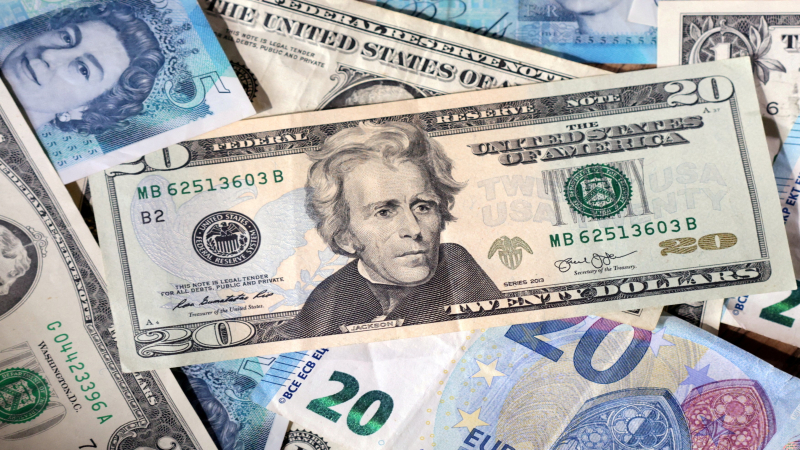
The U.S. dollar has recently strengthened, rising nearly three percent as investors reacted to heightened political uncertainty and a temporary rush toward safe-haven assets. Traders positioned themselves defensively amid fears of a U.S. government shutdown and the absence of fresh economic data. Yet, beneath the surface, the factors driving this rally appear fragile. The momentum reflects short-term positioning and risk aversion rather than lasting confidence in the dollar’s fundamentals.
While the greenback’s strength underscores its status as the world’s reserve currency, structural challenges remain. Fiscal pressures, narrowing interest rate differentials, and mixed growth indicators suggest that the dollar’s latest rally may not endure once markets refocus on economic reality.
Position Reversals and Market Adjustment
Short-Term Position Covering Fuels Momentum
The dollar’s climb began as traders closed out short positions built during months of weakness. As global risk sentiment soured, investors scrambled to unwind bearish bets, sparking a swift and mechanical rebound. This shift was more about market positioning than renewed optimism in U.S. performance. Once short-covering flows subside, the currency’s upward momentum could quickly lose steam.
The absence of fresh economic data amplified this effect. With government agencies pausing key reports due to funding uncertainty, investors lacked clarity and reverted to holding dollars as a defensive measure. Historically, these episodes are followed by moderation once transparency returns and global markets regain equilibrium.
Limited Fundamental Support Behind the Rally
Despite the recent appreciation, the U.S. economy shows no decisive evidence of reacceleration. Growth remains uneven, with consumer spending softening and manufacturing output stagnant. Employment trends are moderating, and inflation pressures are easing, suggesting that the Federal Reserve’s tightening cycle is nearing its end. Without strong data to reinforce the move, the dollar’s rally risks becoming a short-lived technical correction rather than a durable trend.
Safe-Haven Demand and Liquidity Dynamics
Investors Flock to Dollar During Fiscal Tension
Whenever uncertainty rises, investors instinctively turn to the dollar’s deep liquidity. The current episode is no different. Fears of a potential government shutdown and concerns over delayed economic releases triggered renewed demand for U.S. assets. The greenback’s reliability as a settlement and reserve currency remains unmatched, making it the first port of call in times of financial strain.
However, safe-haven inflows are inherently cyclical. Once market anxiety eases and risk appetite returns, demand typically shifts back toward higher-yielding assets. This dynamic often leads to a brief surge in the dollar’s value followed by gradual depreciation as capital reallocates globally.
Liquidity Tightness Adds Temporary Support
Short-term dollar funding markets have tightened slightly, adding to the currency’s upward pressure. Foreign borrowers facing higher hedging costs have reduced dollar outflows, supporting short-lived demand. Yet, such tightening episodes usually unwind as conditions stabilise. For the rally to persist, it would require sustained capital inflows or a policy shift—neither of which seems imminent given the Federal Reserve’s current stance.
Economic Data Gaps and Fiscal Headwinds
Uncertainty from Delayed Indicators
The temporary halt in key government statistics has left markets in partial darkness. Without fresh insights into job growth, inflation, or manufacturing activity, traders are operating on incomplete information. This lack of visibility has contributed to volatility and short-term defensive positioning in the dollar. But once the data pipeline resumes, markets will reassess the true health of the economy—and that could challenge the dollar’s recent strength if the numbers disappoint.
Rising Fiscal Stress Undermines Confidence
Beyond short-term uncertainty, deeper fiscal issues are re-emerging as a long-term risk. Persistent deficits, heavy borrowing, and rising debt service costs have reignited concerns about U.S. fiscal sustainability. Treasury issuance remains elevated, and political divisions continue to complicate budget negotiations. Investors may tolerate these risks temporarily, but prolonged fiscal friction could erode confidence in U.S. assets and weaken the dollar over time.
Rate Expectations and Global Currency Shifts
Waning Interest Rate Advantage
The Federal Reserve’s aggressive rate policy gave the dollar a yield edge through 2023 and early 2024, but that advantage is narrowing. Recent comments from policymakers indicate a more cautious approach, with rate cuts possible if growth slows. This shift reduces the relative attractiveness of dollar-denominated assets and could trigger portfolio adjustments toward other currencies.
Meanwhile, other central banks are moving closer to policy normalisation. The European Central Bank and Bank of England are expected to slow the pace of easing, while the Bank of Japan is gradually moving away from ultra-loose policy. The narrowing rate gap weakens one of the key pillars that supported dollar strength over the past year.
Emerging Market Pressure and Rebalancing
Emerging markets are once again feeling the weight of a stronger dollar. The rise in U.S. yields increases the cost of servicing dollar-denominated debt, strains local credit conditions, and triggers capital outflows. Some central banks have intervened to stabilise currencies, selling reserves or raising local rates. If dollar strength persists, financial stress could escalate in vulnerable economies. Conversely, any softening in the greenback would offer immediate relief and potentially revive investor appetite for emerging-market assets.
Investor Sentiment and Market Outlook
Fiscal Resolution as a Key Catalyst
The next major test for the dollar lies in the resolution of fiscal uncertainty. A clear budget outcome could restore investor confidence and calm market nerves. Conversely, prolonged gridlock or further data disruption could extend safe-haven demand, delaying a return to normal trading patterns. Markets are watching closely for signs of progress in Washington as a signal of stability.
Confidence Will Determine Sustainability
Ultimately, the dollar’s trajectory depends on whether investors view current risks as transitory or structural. A credible fiscal path, steady data releases, and stable monetary guidance would help anchor sentiment and limit volatility. But if these elements falter, the dollar’s current strength could quickly unwind. For now, the rally appears more like a defensive reaction than the start of a new bullish cycle.
Conclusion
The U.S. dollar remains resilient, but its recent gains reflect short-term reactions rather than enduring confidence. Safe-haven flows, liquidity pressures, and fiscal unease have lifted the greenback temporarily, yet the absence of solid fundamentals suggests limited staying power. As economic data returns and global rate gaps narrow, the dollar could stabilise or drift lower in the months ahead.
For traders and policymakers, the key question is whether the U.S. currency can maintain its strength once fear-driven demand fades. If fiscal clarity and growth stability improve, the dollar may find a more balanced range one defined less by reaction and more by resilience.