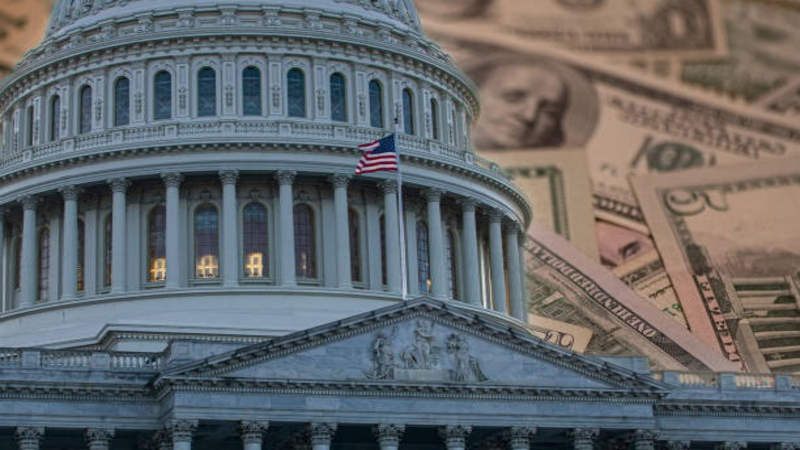
The U.S. Treasury faces one of its most complex challenges in years as it prepares its 2025 borrowing plan. With the dollar maintaining its position as the world’s strongest reserve currency and U.S. yields near multi-year highs, policymakers must find a careful balance between financing government operations and preserving market stability. The Treasury’s strategy must avoid a sharp increase in yields that could undermine both domestic growth and global liquidity.
This year, officials are working within a landscape marked by tight monetary conditions, sustained fiscal deficits, and lingering global market pressures. The Federal Reserve’s cautious stance on rate cuts, coupled with persistent demand for U.S. safe assets, has created a paradoxical environment. Investors continue to seek Treasuries as a haven, yet higher yields are raising long-term borrowing costs for the government. The Treasury’s borrowing decisions now carry consequences not only for Washington’s budget but also for global financial flows and currency stability.
Treasury Strategy on Maturities and Auction Design
The Treasury is expanding short-term issuance while cautiously adjusting long-term supply.
A key feature of the 2025 borrowing plan is the Treasury’s decision to rely more heavily on short-term debt instruments. By issuing a greater volume of Treasury bills and shorter-duration notes, the department can manage borrowing costs and maintain flexibility amid shifting market conditions. This approach helps prevent locking in high rates for extended periods, giving officials room to adapt if yields decline later in the year.
However, this strategy comes with notable risks. Increased short-term issuance means more frequent refinancing and greater sensitivity to sudden rate changes. To mitigate this, the Treasury is fine-tuning auction schedules and coordinating closely with primary dealers to smooth settlement flows. Officials have been gathering feedback on how to optimize issuance around major market events and ensure adequate liquidity for each maturity bucket. This collaboration is intended to avoid congestion in repo markets and prevent liquidity stress during auction settlement periods.
In recent months, Treasury data show that investors have been willing to absorb higher volumes of bills, particularly as money market funds continue to demand short-term instruments. This has given the department temporary breathing room. Yet the long end of the yield curve remains volatile, reflecting uncertainty about inflation, fiscal policy, and global demand for U.S. debt. Maintaining stability across maturities is therefore a central priority in the months ahead.
Managing Yield Pressure and Market Confidence
The Treasury must balance funding needs with investor appetite to prevent market dislocation.
Issuing debt in large volumes always carries the risk of driving yields higher, especially when investors are sensitive to inflation or policy shifts. The Treasury’s challenge is to raise funds without flooding the market or signaling fiscal imbalance. It must strike a careful equilibrium between the pace of issuance and the absorption capacity of investors such as pension funds, sovereign wealth funds, and foreign central banks.
To sustain investor confidence, predictability is essential. Market participants rely on the Treasury’s regular issuance pattern as an anchor for liquidity management. Any sudden changes in auction size, maturity mix, or settlement timing could trigger volatility across bond and currency markets. By maintaining a steady schedule and transparent communication, the Treasury reassures investors that it remains in control of its financing needs even under fiscal stress.
Confidence in the U.S. debt market also depends on credibility and clarity of fiscal policy. Investors assess not only the volume of borrowing but also the government’s broader fiscal discipline. As deficits remain elevated, Treasury officials have emphasized that borrowing is being structured prudently, without sacrificing the integrity of the yield curve or overextending liquidity. Maintaining that message is critical to keeping yields anchored and preventing speculative spikes that could spill over into equity or credit markets.
Constraints, Risks, and the Debt Ceiling Challenge
Legal borrowing limits and rollover exposure add complexity to Treasury operations.
The debt ceiling remains a recurring source of uncertainty. Although Congress temporarily suspended the limit earlier this year, political negotiations around fiscal spending could reintroduce tension in the second half of 2025. When the ceiling is approached, the Treasury must employ extraordinary measures to manage cash and avoid technical default. These maneuvers restrict flexibility, forcing the department to adjust issuance patterns and rely more heavily on short-term debt.
This environment creates a feedback loop. Heavy reliance on short maturities increases rollover frequency, meaning the Treasury must refinance a larger portion of its debt more often. If interest rates rise or market sentiment shifts, refinancing costs can escalate quickly. Each additional auction becomes a test of investor confidence. Even small disruptions in demand can ripple across global markets, influencing everything from corporate borrowing rates to emerging-market capital flows.
Another risk lies in liquidity fragmentation. As the Federal Reserve gradually reduces its balance sheet holdings, private investors must absorb a greater share of new issuance. While demand for Treasuries remains robust, any reduction in foreign buying, particularly from Asian reserve managers, could alter yield dynamics. To counter this, the Treasury may need to fine-tune issuance sizes or offer incentives for longer-duration participation through reopenings or additional benchmarks.
Global Implications and the Role of Dollar Liquidity
The Treasury’s borrowing plan affects global funding conditions and the dollar’s trajectory.
Treasury securities are more than just domestic instruments—they are the foundation of global dollar liquidity. Every auction influences offshore funding costs, central bank reserves, and cross-border capital movements. When the Treasury manages issuance efficiently, it reinforces confidence in the dollar system and supports smooth functioning in global money markets. Conversely, if issuance missteps cause yield spikes, global funding stress can quickly spread through repo markets and dollar swap lines.
Foreign demand for Treasuries remains resilient but uneven. Some central banks have been reducing holdings to defend local currencies or rebalance reserves, while private investors continue to buy as yields offer attractive real returns. The Treasury’s strategy of steady issuance and consistent communication is designed to keep this demand stable. By maintaining a reliable supply of safe assets without flooding the market, the U.S. helps preserve global liquidity and reinforces the dollar’s role as the world’s primary funding currency.
The Treasury’s approach also supports international policy coordination. Stable U.S. yields and predictable debt issuance allow other central banks to calibrate their monetary strategies with less risk of financial disruption. In that sense, the U.S. borrowing plan is not only a domestic necessity but also a global stabilizer that shapes financial conditions far beyond Washington.
Conclusion
The 2025 U.S. Treasury borrowing plan embodies the tension between fiscal necessity and financial stability. The government must raise trillions in new funding while keeping yields under control and maintaining investor confidence. Its success depends on careful pacing, transparent communication, and a nuanced balance between short-term flexibility and long-term sustainability.
Treasury officials understand that every auction sends a signal to markets about fiscal credibility and monetary discipline. A steady hand, supported by close coordination with the Federal Reserve and primary dealers, will be essential to ensuring that borrowing proceeds smoothly. The challenge is to keep funding costs contained without undermining the global demand for dollars that anchors the international financial system.
As 2025 unfolds, the Treasury’s management of maturities, investor communication, and liquidity operations will define not only U.S. fiscal health but also the stability of the global bond market. The world’s reliance on dollar assets means that every Treasury decision reverberates far beyond U.S. borders. A well-calibrated plan could preserve stability and reinforce confidence; a misstep could ignite turbulence in an already fragile global economy.