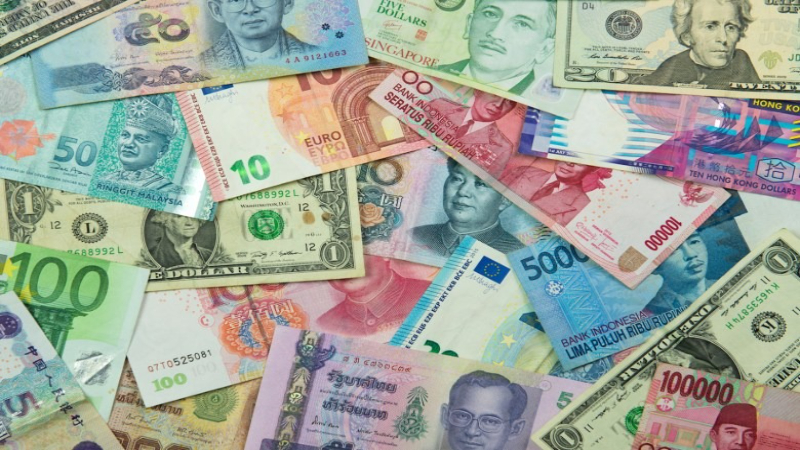
The sustained strength of the U.S. dollar in 2025 has become a defining force across global markets, and few regions feel the impact as acutely as Asia. From Pakistan’s fragile rupee to South Korea’s export-sensitive won and Japan’s chronically weak yen, the region’s currencies are under pressure. The surge in the dollar is driven by a combination of robust U.S. data, resilient Treasury yields, and persistent global demand for safe assets. These factors have intensified volatility in Asian foreign exchange markets and placed policymakers in a difficult position between defending currencies and preserving growth.
For many Asian economies, a stronger dollar represents a tightening of financial conditions without any action from their own central banks. Capital outflows, rising import costs, and heavier debt burdens are all immediate consequences. The current episode is not simply a repeat of previous dollar cycles; it reflects structural shifts in trade, monetary policy divergence, and the global liquidity environment. The question is no longer whether the dollar’s rise will affect Asia, but how deeply and for how long.
Pakistan’s Rupee Under Siege
A shrinking reserve base and debt exposure have left the rupee vulnerable to continued depreciation.
Pakistan remains one of the region’s most dollar-sensitive economies. Its foreign reserves have been eroded by high energy import costs, limited export diversification, and chronic fiscal deficits. The rupee’s depreciation is not just a reflection of dollar strength but also of structural fragility in Pakistan’s external accounts. Each percentage point of dollar appreciation raises the cost of servicing external debt and increases the import bill for fuel, food, and industrial inputs.
The inflationary impact of a weaker rupee is already visible in consumer prices. Imported goods, particularly petroleum and food staples, have risen sharply, straining household budgets. This has forced the government and central bank to take a defensive stance. Currency controls, import restrictions, and market interventions have been deployed in an effort to slow the pace of depreciation. While these measures provide short-term relief, they often come at the expense of investor confidence and long-term reform momentum.
To stabilize its currency, Pakistan needs to rebuild reserves through sustained export growth, remittance inflows, and fiscal consolidation. However, with external funding conditions tightening globally, access to dollar liquidity remains limited. Unless structural reforms attract fresh capital and trade competitiveness improves, the rupee’s vulnerability may persist well into the year.
South Korea and the Won’s Tightrope
Export exposure and portfolio flows make the won highly reactive to global liquidity swings.
South Korea’s currency has historically been one of the most responsive to dollar cycles, and 2025 is no exception. The won’s recent weakness reflects a confluence of factors: slower export growth, weaker semiconductor demand, and capital outflows toward higher-yielding U.S. assets. The widening interest rate differential between the Federal Reserve and the Bank of Korea has encouraged investors to park funds in dollar instruments, creating sustained pressure on the local currency.
The challenge for South Korea lies in balancing financial stability with export competitiveness. A weaker won helps some exporters by making Korean goods cheaper abroad, but persistent volatility disrupts corporate planning and deters foreign investment. Major conglomerates have begun expanding their hedging operations, locking in forward contracts to protect profit margins. Meanwhile, the central bank has engaged in measured interventions to prevent excessive swings that could destabilize markets.
Despite these pressures, South Korea’s fundamentals remain relatively strong. Its ample foreign exchange reserves, diversified trade base, and credible monetary policy framework provide important buffers. However, policymakers recognize that the longer the dollar remains elevated, the greater the risk of inflationary spillovers and reduced consumer purchasing power. Maintaining this balance will require vigilance and coordination across fiscal, monetary, and trade policies.
Japan’s Yen Faces Renewed Strain
A wide policy gap with the U.S. continues to weigh on the yen and intensify import inflation.
Japan’s currency has been on a prolonged weakening trend as the Bank of Japan maintains its ultra-loose monetary policy stance. The yen’s depreciation has accelerated under the latest phase of dollar strength, with investors exploiting the yield gap through carry trades. While this benefits Japan’s export sector by making goods cheaper abroad, it has also increased the cost of essential imports, particularly energy.
The domestic consequences are complex. Rising import costs have pushed consumer inflation above the Bank of Japan’s comfort level, eroding real wages and reducing household purchasing power. Energy-intensive industries are facing cost pressures that squeeze margins, while small businesses reliant on imported materials struggle to adjust. The central bank faces a dilemma: raising rates could stabilize the yen but risk choking off fragile growth, while maintaining accommodation fuels further depreciation.
Authorities have hinted at possible interventions, signaling that excessive currency weakness will not be tolerated. However, with limited coordination from other major central banks, Japan’s ability to reverse yen weakness remains constrained. Over the longer term, the yen’s trajectory will depend on whether the Bank of Japan moves toward policy normalization and whether global yields begin to converge again.
Regional Strategies and Policy Coordination
Asian economies are responding through hedging, reserve management, and bilateral cooperation.
Across Asia, governments and corporations are deploying a variety of tools to cope with dollar pressure. Central banks are using their foreign reserves to smooth currency movements, while others are adjusting policy rates to narrow yield differentials with the United States. These actions help maintain market confidence but also deplete reserve buffers if sustained too long.
Corporations are expanding their risk management frameworks. Many exporters now rely on currency swaps and options to hedge dollar exposure, while importers are renegotiating supplier contracts to mitigate currency losses. In some cases, companies are seeking to shift invoicing toward local currencies to reduce reliance on the dollar in trade transactions.
Regional financial cooperation is also gaining traction. Several countries are exploring new liquidity arrangements and currency swap lines to strengthen their collective defense against dollar volatility. These initiatives echo the lessons of previous crises, where regional coordination helped stabilize markets and restore investor confidence.
Broader Outlook for Asian Currencies
The duration of dollar strength will determine how deep and lasting the regional impact becomes.
If U.S. economic momentum remains strong and interest rate differentials persist, dollar demand will likely continue through the remainder of the year. Under that scenario, Asian currencies could experience additional depreciation, particularly those with weak current accounts or limited reserves. However, if global risk sentiment stabilizes and capital flows diversify, a partial recovery could emerge by mid-2026.
The path forward will depend heavily on how central banks manage policy divergence. Economies that maintain credible policy frameworks and strong reserve positions will likely weather the storm more effectively. Others may need external assistance, either from the International Monetary Fund or regional financing arrangements, to avoid deeper stress.
Conclusion
The dollar’s dominance in 2025 has created an uneven playing field for Asian economies. Pakistan’s rupee remains highly vulnerable to structural imbalances, South Korea’s won faces volatility tied to export cycles, and Japan’s yen continues to struggle under policy divergence. Each country’s experience underscores the same reality: dollar strength reverberates through every corner of global finance.
The coming months will test how effectively Asian policymakers can balance stability, inflation control, and growth. Those who diversify funding sources, manage reserves prudently, and strengthen domestic credibility will emerge stronger from this episode. For now, however, the region’s currencies remain caught in the gravitational pull of a dollar that shows no sign of yielding.