Introduction
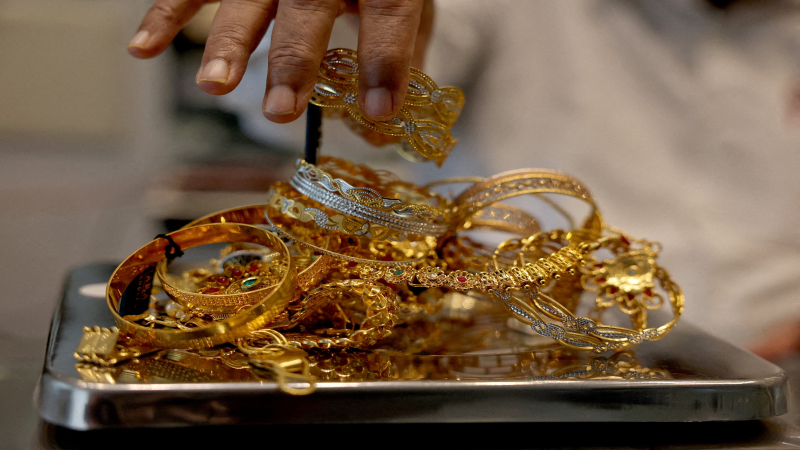
Gold has soared to new record highs in October 2025, surpassing $4,300 per ounce as global investors react to mounting geopolitical tensions and renewed expectations of monetary easing from the U.S. Federal Reserve. The combination of potential interest rate cuts, slowing global growth, and rising uncertainty between the world’s two largest economies has fueled a powerful wave of safe-haven buying. Gold’s rally is now being seen as both a reflection of economic anxiety and a response to shifting investor behavior as confidence in traditional assets weakens.
The surge in gold prices underscores a growing sense that the global economy is entering a more volatile and politically charged phase. Investors are increasingly turning away from riskier assets like equities and currencies tied to emerging markets, instead favoring gold as a store of value and a hedge against instability. The ongoing financial realignment has placed the precious metal at the center of global attention, signaling that the world’s risk appetite is changing in response to monetary and geopolitical developments.
Drivers of the Rally: Rate Cuts and Geopolitical Risks
One of the main drivers of gold’s historic climb has been shifting expectations around U.S. monetary policy. Investors are increasingly convinced that the Federal Reserve will begin cutting interest rates before the end of the year, with futures markets now pricing in at least one cut by December. The reasoning behind this expectation lies in weakening U.S. economic data, including slower job growth, declining manufacturing output, and signs of cooling consumer demand. Lower interest rates typically reduce the opportunity cost of holding non-yielding assets such as gold, prompting capital inflows into the precious metals market.
At the same time, heightened tensions between the United States and China are adding to market unease. A recent escalation in trade restrictions, new tariffs on technology goods, and diplomatic friction over Taiwan and the South China Sea have reignited fears of a renewed trade conflict. These developments have sent shockwaves through financial markets, encouraging investors to move money into assets perceived as safe from geopolitical disruption. Gold’s dual role as a hedge against inflation and political instability has made it the preferred destination for global capital seeking protection from uncertainty.
Market Reactions and Investor Positioning
Gold’s surge past $4,300 per ounce has sparked a strong reaction across global markets. Exchange-traded funds that track the metal have recorded some of their largest weekly inflows in more than a year, while futures markets in New York and London have seen record trading volumes. The move has also triggered a rush among central banks, particularly in Asia and the Middle East, to add to their gold reserves as part of ongoing diversification strategies away from the U.S. dollar. These purchases reflect growing recognition of gold’s strategic value in times of political and financial uncertainty.
Meanwhile, speculative and institutional investors have been quick to follow the trend, viewing the metal as an attractive hedge against declining real yields and weakening global currencies. Investment funds that traditionally favor equities are now allocating more capital to commodities, especially gold, to offset volatility in other markets. However, analysts warn that this influx of speculative interest could also increase short-term price swings, as rapid inflows and profit-taking cycles may amplify volatility. Even so, the underlying demand remains solid, driven by both fundamental and psychological factors that favor long-term ownership of gold.
Implications for the U.S. Dollar and Broader Markets
Gold’s record rally has direct implications for the U.S. dollar, which has softened slightly against a basket of major currencies as investors anticipate easier monetary policy. The two assets have long maintained an inverse relationship: when the dollar weakens, gold tends to rise as it becomes cheaper for buyers using other currencies. This dynamic has been further reinforced by the prospect of U.S. rate cuts, which make dollar-denominated assets less appealing compared to tangible stores of value like gold.
For global markets, this development represents both a warning and an opportunity. A weaker dollar can provide relief to emerging markets that borrow in U.S. currency, but it can also signal declining confidence in the world’s reserve system. Meanwhile, higher gold prices add pressure to central banks managing inflation, as energy and commodity import costs tend to move in tandem with precious metals. Investors are increasingly interpreting gold’s rally as a signal that the global monetary landscape is shifting, with long-term consequences for capital allocation, inflation management, and reserve diversification.
Risks of Overextension and Market Volatility
While the rally has drawn enthusiasm, some analysts caution that gold’s rapid ascent could make it vulnerable to corrections if market sentiment shifts. If inflation rises faster than expected or if the Federal Reserve delays its rate cuts, the dollar could strengthen again, pulling gold prices back down. Similarly, any easing of tensions between the United States and China could reduce demand for safe-haven assets.
Another concern lies in the growing role of algorithmic and high-frequency trading in the gold market. As computer-driven models respond to macroeconomic data in real time, price movements can become more exaggerated. This dynamic can create sudden, large swings that challenge traditional investors and central banks alike. Nevertheless, the long-term fundamentals for gold remain strong, as structural geopolitical risk, debt accumulation, and slower global growth continue to underpin its value proposition.
Conclusion
Gold’s surge above $4,300 per ounce is not just a reflection of market momentum; it is a symbol of shifting global confidence. With investors bracing for potential interest rate cuts and growing wary of geopolitical tensions, gold has reclaimed its position as the world’s ultimate safe-haven asset. The metal’s rise encapsulates a world in transition, where uncertainty is reshaping investment behavior and redefining how value is perceived.
The sustainability of this rally will depend on the trajectory of U.S. monetary policy and the evolution of U.S.–China relations. If the Federal Reserve follows through with rate cuts and tensions persist, gold could push even higher, potentially setting the stage for a new phase in global asset allocation. But if stability returns and yields rise, the rally could pause. For now, gold remains the clearest signal of how deeply interconnected monetary policy, global politics, and investor psychology have become in the modern financial era.