Introduction
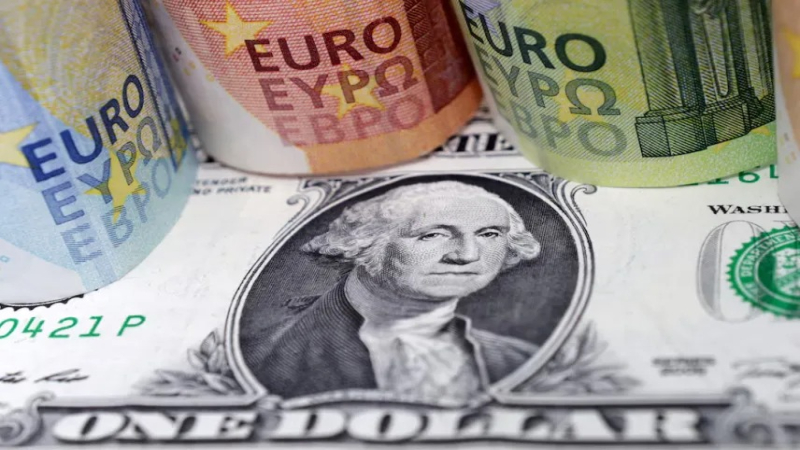
The U.S. dollar has come under renewed pressure this week as investors react to shifting interest-rate expectations and growing unease surrounding trade relations between the world’s largest economies. After months of relative strength, the dollar lost ground against both the Japanese yen and the euro, prompting analysts to question whether the greenback’s remarkable run might finally be slowing. Traders are increasingly positioning themselves for a softer Federal Reserve stance as inflation continues to ease and economic data points to moderating growth. The change in tone has created a notable shift in sentiment across currency markets, where investors are now weighing the prospects of lower U.S. yields against the rising appeal of other major currencies.
The broader environment influencing the dollar is far from straightforward. Geopolitical tensions, particularly between the United States and China, have intensified as new tariffs and export restrictions disrupt trade flows. Meanwhile, recent remarks from Federal Reserve officials suggest a growing openness to rate cuts in early 2026 should economic momentum continue to weaken. These developments have combined to form a complex narrative for global markets, one where the dollar’s direction reflects not only domestic monetary policy but also the broader balance of power within international trade and finance.
Trade Tensions and Market Sentiment
Trade relations between the United States and China have once again emerged as a decisive factor shaping the dollar’s performance. Renewed friction over technology exports and supply-chain access has unsettled investors, reviving concerns about potential disruptions to global growth. The prospect of further tariffs or policy retaliation has led traders to reduce exposure to dollar-denominated assets in favor of currencies traditionally viewed as havens, such as the yen and the Swiss franc. The euro has also benefited, gaining modestly as European markets appear less directly exposed to the latest trade disputes.
These tensions reverberate beyond headline politics. When global trade slows, manufacturers and exporters hedge less in dollars, reducing overall demand for the U.S. currency. At the same time, rising uncertainty amplifies risk aversion, leading to shifts in capital flows. The yen’s appreciation this week exemplifies that pattern. As investors seek safety, they turn to Japan’s deeply liquid government-bond market, where yields remain low but stability is high. The combination of safe-haven demand and diminishing dollar appetite underscores how geopolitical risk continues to influence exchange-rate dynamics long after trade disputes first hit the news.
Interest Rate Expectations and Policy Divergence
Changes in monetary policy expectations have further weakened the dollar’s position. Over the past several weeks, comments from Federal Reserve officials have signaled growing caution about maintaining restrictive policy for too long. With inflation trending lower and unemployment inching upward, markets increasingly expect at least one rate cut by early 2026. Treasury yields have already drifted down in anticipation, narrowing the gap between U.S. and foreign government debt. This shift erodes one of the dollar’s key supports: the yield advantage that had drawn global investors throughout much of 2024 and 2025.
At the same time, foreign central banks are slowly recalibrating their own policies. The Bank of Japan, while still operating under a cautious framework, has begun signaling more confidence in its domestic recovery. Any move toward tightening, however modest, strengthens the yen by reducing incentives for carry trades funded in Japanese currency. In Europe, the European Central Bank has adopted a wait-and-see posture, suggesting rates will remain steady through the end of the year but emphasizing that inflation remains under control. Together, these subtle adjustments across central banks have created an environment where the dollar no longer enjoys the same policy-driven dominance it once did.
Broader Market Implications
The recent weakening of the dollar is rippling through global asset markets. For commodities, a softer greenback typically supports higher prices since most raw materials are priced in dollars. This trend has already begun to appear in oil and precious-metal markets, where international buyers benefit from improved purchasing power. For emerging-market economies, a weaker dollar offers temporary relief from the burden of servicing dollar-denominated debt. Yet, the same trend can also spur volatility if investors reallocate funds too quickly into riskier assets, raising the potential for sudden reversals.
Financial institutions are paying close attention to these shifts in capital flows. A sustained decline in the dollar could alter investment strategies for pension funds, insurers, and sovereign wealth managers, many of whom benchmark their returns against dollar-based indices. For policymakers, the challenge is to interpret whether current weakness reflects a normal correction or an early sign of structural change in global liquidity patterns. If the dollar’s retreat continues in tandem with easing monetary conditions, global inflationary pressures may re-emerge as cheaper financing fuels demand across developing markets.
The Role of Safe-Haven Currencies
The yen’s resurgence is a reminder of its enduring role as a stabilizing force in global finance. Despite Japan’s long period of low growth and minimal yields, the yen retains its reputation as a refuge in times of uncertainty. This week’s appreciation was driven by investors unwinding carry-trade positions borrowing in yen to buy higher-yielding assets elsewhere as U.S. yield prospects softened. That process strengthens the yen and underscores how sensitive global portfolios remain to small changes in interest-rate expectations.
The euro’s recent performance reflects a different dynamic. Europe’s relative insulation from the latest trade frictions, along with steady fiscal coordination across member states, has provided modest support. The currency’s gains against the dollar are also being helped by reduced political risk after several key European elections concluded with market-friendly outcomes. Together, the yen and the euro’s advances demonstrate how the dollar’s rivals can attract capital when policy clarity and geopolitical confidence converge outside the United States.
Conclusion
The dollar’s decline against the yen and euro captures a pivotal moment for global currency markets. Investors are reassessing not only the Federal Reserve’s next moves but also the broader outlook for trade stability and growth. As geopolitical uncertainty rises and monetary policy enters a transitional phase, the dollar’s once-unchallenged dominance is being tested by both cyclical and structural forces.
For USD Observer readers, the message is clear: this episode is not simply a temporary swing in exchange rates but part of a larger adjustment across the global financial system. The interplay of policy decisions, capital flows, and investor psychology will determine whether the current softness proves fleeting or evolves into a more durable trend. While the dollar remains the cornerstone of international finance, its future path will depend increasingly on how well U.S. policymakers manage both domestic balance and external diplomacy in a world that is diversifying its sources of economic power.